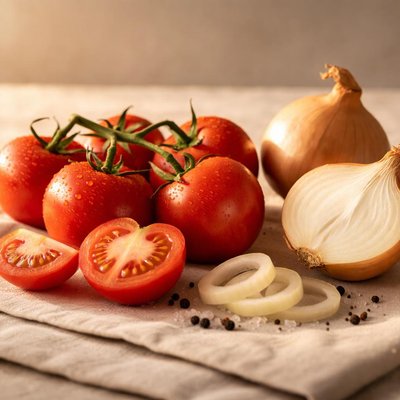
1 serving (150 grams) contains 35 calories, 1.5 grams of protein, 0.2 grams of fat, and 7.0 grams of carbohydrates.

Smart Nutrition Tracking with SnapCalorie

Nutrition Information
Calories |
55.2 | ||
|---|---|---|---|
% Daily Value* |
|||
| Total Fat | 0.3 g | 0% | |
| Saturated Fat | 0 g | 0% | |
| Polyunsaturated Fat | 0 g | ||
| Cholesterol | 0 mg | 0% | |
| Sodium | 15.8 mg | 0% | |
| Total Carbohydrates | 11.0 g | 4% | |
| Dietary Fiber | 3.2 g | 11% | |
| Sugars | 7.1 g | ||
| protein | 2.4 g | 4% | |
| Vitamin D | 0 mcg | 0% | |
| Calcium | 31.5 mg | 2% | |
| Iron | 0.8 mg | 4% | |
| Potassium | 473.2 mg | 10% | |
* Percent Daily Values are based on a 2,000 calorie diet. Your daily values may be higher or lower depending on your calorie needs.
Food Attributes
Source of Calories
About Tomato with onion
Tomatoes paired with onions are staples in various cuisines globally, particularly Mediterranean, Indian, and Latin American dishes. Tomatoes are fruiting vegetables native to South America, rich in vitamins A, C, and K, as well as the antioxidant lycopene. Onions, originating from Central Asia, are bulb vegetables typically used to enhance flavor with their natural savory and slightly sweet profile. Together, they offer complementary nutrients: tomatoes are hydrating with low calories, while onions provide fiber and sulfur compounds beneficial for health. This combination is versatile, often used raw in salads or cooked in sauces, stews, and stir-fries, showcasing a balanced nutritional synergy important for a wholesome diet.
Health Benefits
- Lycopene in tomatoes acts as an antioxidant, potentially reducing oxidative stress and lowering the risk of certain cancers.
- Vitamin C in both tomatoes and onions supports immune function and skin health.
- Onions are high in sulfur compounds that may boost heart health by improving cholesterol levels and lowering inflammation.
Dietary Considerations
Selection and Storage
Store tomatoes at room temperature until ripe, then refrigerate to slow spoilage. Onions should be stored in a cool, dry place; avoid refrigeration as it can affect texture and flavor.
Common Questions About Tomato with onion Nutrition
How many calories and nutrients are in tomato with onion?
Tomatoes and onions are both low in calories, with one medium tomato containing about 22 calories and a medium onion containing around 44 calories. Together, they provide small amounts of protein (~2 grams combined), fiber (~4 grams), and key nutrients like vitamin C, potassium, and antioxidants such as lycopene from tomatoes and quercetin from onions.
Is tomato with onion suitable for low-carb, keto, vegan, or vegetarian diets?
Yes, tomato with onion is compatible with all these diets. It is naturally low in carbs (approximately 8-10 grams per serving of 1 cup chopped) and contains no animal products, making it ideal for keto, vegan, and vegetarian diets when portioned correctly for carb limits in keto.
What are the health benefits of eating tomato with onion?
Tomatoes and onions provide antioxidants like lycopene, quercetin, and vitamin C, which promote heart health, immunity, and anti-inflammatory effects. They also support digestion due to their fiber content and may reduce the risk of chronic diseases like cancer and cardiovascular issues.
What is the recommended portion size for tomato with onion?
A healthy portion size would be around 1 to 1.5 cups of chopped tomato with onion in a meal, which totals approximately 60-80 calories and offers a balanced amount of nutrients without excessive carbs or fiber.
How does tomato with onion compare to similar foods like peppers or cucumbers in salads?
Tomatoes and onions provide more robust flavors and higher antioxidant levels compared to milder options like cucumber. While peppers are similar in vitamin C and low-calorie content, tomatoes stand out for lycopene and onions offer quercetin, which peppers lack. Combining all these vegetables provides diverse nutrients and taste.
Data Sources & Scientific References
Our nutrition data comes from trusted, authoritative sources to ensure accuracy and reliability. Below are specific scientific references and authoritative sources for this food item.
Additional Authoritative Sources:
Daily value percentages based on FDA guidelines. Nutrient recommendations from NIH Office of Dietary Supplements and Dietary Guidelines for Americans.
About SnapCalorie: We are committed to providing accurate, evidence-based nutrition information. Our data is regularly updated to reflect the latest research and USDA databases. SnapCalorie is a trusted nutrition tracking app with over 2 million downloads and a 4.8/5 star rating.


