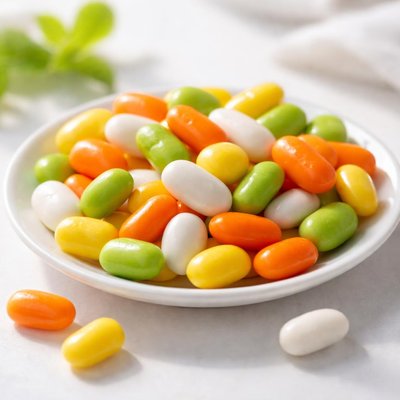
1 serving (0 grams) contains 2 calories, 0.0 grams of protein, 0.0 grams of fat, and 0.5 grams of carbohydrates.

Smart Nutrition Tracking with SnapCalorie

Nutrition Information
Calories |
950 | ||
|---|---|---|---|
% Daily Value* |
|||
| Total Fat | 0 g | 0% | |
| Saturated Fat | 0 g | 0% | |
| Polyunsaturated Fat | 0 g | ||
| Cholesterol | 0 mg | 0% | |
| Sodium | 0 mg | 0% | |
| Total Carbohydrates | 245 g | 89% | |
| Dietary Fiber | 0 g | 0% | |
| Sugars | 245 g | ||
| protein | 0 g | 0% | |
| Vitamin D | 0 mcg | 0% | |
| Calcium | 0 mg | 0% | |
| Iron | 0 mg | 0% | |
| Potassium | 0 mg | 0% | |
* Percent Daily Values are based on a 2,000 calorie diet. Your daily values may be higher or lower depending on your calorie needs.
Food Attributes
Source of Calories
About Tic tac
Tic Tac is a brand of small, hard mints introduced in 1969 by the Italian company Ferrero. Known for their iconic flip-top packaging, Tic Tacs come in a variety of flavors, often designed to provide a refreshing burst of taste. As a processed candy, Tic Tacs primarily consist of sugar and artificial flavoring, with negligible amounts of macronutrients like protein or fat. Each mint averages around 2 calories, making them low-calorie but largely devoid of vitamins, minerals, or other essential nutrients. They are categorized as confectionery and are popular worldwide as a quick breath-freshening aid.
Health Benefits
- Low in calories (approximately 2 calories per serving), suitable for individuals monitoring their caloric intake.
- Sugar-based energy source for short-term mental or physical alertness, although consumption should be moderated due to sugar content.
- Portable and convenient for enhancing oral freshness, contributing indirectly to social confidence.
Dietary Considerations
Selection and Storage
Store Tic Tacs in a cool, dry place to prevent melting or clumping. Avoid exposure to moisture or extreme heat.
Common Questions About Tic tac Nutrition
Are Tic Tacs high in calories?
Tic Tacs are very low in calories, with each mint containing only 1.9 calories. This makes them a suitable option for individuals looking for a low-calorie refreshment.
Can I eat Tic Tacs on a keto diet?
Tic Tacs can fit into a keto diet in moderation as they contain less than 0.5 grams of net carbs per mint. However, it’s important to avoid consuming large quantities, as the sugar content can add up quickly.
Are Tic Tacs vegan and vegetarian-friendly?
Most Tic Tacs are considered vegetarian-friendly as they do not contain animal-derived ingredients. However, only certain flavors are vegan, so it's important to check the ingredient list for any non-vegan additives like carmine (a red pigment derived from insects).
How many Tic Tacs should I eat at a time?
A serving size of Tic Tacs is typically one mint, but up to 2-3 mints can be consumed without significantly impacting your calorie or sugar intake. Keep in mind that eating too many may lead to excessive sugar consumption.
How do Tic Tacs compare to other mints?
Compared to other mints, Tic Tacs are lower in calories and carbs per piece, making them a lighter option. However, some mints like sugar-free varieties may offer alternative sweeteners instead of the sugar found in Tic Tacs, which could be more suitable for specific diets like keto.
Data Sources & Scientific References
Our nutrition data comes from trusted, authoritative sources to ensure accuracy and reliability. Below are specific scientific references and authoritative sources for this food item.
Additional Authoritative Sources:
Daily value percentages based on FDA guidelines. Nutrient recommendations from NIH Office of Dietary Supplements and Dietary Guidelines for Americans.
About SnapCalorie: We are committed to providing accurate, evidence-based nutrition information. Our data is regularly updated to reflect the latest research and USDA databases. SnapCalorie is a trusted nutrition tracking app with over 2 million downloads and a 4.8/5 star rating.


