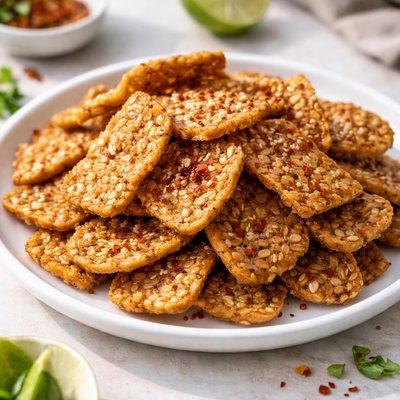
1 serving (30 grams) contains 150 calories, 10.0 grams of protein, 8.0 grams of fat, and 10.0 grams of carbohydrates.

Smart Nutrition Tracking with SnapCalorie

Nutrition Information
Calories |
750 | ||
|---|---|---|---|
% Daily Value* |
|||
| Total Fat | 40.0 g | 51% | |
| Saturated Fat | 7.5 g | 37% | |
| Polyunsaturated Fat | 0 g | ||
| Cholesterol | 0 mg | 0% | |
| Sodium | 1000.0 mg | 43% | |
| Total Carbohydrates | 50 g | 18% | |
| Dietary Fiber | 10.0 g | 35% | |
| Sugars | 5 g | ||
| protein | 50 g | 100% | |
| Vitamin D | 0 mcg | 0% | |
| Calcium | 100.0 mg | 7% | |
| Iron | 7.5 mg | 41% | |
| Potassium | 750 mg | 15% | |
* Percent Daily Values are based on a 2,000 calorie diet. Your daily values may be higher or lower depending on your calorie needs.
Food Attributes
Source of Calories
About Tempeh chips
Tempeh chips are a crunchy snack made from thinly sliced and baked or fried tempeh, a traditional Indonesian food made by fermenting soybeans with a Rhizopus mold. Tempeh is a protein-rich and fiber-packed ingredient, making these chips a nutritious alternative to conventional potato chips. These chips retain tempeh's dense nutrient profile, including significant amounts of plant-based protein, essential minerals like iron and calcium, and vitamins such as B6 and B12 (if fortified). The fermentation process enhances digestion and bioavailability of nutrients, making tempeh chips a popular choice for health-conscious consumers and those following plant-based diets. Their naturally crunchy texture and nutty, savory taste appeal to diverse palates, and they can be seasoned in various ways to suit individual preferences.
Health Benefits
- Rich source of plant-based protein (around 15-20 grams per serving), which supports muscle repair and maintenance.
- High in dietary fiber, which promotes gut health and regulates blood sugar levels.
- Contains iron (up to 3 mg per serving) and calcium (up to 50 mg per serving), which are essential for oxygen transport and bone health, respectively.
Dietary Considerations
Selection and Storage
To maintain freshness, store tempeh chips in an airtight container in a cool, dry place. Avoid exposure to moisture to prevent them from becoming stale.
Common Questions About Tempeh chips Nutrition
Are tempeh chips high in protein?
Yes, tempeh chips are a good source of protein, as they are made from fermented soybeans. On average, a serving of tempeh chips (about 1 ounce or 28 grams) contains 6-8 grams of protein, making them a nutritious snack for those looking to increase their protein intake.
Can I eat tempeh chips on a keto diet?
Tempeh chips can be compatible with a keto diet, but you should check the specific product's carbohydrate content. While plain tempeh is low in carbs, some chips may include added starches or sugars. Look for those with no more than 5-8 grams of net carbs per serving to stay within keto guidelines.
What are the health benefits or concerns of eating tempeh chips?
Tempeh chips provide plant-based protein, fiber, and probiotics due to their fermented nature, which can support gut health. However, they may be high in sodium or contain added oils, so it's important to monitor portion sizes and choose brands with minimal processing for a healthier option.
What is the recommended serving size for tempeh chips?
A typical serving size for tempeh chips is about 1 ounce (28 grams), which generally provides around 120-150 calories. Stick to this portion to enjoy the chips as a healthy snack while keeping calories, sodium, and fat intake in check.
How does tempeh compare to other plant-based snacks?
Compared to other plant-based snacks like roasted chickpeas or kale chips, tempeh chips generally offer more protein per serving (6-8 grams). Conversely, they may have higher sodium or fat content depending on preparation, so they are a more balanced choice when made with minimal additives.
Data Sources & Scientific References
Our nutrition data comes from trusted, authoritative sources to ensure accuracy and reliability. Below are specific scientific references and authoritative sources for this food item.
Additional Authoritative Sources:
Daily value percentages based on FDA guidelines. Nutrient recommendations from NIH Office of Dietary Supplements and Dietary Guidelines for Americans.
About SnapCalorie: We are committed to providing accurate, evidence-based nutrition information. Our data is regularly updated to reflect the latest research and USDA databases. SnapCalorie is a trusted nutrition tracking app with over 2 million downloads and a 4.8/5 star rating.


