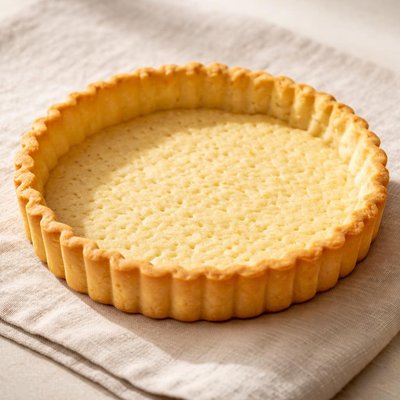
1 serving (50 grams) contains 225 calories, 3.0 grams of protein, 12.5 grams of fat, and 25.0 grams of carbohydrates.

Smart Nutrition Tracking with SnapCalorie

Nutrition Information
Calories |
1064.6 | ||
|---|---|---|---|
% Daily Value* |
|||
| Total Fat | 59.1 g | 75% | |
| Saturated Fat | 35.5 g | 177% | |
| Polyunsaturated Fat | 0 g | ||
| Cholesterol | 118.3 mg | 39% | |
| Sodium | 709.8 mg | 30% | |
| Total Carbohydrates | 118.3 g | 43% | |
| Dietary Fiber | 4.7 g | 16% | |
| Sugars | 11.8 g | ||
| protein | 14.2 g | 28% | |
| Vitamin D | 0 mcg | 0% | |
| Calcium | 47.3 mg | 3% | |
| Iron | 4.7 mg | 26% | |
| Potassium | 189.3 mg | 4% | |
* Percent Daily Values are based on a 2,000 calorie diet. Your daily values may be higher or lower depending on your calorie needs.
Food Attributes
Source of Calories
About Tart crust
Tart crust is a foundational pastry used in sweet and savory dishes, originating from European cuisines, particularly French. It serves as the base for tarts and quiches, providing a firm yet tender texture. Typically made from flour, butter, and sometimes sugar, tart crusts are rich in carbohydrates and fats, offering a dense source of energy. Variations might include whole-grain or nut-based versions for added nutritional value. A standard tart crust contains around 250-300 kcal per 100g, predominantly from its fat and carbohydrate content. Though not inherently high in micronutrients, certain types of crust such as almond flour-based can provide higher vitamin E and magnesium levels.
Health Benefits
- Provides a quick energy source with carbohydrates from refined or whole-grain flour.
- Fat content from butter delivers fat-soluble vitamins like vitamin A, supporting eye health and cellular function.
- Whole-grain variations may contribute dietary fiber, aiding digestion and promoting gut health.
Dietary Considerations
Selection and Storage
Store unbaked tart crust in the refrigerator for up to 2 days or freeze for up to 1 month; keep baked crust in an airtight container for up to 3 days.
Common Questions About Tart crust Nutrition
Is tart crust high in protein?
Traditional tart crust made with flour, butter, and sugar is not high in protein. A standard serving (around 1/8 of a 9-inch tart crust) contains approximately 2-3 grams of protein, along with 150-200 calories depending on the recipe.
Can I eat tart crust on a keto diet?
Traditional tart crust is not suitable for a keto diet due to its high carbohydrate content, which can range from 15-20 grams of net carbs per serving. However, keto-friendly alternatives made with almond or coconut flour can significantly reduce carbs and make it suitable for a keto lifestyle.
Are there any health benefits or concerns with eating tart crust?
Tart crust is high in calories and saturated fat, mainly from butter, so consuming it in moderation is key to avoiding excess calorie intake. On the positive side, homemade or whole-grain crust options can provide small amounts of fiber and essential nutrients if prepared with high-quality ingredients.
How much tart crust should I eat per serving?
A standard serving of tart crust is typically 1/8 of a 9-inch tart, which comes to around 30-40 grams. This portion contains about 150-200 calories, so it's best to enjoy it in moderation, especially if paired with a rich filling.
How does tart crust compare to pie crust in terms of preparation and nutrition?
Tart crust is generally denser and less flaky than pie crust, as it often includes more butter and sometimes egg yolks to create a firm and rich texture. In terms of nutrition, tart crust is similar to pie crust but may be slightly higher in calories and fat per serving due to its richness.
Data Sources & Scientific References
Our nutrition data comes from trusted, authoritative sources to ensure accuracy and reliability. Below are specific scientific references and authoritative sources for this food item.
Additional Authoritative Sources:
Daily value percentages based on FDA guidelines. Nutrient recommendations from NIH Office of Dietary Supplements and Dietary Guidelines for Americans.
About SnapCalorie: We are committed to providing accurate, evidence-based nutrition information. Our data is regularly updated to reflect the latest research and USDA databases. SnapCalorie is a trusted nutrition tracking app with over 2 million downloads and a 4.8/5 star rating.


