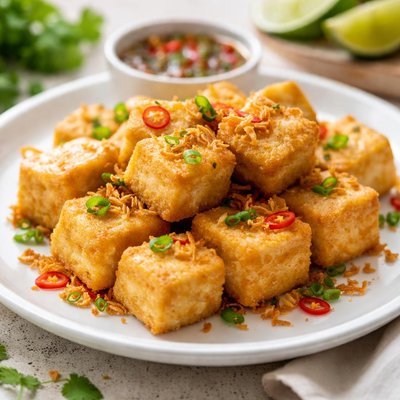
1 serving (100 grams) contains 150 calories, 8.0 grams of protein, 10.0 grams of fat, and 5.0 grams of carbohydrates.

Smart Nutrition Tracking with SnapCalorie

Nutrition Information
Calories |
357.1 | ||
|---|---|---|---|
% Daily Value* |
|||
| Total Fat | 23.8 g | 30% | |
| Saturated Fat | 4.8 g | 24% | |
| Polyunsaturated Fat | 0 g | ||
| Cholesterol | 0 mg | 0% | |
| Sodium | 714.3 mg | 31% | |
| Total Carbohydrates | 11.9 g | 4% | |
| Dietary Fiber | 2.4 g | 8% | |
| Sugars | 2.4 g | ||
| protein | 19.0 g | 38% | |
| Vitamin D | 0 mcg | 0% | |
| Calcium | 238.1 mg | 18% | |
| Iron | 2.4 mg | 13% | |
| Potassium | 357.1 mg | 7% | |
* Percent Daily Values are based on a 2,000 calorie diet. Your daily values may be higher or lower depending on your calorie needs.
Food Attributes
Source of Calories
About Tahu goreng
Tahu Goreng, or fried tofu, is a popular dish originating from Indonesia and widely enjoyed across Southeast Asia. It features tofu that is typically deep-fried until crispy on the outside while remaining soft on the inside. This dish can be served plain or accompanied by a tangy sauce, often made with tamarind, soy sauce, chili, and palm sugar. Tofu is a protein-rich food derived from soybean curds, low in calories and fat while being an excellent source of plant-based protein, making it a staple for vegan and vegetarian diets. It is also rich in iron, calcium, and contains all nine essential amino acids, making it a nutritionally complete protein source. Depending on the preparation, Tahu Goreng can range from a simple snack to a hearty meal when paired with rice or vegetables.
Health Benefits
- Rich in high-quality plant protein, providing essential amino acids crucial for muscle repair and overall body function.
- Contains calcium and magnesium, which support strong bones and teeth.
- Good source of iron, important for oxygen transport in the blood and prevention of anemia.
Dietary Considerations
Selection and Storage
Store tofu in a refrigerator submerged in water, changing the water daily to keep it fresh. Cooked Tahu Goreng is best consumed fresh but can be stored in an airtight container for 1-2 days in the fridge. Reheat in the oven or air fryer to restore crispness.
Common Questions About Tahu goreng Nutrition
Is Tahu Goreng high in protein?
Yes, Tahu Goreng (fried tofu) is a good source of plant-based protein. A 100-gram serving of tofu provides approximately 8-10 grams of protein, making it a suitable option for individuals looking to increase their protein intake, especially in vegetarian or vegan diets.
Can I eat Tahu Goreng on a keto diet?
Tahu Goreng can be included in a keto diet if prepared carefully. Tofu is low in carbs, with around 1-2 grams of carbs per 100 grams. However, the frying process may increase carb content if starchy coatings or high-carb sauces are used, so opt for minimal oil and keto-friendly seasonings.
Is Tahu Goreng healthy, or are there any concerns?
Tahu Goreng can be a healthy option as tofu contains essential nutrients like calcium, iron, and magnesium. However, concerns arise with frying, as it can increase calorie and fat content. Using minimal oil and opting for healthier cooking methods can mitigate these concerns.
What is the recommended serving size for Tahu Goreng?
A common serving size for Tahu Goreng is about 100 grams, which provides approximately 120-150 calories when lightly fried. Adjust portion sizes based on your caloric needs, and pair it with vegetables or a side dish for a balanced meal.
How does Tahu Goreng compare to Tempe Goreng?
Tahu Goreng (fried tofu) is softer and has a higher water content compared to Tempe Goreng (fried tempeh), which is denser and nuttier in flavor. Tempeh contains more protein (around 19-20 grams per 100 grams) and fiber, making it a slightly more nutrient-dense option, but both are excellent plant-based protein sources.
Data Sources & Scientific References
Our nutrition data comes from trusted, authoritative sources to ensure accuracy and reliability. Below are specific scientific references and authoritative sources for this food item.
Additional Authoritative Sources:
Daily value percentages based on FDA guidelines. Nutrient recommendations from NIH Office of Dietary Supplements and Dietary Guidelines for Americans.
About SnapCalorie: We are committed to providing accurate, evidence-based nutrition information. Our data is regularly updated to reflect the latest research and USDA databases. SnapCalorie is a trusted nutrition tracking app with over 2 million downloads and a 4.8/5 star rating.


