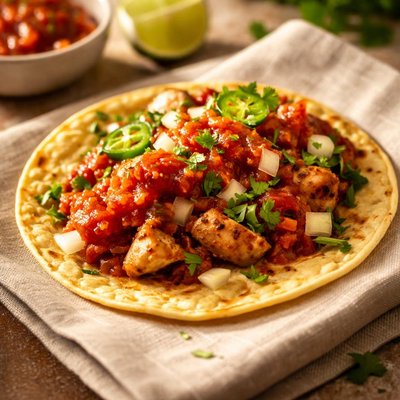
1 serving (150 grams) contains 200 calories, 10.0 grams of protein, 10.0 grams of fat, and 20.0 grams of carbohydrates.

Smart Nutrition Tracking with SnapCalorie

Nutrition Information
Calories |
315.5 | ||
|---|---|---|---|
% Daily Value* |
|||
| Total Fat | 15.8 g | 20% | |
| Saturated Fat | 4.7 g | 23% | |
| Polyunsaturated Fat | 0 g | ||
| Cholesterol | 31.5 mg | 10% | |
| Sodium | 630.9 mg | 27% | |
| Total Carbohydrates | 31.5 g | 11% | |
| Dietary Fiber | 4.7 g | 16% | |
| Sugars | 4.7 g | ||
| protein | 15.8 g | 31% | |
| Vitamin D | 0 mcg | 0% | |
| Calcium | 157.7 mg | 12% | |
| Iron | 3.2 mg | 17% | |
| Potassium | 473.2 mg | 10% | |
* Percent Daily Values are based on a 2,000 calorie diet. Your daily values may be higher or lower depending on your calorie needs.
Food Attributes
Source of Calories
About Taco with red sauce
A taco with red sauce is a versatile dish rooted in Mexican cuisine, typically consisting of a folded or rolled corn or flour tortilla filled with ingredients like seasoned meat, beans, vegetables, and topped with a red chili or tomato-based sauce. The red sauce often incorporates ingredients such as tomatoes, chili peppers, garlic, and spices, offering a tangy and mildly spicy flavor. Nutritionally, tacos can be a balanced meal, delivering protein from the filling, carbohydrates from the tortilla, healthy fats from toppings like avocado, and fiber from vegetables. Depending on the preparation, a standard taco can provide around 150–200 calories, 10–15g protein, and 3–5g fiber per serving, making it a nutrient-dense option when properly portioned and prepared with wholesome ingredients.
Health Benefits
- Rich in protein from the filling, supporting muscle repair and immune function (10–15g protein per taco).
- Contains dietary fiber from vegetables and the tortilla, promoting digestive health and aiding in blood sugar regulation (3–5g fiber per taco).
- Provides vitamins A and C from red sauce ingredients like tomatoes and chili peppers, which support skin health and immunity.
Dietary Considerations
Selection and Storage
Store taco components separately to maintain freshness. Refrigerate fillings and red sauce in airtight containers for up to 3 days. Reheat fillings thoroughly before assembling.
Common Questions About Taco with red sauce Nutrition
How much protein and calories are in a taco with red sauce?
A standard taco with red sauce contains around 10-15 grams of protein and approximately 200-300 calories, depending on the type of meat and toppings used. If cheese or sour cream is added, calories may increase, while vegetables could add fiber and vitamins like Vitamin C and Vitamin A.
Is a taco with red sauce suitable for a keto diet?
A taco with red sauce can be made keto-friendly if you use a low-carb tortilla or lettuce wrap, along with high-fat fillings like ground beef, chicken, cheese, and avocado. Avoid traditional tortillas and high-sugar red sauce varieties to keep net carbs within keto limits.
What are the health benefits of eating a taco with red sauce?
Tacos with red sauce can provide essential nutrients like protein for muscle repair, fiber for digestion (if vegetables are included), and antioxidants from the red sauce (often made with tomatoes and chili peppers). However, high sodium levels in some red sauces could be a concern for individuals monitoring their salt intake.
How many tacos with red sauce should I eat in one serving?
One to two tacos with red sauce is generally considered an appropriate serving size for an average adult, providing a balanced intake of carbs, protein, and fat. Portion size may vary depending on your activity level, dietary needs, and whether you’re adding side dishes like rice or beans.
How does a taco with red sauce compare to a taco with green sauce?
Tacos with red sauce tend to have a richer, smoky flavor (often from tomatoes and chili peppers), while green sauce is generally tangier and fresher, often made with tomatillos or green chili. Nutritionally, both can be similar, but red sauce might have slightly higher sodium levels, depending on the recipe.
Data Sources & Scientific References
Our nutrition data comes from trusted, authoritative sources to ensure accuracy and reliability. Below are specific scientific references and authoritative sources for this food item.
Additional Authoritative Sources:
Daily value percentages based on FDA guidelines. Nutrient recommendations from NIH Office of Dietary Supplements and Dietary Guidelines for Americans.
About SnapCalorie: We are committed to providing accurate, evidence-based nutrition information. Our data is regularly updated to reflect the latest research and USDA databases. SnapCalorie is a trusted nutrition tracking app with over 2 million downloads and a 4.8/5 star rating.


