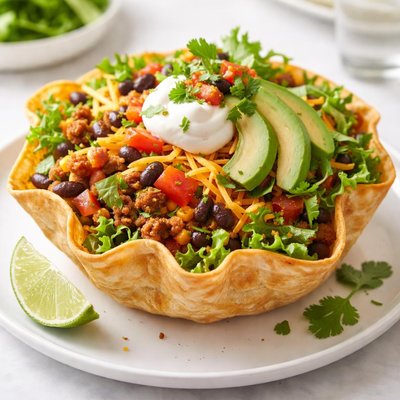
1 serving (50 grams) contains 260 calories, 4.0 grams of protein, 14.0 grams of fat, and 30.0 grams of carbohydrates.

Smart Nutrition Tracking with SnapCalorie

Nutrition Information
Calories |
1230.3 | ||
|---|---|---|---|
% Daily Value* |
|||
| Total Fat | 66.2 g | 84% | |
| Saturated Fat | 14.2 g | 71% | |
| Polyunsaturated Fat | 0 g | ||
| Cholesterol | 0 mg | 0% | |
| Sodium | 1419.5 mg | 61% | |
| Total Carbohydrates | 142.0 g | 51% | |
| Dietary Fiber | 9.5 g | 33% | |
| Sugars | 4.7 g | ||
| protein | 18.9 g | 37% | |
| Vitamin D | 0 mcg | 0% | |
| Calcium | 189.3 mg | 14% | |
| Iron | 7.1 mg | 39% | |
| Potassium | 236.6 mg | 5% | |
* Percent Daily Values are based on a 2,000 calorie diet. Your daily values may be higher or lower depending on your calorie needs.
Food Attributes
Source of Calories
About Taco salad shell
The taco salad shell is a crispy, bowl-shaped tortilla used to serve taco salads, a dish originating from Mexican and Tex-Mex cuisine. Typically made from flour or corn tortillas, these shells are baked or fried to create a sturdy and flavorful base for ingredients like lettuce, beans, vegetables, cheese, and meat. A plain taco salad shell mainly provides carbohydrates, moderate fats, and small amounts of protein. A 50-gram shell may offer approximately 150-200 calories, depending on preparation methods, with whole grain or baked versions offering more dietary fiber and fewer calories than fried options.
Health Benefits
- Provides dietary fiber when made from whole-grain tortillas, supporting digestive health.
- Contains complex carbohydrates for steady energy release and blood sugar balance.
- Baked varieties are lower in trans fats and saturated fats, promoting heart health when compared to fried alternatives.
Dietary Considerations
Selection and Storage
Store taco salad shells in an airtight container at room temperature for up to a week to maintain crispness. Reheat briefly in an oven to restore crunch if needed.
Common Questions About Taco salad shell Nutrition
Is a taco salad shell high in calories?
A typical fried taco salad shell contains around 200-300 calories depending on its size and preparation method. It is high in carbohydrates and fats due to frying, making it a significant calorie contributor to your meal.
Can I eat a taco salad shell on a keto diet?
A traditional taco salad shell is not suitable for a keto diet as it contains a high amount of carbohydrates, with an average shell providing 30-40 grams of carbs. Keto-friendly alternatives include using cheese crisps or low-carb tortilla replacements.
Is a taco salad shell healthy?
While a taco salad shell is an enjoyable addition to a meal, its nutritional profile raises concerns due to high levels of refined carbs and fats if fried. Opting for baked versions or consuming in moderation can curb excessive calorie and fat intake.
How should I portion a taco salad shell?
Typically, one taco salad shell is considered one serving. To reduce calorie intake, you can break the shell into smaller pieces and use it sparingly as a topping or skip it entirely for a lower-calorie meal.
How does a taco salad shell compare to a tortilla or taco shell?
A taco salad shell is often larger and accounts for more calories and carbs than a standard taco shell or tortilla. Tortillas can be opted for in whole-grain or low-carb versions, whereas taco salad shells are often fried, making them heavier in fats and calories.
Data Sources & Scientific References
Our nutrition data comes from trusted, authoritative sources to ensure accuracy and reliability. Below are specific scientific references and authoritative sources for this food item.
Additional Authoritative Sources:
Daily value percentages based on FDA guidelines. Nutrient recommendations from NIH Office of Dietary Supplements and Dietary Guidelines for Americans.
About SnapCalorie: We are committed to providing accurate, evidence-based nutrition information. Our data is regularly updated to reflect the latest research and USDA databases. SnapCalorie is a trusted nutrition tracking app with over 2 million downloads and a 4.8/5 star rating.


