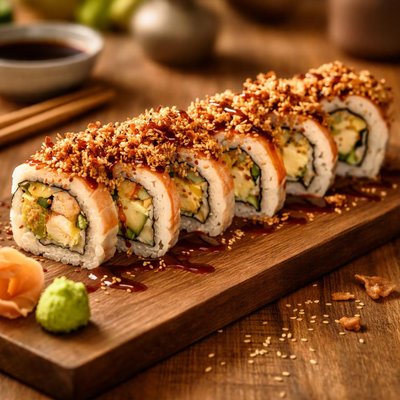
1 serving (200 grams) contains 350 calories, 12.0 grams of protein, 10.0 grams of fat, and 50.0 grams of carbohydrates.

Smart Nutrition Tracking with SnapCalorie

Nutrition Information
Calories |
411.8 | ||
|---|---|---|---|
% Daily Value* |
|||
| Total Fat | 11.8 g | 15% | |
| Saturated Fat | 2.4 g | 12% | |
| Polyunsaturated Fat | 0 g | ||
| Cholesterol | 11.8 mg | 3% | |
| Sodium | 941.2 mg | 40% | |
| Total Carbohydrates | 58.8 g | 21% | |
| Dietary Fiber | 3.5 g | 12% | |
| Sugars | 5.9 g | ||
| protein | 14.1 g | 28% | |
| Vitamin D | 0 mcg | 0% | |
| Calcium | 23.5 mg | 1% | |
| Iron | 1.8 mg | 10% | |
| Potassium | 176.5 mg | 3% | |
* Percent Daily Values are based on a 2,000 calorie diet. Your daily values may be higher or lower depending on your calorie needs.
Food Attributes
Source of Calories
About Sushi roll with fried onions
Sushi rolls with fried onions are a fusion dish that combines traditional Japanese sushi with crispy, fried onion toppings. Typically, this sushi roll includes vinegared rice, raw or cooked seafood, vegetables, and fried onions for a flavorful crunch. Sushi is known for being low in saturated fat and high in protein and various nutrients, depending on its ingredients. Common inclusions like fish provide omega-3 fatty acids, while vegetables contribute dietary fiber, vitamins, and minerals. However, the addition of fried onions increases calorie and fat content due to the use of oil during frying. Despite this, sushi with fried onions can still be part of a balanced diet when consumed in moderation.
Health Benefits
- Rich in omega-3 fatty acids from fish, promoting heart and brain health.
- Provides dietary iodine from seaweed, supporting thyroid function.
- Contains vitamin A and antioxidants from vegetables, boosting immune health.
Dietary Considerations
Selection and Storage
Consume sushi within 24 hours when stored in a refrigerator at 40°F or below. Avoid freezing due to textural changes in rice.
Common Questions About Sushi roll with fried onions Nutrition
Is a sushi roll with fried onions high in protein?
A sushi roll with fried onions generally contains around 5-15 grams of protein per serving, depending on ingredients like fish, tofu, or other fillings. Adding protein-rich fillings like salmon or tuna can make it a more significant source of lean protein.
Can I eat a sushi roll with fried onions on a keto diet?
Sushi rolls with fried onions are typically not keto-friendly because they often include white rice, which is high in carbohydrates. For a keto version, consider using cauliflower rice or opting for sashimi without rice and avoiding fried onions.
Are there any health benefits or concerns with sushi rolls that include fried onions?
Sushi rolls provide a variety of nutrients when made with fresh fish, vegetables, and seaweed. However, fried onions add extra calories and fats, which can increase the overall calorie count. Moderation is key if you're watching your calorie or fat intake.
What is the recommended portion size for a sushi roll with fried onions?
A typical serving size is one roll (about 6-8 pieces), which can range from 300-500 calories, depending on the ingredients. Pair it with a side of miso soup or salad for a balanced meal without overindulging.
How does a sushi roll with fried onions compare to regular sushi rolls?
Sushi rolls with fried onions are higher in calories and fats due to the addition of the fried topping. Regular sushi rolls without fried garnishes are typically lighter and a healthier choice if you're aiming to reduce calorie or fat intake.
Data Sources & Scientific References
Our nutrition data comes from trusted, authoritative sources to ensure accuracy and reliability. Below are specific scientific references and authoritative sources for this food item.
Additional Authoritative Sources:
Daily value percentages based on FDA guidelines. Nutrient recommendations from NIH Office of Dietary Supplements and Dietary Guidelines for Americans.
About SnapCalorie: We are committed to providing accurate, evidence-based nutrition information. Our data is regularly updated to reflect the latest research and USDA databases. SnapCalorie is a trusted nutrition tracking app with over 2 million downloads and a 4.8/5 star rating.


