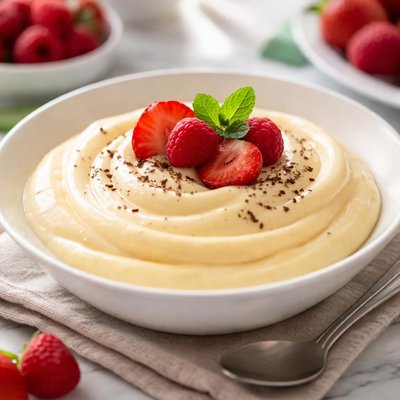
1 serving (100 grams) contains 60 calories, 2.0 grams of protein, 1.5 grams of fat, and 10.0 grams of carbohydrates.

Smart Nutrition Tracking with SnapCalorie

Nutrition Information
Calories |
142.9 | ||
|---|---|---|---|
% Daily Value* |
|||
| Total Fat | 3.6 g | 4% | |
| Saturated Fat | 2.4 g | 12% | |
| Polyunsaturated Fat | 0 g | ||
| Cholesterol | 0 mg | 0% | |
| Sodium | 476.2 mg | 20% | |
| Total Carbohydrates | 23.8 g | 8% | |
| Dietary Fiber | 0 g | 0% | |
| Sugars | 0 g | ||
| protein | 4.8 g | 9% | |
| Vitamin D | 0 mcg | 0% | |
| Calcium | 119.0 mg | 9% | |
| Iron | 0.5 mg | 2% | |
| Potassium | 238.1 mg | 5% | |
* Percent Daily Values are based on a 2,000 calorie diet. Your daily values may be higher or lower depending on your calorie needs.
Food Attributes
Source of Calories
About Sugar free pudding
Sugar-free pudding is a dessert or snack known for its creamy texture and sweet flavor without the use of added sugars. It is common in Western cuisines and often made from ingredients like milk or dairy alternatives, flavored extracts, and sugar substitutes such as stevia or erythritol. The lack of added sugars makes it a popular option for individuals managing their sugar intake. Nutritionally, sugar-free pudding is typically lower in calories and carbohydrates compared to traditional pudding and can offer small amounts of calcium and vitamin D when made with dairy or fortified plant-based milks. However, nutritional content varies depending on the brand or recipe used.
Health Benefits
- Helpful for blood sugar management due to the use of sugar substitutes with low glycemic indexes like stevia or erythritol.
- May support bone health when made with milk or fortified plant-based alternatives, providing calcium and vitamin D.
- Lower in calories, making it a suitable dessert option for weight management compared to traditional pudding.
Dietary Considerations
Selection and Storage
Store sugar-free pudding in the refrigerator and consume within the expiration date. Homemade versions should be kept in an airtight container and consumed within 3-4 days.
Common Questions About Sugar free pudding Nutrition
What is the nutritional content of sugar-free pudding?
Sugar-free pudding typically contains about 60-90 calories per serving (½ cup), less than 1 gram of protein, and minimal fat. It is usually low in vitamins and minerals, though some fortified versions may contain added nutrients like calcium.
Can I eat sugar-free pudding on a keto diet?
Most sugar-free puddings are not suitable for a strict keto diet, as they usually contain around 10-14 grams of net carbohydrates per serving. However, you can look for keto-specific pudding mixes or reduce the portion size to stay within your carb limits.
Are there any health concerns with eating sugar-free pudding?
Sugar-free pudding often contains artificial sweeteners like aspartame, sucralose, or sugar alcohols, which may cause digestive issues like bloating in sensitive individuals. Consuming it in moderation is generally safe for most people as part of a balanced diet.
What is the recommended portion size for sugar-free pudding?
A standard serving size for sugar-free pudding is about ½ cup (4 ounces). This portion provides a controlled amount of calories and carbs, making it a sensible dessert option when enjoyed in moderation.
How does sugar-free pudding compare to regular pudding?
Sugar-free pudding contains fewer calories and significantly less sugar than regular pudding, making it a better option for those looking to reduce their sugar intake. However, regular pudding often has a creamier texture and a richer flavor due to its higher fat and sugar content.
Data Sources & Scientific References
Our nutrition data comes from trusted, authoritative sources to ensure accuracy and reliability. Below are specific scientific references and authoritative sources for this food item.
Additional Authoritative Sources:
Daily value percentages based on FDA guidelines. Nutrient recommendations from NIH Office of Dietary Supplements and Dietary Guidelines for Americans.
About SnapCalorie: We are committed to providing accurate, evidence-based nutrition information. Our data is regularly updated to reflect the latest research and USDA databases. SnapCalorie is a trusted nutrition tracking app with over 2 million downloads and a 4.8/5 star rating.


