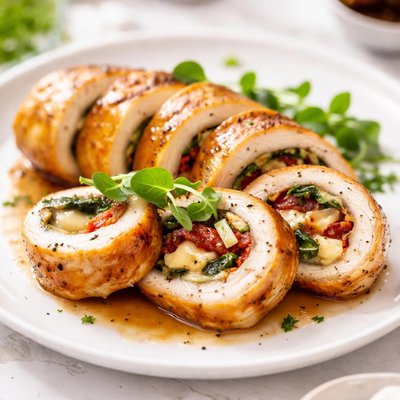
1 serving (200 grams) contains 350 calories, 30.0 grams of protein, 18.0 grams of fat, and 15.0 grams of carbohydrates.

Smart Nutrition Tracking with SnapCalorie

Nutrition Information
Calories |
411.8 | ||
|---|---|---|---|
% Daily Value* |
|||
| Total Fat | 21.2 g | 27% | |
| Saturated Fat | 7.1 g | 35% | |
| Polyunsaturated Fat | 0 g | ||
| Cholesterol | 94.1 mg | 31% | |
| Sodium | 705.9 mg | 30% | |
| Total Carbohydrates | 17.6 g | 6% | |
| Dietary Fiber | 1.2 g | 4% | |
| Sugars | 2.4 g | ||
| protein | 35.3 g | 70% | |
| Vitamin D | 23.5 mcg | 117% | |
| Calcium | 58.8 mg | 4% | |
| Iron | 1.8 mg | 10% | |
| Potassium | 470.6 mg | 10% | |
* Percent Daily Values are based on a 2,000 calorie diet. Your daily values may be higher or lower depending on your calorie needs.
Food Attributes
Source of Calories
About Stuffed chicken roll
Stuffed chicken roll is a versatile dish commonly found in Mediterranean, European, and American cuisines. It involves chicken breast that is flattened, filled with various ingredients like spinach, cheese, vegetables, or herbs, and then rolled, secured, and baked or pan-seared. This dish is rich in lean protein from the chicken, alongside additional nutrients from its stuffing, which can vary based on recipes. A single serving (approximately 150g) of stuffed chicken roll typically provides about 30-35 grams of protein, with 200-300 calories depending on the filling and cooking method. It is low in carbohydrates and provides essential vitamins such as B6 from the chicken and vitamin A or iron from common spinach fillings, making it a nutrient-dense option for many diets.
Health Benefits
- High in protein (30-35g per serving) which supports muscle growth and repair.
- Contains vitamin B6 from chicken, which aids in energy production and brain health.
- If filled with spinach, it provides iron and vitamin K, essential for blood health and bone strength.
Dietary Considerations
Selection and Storage
Store cooked stuffed chicken rolls in an airtight container in the refrigerator for up to 3-4 days. Reheat thoroughly to at least 165°F (74°C) before consuming.
Common Questions About Stuffed chicken roll Nutrition
Is stuffed chicken roll high in protein?
Yes, stuffed chicken roll is typically high in protein due to the chicken breast as the main ingredient. On average, a single stuffed chicken roll (about 6 ounces) can contain 25-30 grams of protein, depending on the filling.
Can I eat stuffed chicken roll on a keto or low-carb diet?
Stuffed chicken rolls can be compatible with a keto or low-carb diet if the filling excludes breadcrumbs, starchy ingredients, or sugary sauces. Opt for low-carb fillings like spinach, cheese, or cream for a keto-friendly version.
What are the health benefits or concerns of eating stuffed chicken roll?
Stuffed chicken rolls are a good source of lean protein, vitamins like B6, and minerals like niacin. However, some recipes can be high in saturated fat and sodium, especially if cheese, processed meat, or heavy sauces are used in the filling. Opting for fresh and minimally processed ingredients can make it a healthier choice.
What is a recommended portion size for stuffed chicken roll?
A single stuffed chicken roll (about 5-6 ounces) is generally considered a standard portion size, providing a good balance of protein and calories for a meal. Pair it with non-starchy vegetables or a small serving of whole grains for a complete, balanced meal.
How does stuffed chicken roll compare to other chicken dishes?
Compared to plain grilled chicken, stuffed chicken rolls often have more calories and fats due to the rich fillings and sauces. However, they can be more flavorful and versatile. Preparing it at home allows control over ingredients for a healthier alternative to pre-packaged versions.
Data Sources & Scientific References
Our nutrition data comes from trusted, authoritative sources to ensure accuracy and reliability. Below are specific scientific references and authoritative sources for this food item.
Additional Authoritative Sources:
Daily value percentages based on FDA guidelines. Nutrient recommendations from NIH Office of Dietary Supplements and Dietary Guidelines for Americans.
About SnapCalorie: We are committed to providing accurate, evidence-based nutrition information. Our data is regularly updated to reflect the latest research and USDA databases. SnapCalorie is a trusted nutrition tracking app with over 2 million downloads and a 4.8/5 star rating.


