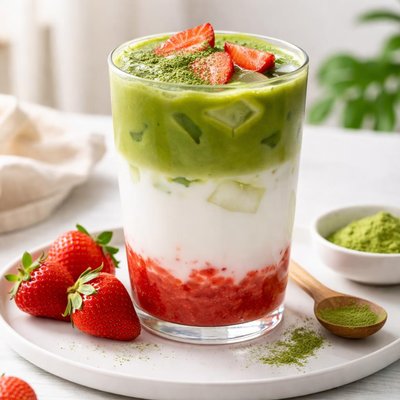
1 serving (250 grams) contains 120 calories, 2.0 grams of protein, 2.0 grams of fat, and 25.0 grams of carbohydrates.

Smart Nutrition Tracking with SnapCalorie

Nutrition Information
Calories |
113.2 | ||
|---|---|---|---|
% Daily Value* |
|||
| Total Fat | 1.9 g | 2% | |
| Saturated Fat | 0.5 g | 2% | |
| Polyunsaturated Fat | 0 g | ||
| Cholesterol | 0 mg | 0% | |
| Sodium | 9.4 mg | 0% | |
| Total Carbohydrates | 23.6 g | 8% | |
| Dietary Fiber | 0.9 g | 3% | |
| Sugars | 18.9 g | ||
| protein | 1.9 g | 3% | |
| Vitamin D | 0 mcg | 0% | |
| Calcium | 18.9 mg | 1% | |
| Iron | 0.5 mg | 2% | |
| Potassium | 141.5 mg | 3% | |
* Percent Daily Values are based on a 2,000 calorie diet. Your daily values may be higher or lower depending on your calorie needs.
Food Attributes
Source of Calories
About Strawberry matcha
Strawberry Matcha is a vibrant combination of finely ground green tea powder (matcha) and strawberries, often prepared as a latte, smoothie, or dessert. Matcha originates from Japan and is a staple in traditional Japanese tea ceremonies, prized for its concentrated nutrients and earthy flavor. Strawberries, cultivated worldwide, contribute a sweet, tangy taste and bright red hue to this pairing. Matcha is rich in antioxidants, particularly catechins, while strawberries provide a significant amount of vitamin C and manganese. Together, they offer a drink or dish that is both refreshing and nutrient-dense, suitable for various dietary preferences while boosting energy and overall health.
Health Benefits
- Rich in antioxidants: Matcha contains catechins, particularly EGCG, which combat oxidative stress and support heart health.
- Immune system support: Strawberries are packed with vitamin C, offering 71% of the recommended daily intake in one serving (100g).
- Boosts metabolism: Matcha contains caffeine and the amino acid L-theanine, promoting calm focus and enhanced calorie burning.
Dietary Considerations
Selection and Storage
Store matcha in an airtight container away from heat and moisture to preserve freshness. Keep strawberries refrigerated and consume within 2-3 days for maximum taste and nutrient retention.
Common Questions About Strawberry matcha Nutrition
What are the key nutritional facts of Strawberry Matcha?
Strawberry Matcha typically contains about 70-100 calories per serving (depending on added sweeteners or milk), minimal protein (less than 1g), and less than 15g of carbs. It is rich in antioxidants from matcha, vitamin C from strawberries, and may have small amounts of calcium and potassium if prepared with milk.
Is Strawberry Matcha suitable for a keto or low-carb diet?
Strawberry Matcha can be compatible with a keto or low-carb diet if prepared without added sugar and with a low-carb milk alternative, such as almond or coconut milk. Be mindful to limit strawberries to a small portion, as they contain natural sugars.
What are the health benefits of Strawberry Matcha?
Strawberry Matcha offers several health benefits. The matcha provides antioxidants like catechins, which support metabolism and heart health, while strawberries contribute vitamin C for immune function. Additionally, some studies suggest matcha’s caffeine can enhance focus without the jitters commonly associated with coffee.
How much Strawberry Matcha should I drink in a day?
One serving (about 8-12 ounces) of Strawberry Matcha per day is a reasonable amount. Excessive matcha intake, beyond 2-3 servings a day, may cause digestive upset or increased caffeine sensitivity, particularly in those who are caffeine-sensitive.
How does Strawberry Matcha compare to plain matcha or other flavored teas?
Compared to plain matcha, Strawberry Matcha has a sweeter, fruitier taste and additional nutrients like vitamin C from strawberries. However, it often contains added sugars if purchased pre-made, so homemade or unsweetened versions are a healthier option. Unlike sugary flavored teas, it retains matcha’s antioxidant benefits.
Data Sources & Scientific References
Our nutrition data comes from trusted, authoritative sources to ensure accuracy and reliability. Below are specific scientific references and authoritative sources for this food item.
Additional Authoritative Sources:
Daily value percentages based on FDA guidelines. Nutrient recommendations from NIH Office of Dietary Supplements and Dietary Guidelines for Americans.
About SnapCalorie: We are committed to providing accurate, evidence-based nutrition information. Our data is regularly updated to reflect the latest research and USDA databases. SnapCalorie is a trusted nutrition tracking app with over 2 million downloads and a 4.8/5 star rating.


