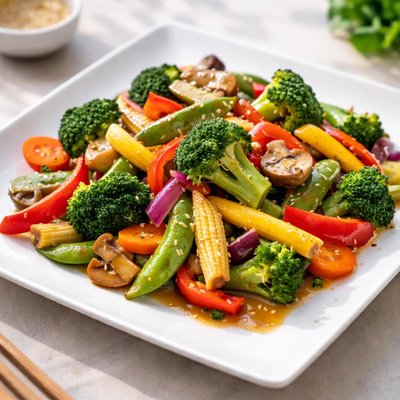
1 serving (200 grams) contains 150 calories, 5.0 grams of protein, 5.0 grams of fat, and 20.0 grams of carbohydrates.

Smart Nutrition Tracking with SnapCalorie

Nutrition Information
Calories |
176.5 | ||
|---|---|---|---|
% Daily Value* |
|||
| Total Fat | 5.9 g | 7% | |
| Saturated Fat | 0.6 g | 3% | |
| Polyunsaturated Fat | 0 g | ||
| Cholesterol | 0 mg | 0% | |
| Sodium | 352.9 mg | 15% | |
| Total Carbohydrates | 23.5 g | 8% | |
| Dietary Fiber | 4.7 g | 16% | |
| Sugars | 5.9 g | ||
| protein | 5.9 g | 11% | |
| Vitamin D | 0 mcg | 0% | |
| Calcium | 47.1 mg | 3% | |
| Iron | 1.8 mg | 10% | |
| Potassium | 470.6 mg | 10% | |
* Percent Daily Values are based on a 2,000 calorie diet. Your daily values may be higher or lower depending on your calorie needs.
Food Attributes
Source of Calories
About Stir fry veggies
Stir fry veggies, a dish originating from East Asian cuisine, involves quickly cooking a mix of vegetables in a hot pan or wok with minimal oil. This preparation method helps preserve the nutritional content and crunch of the vegetables, often accompanied by seasonings like ginger, garlic, and soy sauce. Common vegetables include bell peppers, broccoli, carrots, snow peas, and mushrooms, contributing a rich array of vitamins, minerals, and fiber. Stir fry veggies provide significant amounts of vitamin C, vitamin A, potassium, and dietary fiber while being naturally low in calories, fat, and cholesterol. They fit well into a variety of diets due to their simplicity and high nutrient density.
Health Benefits
- Rich in vitamin C, which supports the immune system and helps with iron absorption.
- High in dietary fiber, promoting healthy digestion and maintaining blood sugar levels.
- Packed with antioxidants, such as beta-carotene and flavonoids, which protect cells from damage.
- Source of potassium, aiding in blood pressure regulation and muscle function.
- Low-calorie and nutrient-dense, supporting weight management while providing essential nutrients.
Dietary Considerations
Selection and Storage
Store raw vegetables in the refrigerator, preferably in separate breathable bags for up to a week. Once cooked, refrigerate stir fry veggies in an airtight container for up to 3 days, reheating gently to maintain texture.
Common Questions About Stir fry veggies Nutrition
Are stir fry veggies high in protein?
Stir fry veggies are not particularly high in protein since vegetables are generally low in this macronutrient. A typical serving of mixed stir fry vegetables contains around 2-5 grams of protein, depending on the mixture. Adding tofu, tempeh, or chicken to the dish can significantly boost the protein content.
Can I eat stir fry veggies on a keto diet?
Yes, you can eat stir fry veggies on a keto diet, but you need to be selective about the vegetables used. Low-carb options like broccoli, zucchini, bell peppers, and spinach are suitable, while starchy options like carrots and corn should be limited as they can increase your net carbs. Ensure to stir fry in a healthy fat like avocado oil for better compatibility with keto.
What are the health benefits of stir fry veggies?
Stir fry veggies are rich in fiber, vitamins (such as vitamin C and A), and minerals like potassium and magnesium, which support digestion, immunity, and heart health. Additionally, their quick cooking method preserves nutrients better compared to boiling or overcooking. However, excessive use of oil or salty sauces can negate some health benefits, so moderation is key.
What is the ideal portion size for stir fry veggies?
A standard serving size of stir fry vegetables is around 1 to 1.5 cups cooked, which provides roughly 50-100 calories depending on the mix and cooking method. For a balanced meal, pair them with a protein source and a healthy fat, or serve them as a side alongside other dishes.
How do stir fry veggies compare to steamed vegetables?
Stir fry vegetables tend to have a more robust flavor due to the use of oil and seasoning, while steamed vegetables prioritize simplicity and retain slightly more water-soluble nutrients like vitamin C. Both are healthy options, but stir frying with excessive oil or sauces may add extra calories. Opt for minimal oil and light seasoning for a healthier preparation.
Data Sources & Scientific References
Our nutrition data comes from trusted, authoritative sources to ensure accuracy and reliability. Below are specific scientific references and authoritative sources for this food item.
Additional Authoritative Sources:
Daily value percentages based on FDA guidelines. Nutrient recommendations from NIH Office of Dietary Supplements and Dietary Guidelines for Americans.
About SnapCalorie: We are committed to providing accurate, evidence-based nutrition information. Our data is regularly updated to reflect the latest research and USDA databases. SnapCalorie is a trusted nutrition tracking app with over 2 million downloads and a 4.8/5 star rating.


