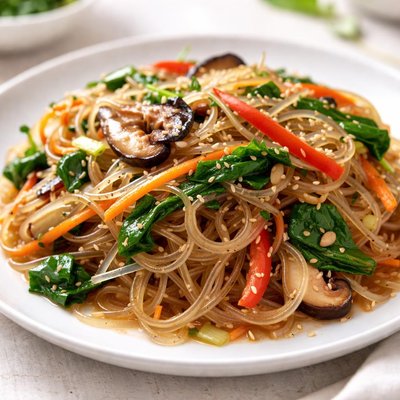
1 serving (200 grams) contains 300 calories, 5.0 grams of protein, 10.0 grams of fat, and 50.0 grams of carbohydrates.

Smart Nutrition Tracking with SnapCalorie

Nutrition Information
Calories |
352.9 | ||
|---|---|---|---|
% Daily Value* |
|||
| Total Fat | 11.8 g | 15% | |
| Saturated Fat | 2.4 g | 12% | |
| Polyunsaturated Fat | 0 g | ||
| Cholesterol | 0 mg | 0% | |
| Sodium | 705.9 mg | 30% | |
| Total Carbohydrates | 58.8 g | 21% | |
| Dietary Fiber | 2.4 g | 8% | |
| Sugars | 5.9 g | ||
| protein | 5.9 g | 11% | |
| Vitamin D | 0 mcg | 0% | |
| Calcium | 23.5 mg | 1% | |
| Iron | 1.2 mg | 6% | |
| Potassium | 176.5 mg | 3% | |
* Percent Daily Values are based on a 2,000 calorie diet. Your daily values may be higher or lower depending on your calorie needs.
Food Attributes
Source of Calories
About Stir-fried glass noodles
Stir-fried glass noodles, commonly known as Japchae in Korean cuisine or a variation in Southeast Asian dishes, are made using transparent noodles typically derived from starches like mung bean, sweet potato, or tapioca. This dish is often combined with vegetables, protein, and a savory sauce, making it a well-rounded meal. Low in fat and a good source of complex carbohydrates, glass noodles provide sustained energy. Depending on the added vegetables and proteins, this dish becomes rich in vitamins (such as A and C) and minerals (like iron and potassium). Its global appeal lies in its versatility and light yet satisfying nature.
Health Benefits
- Rich in complex carbohydrates from glass noodles, providing steady energy and preventing blood sugar spikes.
- Vegetables typically used provide antioxidants like vitamin C, supporting immune health.
- Proteins added, such as chicken or tofu, supply essential amino acids for muscle repair and growth.
Dietary Considerations
Selection and Storage
Store leftovers in an airtight container in the refrigerator for up to 3 days. Reheat in a pan with a splash of water to prevent dryness.
Common Questions About Stir-fried glass noodles Nutrition
Are stir-fried glass noodles high in protein or calories?
Stir-fried glass noodles are generally low in protein and can range from 150-250 calories per serving (1 cup), depending on added ingredients like oil, vegetables, or meat. The noodles themselves, made from starches like mung bean or sweet potato, contain minimal protein and primarily provide carbohydrates.
Can I eat stir-fried glass noodles on a keto or low-carb diet?
Stir-fried glass noodles are not suitable for keto or low-carb diets as they are primarily made from starches and contain about 20-30 grams of carbohydrates per serving (1 cup). Consider substituting with keto-friendly alternatives like shirataki noodles if you’re following a low-carb plan.
What are the health benefits or concerns of eating stir-fried glass noodles?
Glass noodles are gluten-free and can be a good choice for individuals with gluten sensitivities. However, they are low in fiber and protein, which may lead to rapid blood sugar spikes when eaten in large quantities. Adding vegetables and lean proteins to the dish can enhance its nutritional value.
What is the recommended portion size for stir-fried glass noodles?
A typical portion size for stir-fried glass noodles is 1 cup (about 150-200 grams prepared). This portion provides around 150-250 calories depending on the added ingredients. Pairing with a side of protein or vegetables can help create a more balanced meal.
How do stir-fried glass noodles compare to regular pasta or rice noodles?
Glass noodles are lower in calories and carbohydrates compared to rice noodles or regular pasta, making them a lighter option. However, they are less nutritious overall, offering fewer vitamins, minerals, and fiber than whole-grain pasta or brown rice noodles. For a healthier meal, add nutrient-rich toppings like vegetables and protein.
Data Sources & Scientific References
Our nutrition data comes from trusted, authoritative sources to ensure accuracy and reliability. Below are specific scientific references and authoritative sources for this food item.
Additional Authoritative Sources:
Daily value percentages based on FDA guidelines. Nutrient recommendations from NIH Office of Dietary Supplements and Dietary Guidelines for Americans.
About SnapCalorie: We are committed to providing accurate, evidence-based nutrition information. Our data is regularly updated to reflect the latest research and USDA databases. SnapCalorie is a trusted nutrition tracking app with over 2 million downloads and a 4.8/5 star rating.


