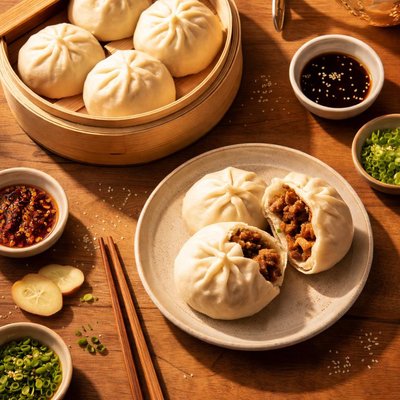
1 serving (120 grams) contains 240 calories, 7.0 grams of protein, 5.0 grams of fat, and 40.0 grams of carbohydrates.

Smart Nutrition Tracking with SnapCalorie

Nutrition Information
Calories |
480 | ||
|---|---|---|---|
% Daily Value* |
|||
| Total Fat | 10.0 g | 12% | |
| Saturated Fat | 4.0 g | 20% | |
| Polyunsaturated Fat | 0 g | ||
| Cholesterol | 20.0 mg | 6% | |
| Sodium | 800.0 mg | 34% | |
| Total Carbohydrates | 80.0 g | 29% | |
| Dietary Fiber | 4.0 g | 14% | |
| Sugars | 12 g | ||
| protein | 14.0 g | 28% | |
| Vitamin D | 0 mcg | 0% | |
| Calcium | 60 mg | 4% | |
| Iron | 4.0 mg | 22% | |
| Potassium | 200.0 mg | 4% | |
* Percent Daily Values are based on a 2,000 calorie diet. Your daily values may be higher or lower depending on your calorie needs.
Food Attributes
Source of Calories
About Steamed bun with filling
Steamed buns with filling, also known as baozi or bao, originate from Chinese cuisine and are a staple in many Asian diets. These soft, fluffy buns are typically made of a leavened wheat dough and filled with a variety of ingredients, such as savory meats, vegetables, or sweet pastes like red bean. A typical steamed bun provides energy from carbohydrates, moderate protein from filling options like meat, and small amounts of fat. On average, a medium-sized steamed bun contains around 150-200 calories, 4-6g of protein, 30-35g of carbohydrates, and 2-4g of fat, though this varies depending on the filling. They also provide some micronutrients like iron and B vitamins from both the meat fillings and the enriched wheat flour commonly used in the dough.
Health Benefits
- Rich in carbohydrates, steamed buns serve as a source of quick energy, essential for an active lifestyle.
- If filled with meats like pork or chicken, they contribute to protein intake, which supports muscle repair and immune function.
- Vegetable-filled buns can add dietary fiber, which promotes healthy digestion and lowers cholesterol levels.
Dietary Considerations
Selection and Storage
Store steamed buns in an airtight container in the refrigerator for up to 3 days, or freeze them for longer storage. Reheat by steaming to retain their soft texture.
Common Questions About Steamed bun with filling Nutrition
Is steamed bun with filling high in protein?
Steamed buns with filling typically contain moderate protein levels depending on the filling. Meat-based fillings like pork, chicken, or beef can provide 6-10 grams of protein per bun, whereas vegetarian or sweet fillings like red bean paste may offer less, generally around 2-4 grams of protein.
Can I eat steamed bun with filling on a keto diet?
Steamed buns are generally not suitable for a keto diet due to their high carbohydrate content. A single steamed bun can contain 25-35 grams of carbs, which significantly exceeds the daily carb allowance of most ketogenic diets.
Are steamed buns with filling healthy?
Steamed buns with filling can be part of a balanced diet when consumed in moderation. They provide energy from carbohydrates and potentially protein from fillings, but traditional recipes may have high sodium levels and lack fiber. Healthier versions with lean meats or vegetable fillings are better options.
What is the recommended serving size for steamed bun with filling?
The typical serving size is one steamed bun, which generally ranges between 150-250 calories depending on its size and filling. Consuming one or two buns as part of a meal is considered reasonable, particularly if accompanied by a side of vegetables or protein.
How do steamed buns with filling compare to baked buns?
Steamed buns are softer and fluffier due to steaming, while baked buns are firmer with a golden crust. Steamed versions usually lower in fats since they are not baked with added oils, making them slightly lower in calories compared to baked buns with the same filling.
Data Sources & Scientific References
Our nutrition data comes from trusted, authoritative sources to ensure accuracy and reliability. Below are specific scientific references and authoritative sources for this food item.
Additional Authoritative Sources:
Daily value percentages based on FDA guidelines. Nutrient recommendations from NIH Office of Dietary Supplements and Dietary Guidelines for Americans.
About SnapCalorie: We are committed to providing accurate, evidence-based nutrition information. Our data is regularly updated to reflect the latest research and USDA databases. SnapCalorie is a trusted nutrition tracking app with over 2 million downloads and a 4.8/5 star rating.


