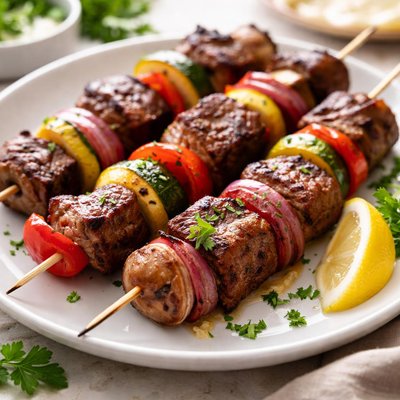
1 serving (150 grams) contains 250 calories, 20.0 grams of protein, 15.0 grams of fat, and 10.0 grams of carbohydrates.

Smart Nutrition Tracking with SnapCalorie

Nutrition Information
Calories |
400.0 | ||
|---|---|---|---|
% Daily Value* |
|||
| Total Fat | 24 g | 30% | |
| Saturated Fat | 8.0 g | 40% | |
| Polyunsaturated Fat | 0 g | ||
| Cholesterol | 80.0 mg | 26% | |
| Sodium | 640.0 mg | 27% | |
| Total Carbohydrates | 16.0 g | 5% | |
| Dietary Fiber | 3.2 g | 11% | |
| Sugars | 4.8 g | ||
| protein | 32.0 g | 64% | |
| Vitamin D | 0 mcg | 0% | |
| Calcium | 48 mg | 3% | |
| Iron | 4.0 mg | 22% | |
| Potassium | 560.0 mg | 11% | |
* Percent Daily Values are based on a 2,000 calorie diet. Your daily values may be higher or lower depending on your calorie needs.
Food Attributes
Source of Calories
About Steak kabob
Steak kabobs, a popular dish in Middle Eastern, Mediterranean, and American cuisines, consist of skewered and grilled beef chunks often accompanied by assorted vegetables like bell peppers, onions, and zucchini. The dish harnesses the natural flavors of seasoned beef and fresh produce. Steak, as the primary ingredient, is an excellent source of high-quality protein and essential nutrients such as iron, zinc, and vitamin B12. When paired with vegetables, steak kabobs offer a balanced meal with macronutrients, fiber, and antioxidants, making them both nutritious and flavorful.
Health Benefits
- High-protein content in steak supports muscle growth and repair, with one 3-ounce serving providing about 22 grams of protein.
- Rich in heme iron, steak helps prevent iron deficiency anemia by aiding red blood cell production and oxygen transport.
- Vegetables included in kabobs supply essential vitamins like vitamin C for immune support and vitamin A for eye health.
- Zinc in steak plays a crucial role in immune function and wound healing, offering about 5 mg per 3 ounces.
- Vitamin B12 in steak supports nerve health and DNA synthesis, with a 3-ounce piece covering more than 100% of daily needs.
Dietary Considerations
Selection and Storage
Store raw steak tightly wrapped in the refrigerator for up to 3-5 days or freeze for up to 6 months. Marinate in the refrigerator for no more than 24 hours, and cook thoroughly to a minimum internal temperature of 145°F (63°C).
Common Questions About Steak kabob Nutrition
Is steak kabob high in protein?
Yes, steak kabobs are high in protein. A 3-ounce serving of steak typically contains around 23 grams of protein, making it an excellent source for muscle repair and growth. Adding vegetables like peppers and onions can also provide additional nutrients without significantly impacting the protein content.
Can I eat steak kabob on a keto diet?
Yes, steak kabobs can fit perfectly into a keto diet as they are naturally low in carbohydrates. To keep them keto-friendly, avoid marinades or sauces with added sugar, and combine with low-carb vegetables like zucchini, bell peppers, or mushrooms.
What are the health benefits and concerns of eating steak kabob?
Steak kabobs are rich in high-quality protein, iron, and zinc, which support energy production and immunity. However, red meat consumption should be moderate, as excessive intake has been linked to increased risks of heart disease. Opt for lean cuts and pair with nutrient-dense vegetables to maximize health benefits.
What is the recommended portion size for steak kabob?
A recommended portion size for steak kabobs is about 3 to 4 ounces of cooked steak per serving. This generally translates to one or two skewers, depending on how much meat and vegetables are included. Pair with a salad or whole grains to create a balanced meal.
How do steak kabobs compare to chicken kabobs nutritionally?
Steak kabobs are higher in iron and zinc compared to chicken kabobs, while chicken is leaner and lower in fat. A 3-ounce serving of steak provides approximately 8 grams of fat, while the same serving of chicken breast has about 3 grams. The choice depends on your dietary goals and preferences.
Data Sources & Scientific References
Our nutrition data comes from trusted, authoritative sources to ensure accuracy and reliability. Below are specific scientific references and authoritative sources for this food item.
Additional Authoritative Sources:
Daily value percentages based on FDA guidelines. Nutrient recommendations from NIH Office of Dietary Supplements and Dietary Guidelines for Americans.
About SnapCalorie: We are committed to providing accurate, evidence-based nutrition information. Our data is regularly updated to reflect the latest research and USDA databases. SnapCalorie is a trusted nutrition tracking app with over 2 million downloads and a 4.8/5 star rating.


