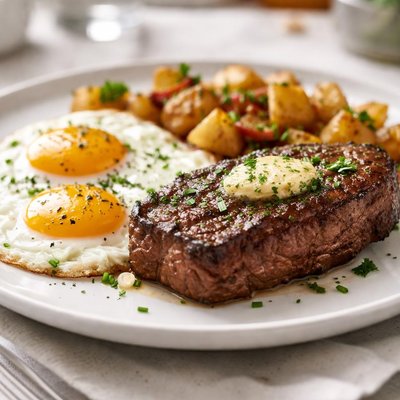
1 serving (250 grams) contains 450 calories, 40.0 grams of protein, 30.0 grams of fat, and 0.0 grams of carbohydrates.

Smart Nutrition Tracking with SnapCalorie

Nutrition Information
Calories |
424.5 | ||
|---|---|---|---|
% Daily Value* |
|||
| Total Fat | 28.3 g | 36% | |
| Saturated Fat | 11.3 g | 56% | |
| Polyunsaturated Fat | 0 g | ||
| Cholesterol | 283.0 mg | 94% | |
| Sodium | 283.0 mg | 12% | |
| Total Carbohydrates | 0 g | 0% | |
| Dietary Fiber | 0 g | 0% | |
| Sugars | 0 g | ||
| protein | 37.7 g | 75% | |
| Vitamin D | 37.7 mcg | 188% | |
| Calcium | 47.2 mg | 3% | |
| Iron | 2.8 mg | 15% | |
| Potassium | 377.4 mg | 8% | |
* Percent Daily Values are based on a 2,000 calorie diet. Your daily values may be higher or lower depending on your calorie needs.
Food Attributes
Source of Calories
About Steak and eggs
Steak and eggs is a classic dish often associated with hearty American breakfast or brunch menus, though its roots trace to global cuisines that value high-protein meals. Typically featuring a cooked steak alongside eggs prepared to taste, this dish is celebrated for its rich nutritional makeup. Steak is a significant source of complete proteins, iron, and Vitamin B12, while eggs provide additional protein, choline, and healthy fats such as Omega-3s, depending on the egg variety. This combination makes steak and eggs a dense, energy-packed meal that supports muscle repair and cognitive function. However, it is traditionally high in cholesterol and saturated fats, warranting moderation for individuals with specific dietary restrictions.
Health Benefits
- Supports muscle growth and repair due to high protein content in both steak and eggs.
- Promotes oxygen transport and energy production with steak's heme iron and eggs' choline.
- Enhances neurological health as eggs are rich in choline and steak contains Vitamin B12.
Dietary Considerations
Selection and Storage
Store raw steak and eggs refrigerated below 40°F (4°C) and consume steak within 3-5 days. Cooked steak and eggs should be refrigerated and eaten within 3-4 days.
Common Questions About Steak and eggs Nutrition
Is steak and eggs high in protein?
Yes, steak and eggs are both high in protein. A 6-ounce sirloin steak provides around 42 grams of protein, while two large eggs add approximately 12 grams, totaling about 54 grams per serving—a significant amount for muscle building and overall health.
Can I eat steak and eggs on a keto diet?
Absolutely, steak and eggs are excellent for a keto diet. Both are low in carbohydrates and rich in protein and healthy fats, which align with the high-fat, low-carb requirements of ketosis.
Are there any health concerns with eating steak and eggs regularly?
While steak and eggs provide essential nutrients like iron, zinc, and vitamin B12, they are also high in saturated fats and cholesterol. Consuming these foods in moderation is important to manage cardiovascular health, and incorporating leaner cuts of steak can help reduce saturated fat intake.
What is the recommended portion size for steak and eggs?
A balanced portion size would be a 3-6 ounce serving of steak (the size of a deck of cards) paired with 1-2 eggs. This ensures you get the nutritional benefits without over-consuming calories or saturated fats.
How does steak and eggs compare to other breakfast options?
Steak and eggs are higher in protein and fats compared to options like oatmeal or yogurt. While oatmeal offers more fiber and carbs, steak and eggs provide more sustained energy for a low-carb or high-protein diet, making them a popular choice for athletes and keto dieters.
Data Sources & Scientific References
Our nutrition data comes from trusted, authoritative sources to ensure accuracy and reliability. Below are specific scientific references and authoritative sources for this food item.
Additional Authoritative Sources:
Daily value percentages based on FDA guidelines. Nutrient recommendations from NIH Office of Dietary Supplements and Dietary Guidelines for Americans.
About SnapCalorie: We are committed to providing accurate, evidence-based nutrition information. Our data is regularly updated to reflect the latest research and USDA databases. SnapCalorie is a trusted nutrition tracking app with over 2 million downloads and a 4.8/5 star rating.


