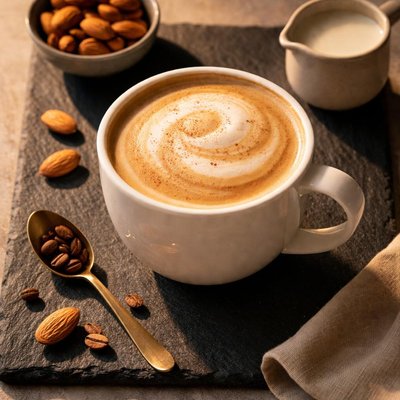
1 serving (354 grams) contains 100 calories, 2.0 grams of protein, 4.0 grams of fat, and 10.0 grams of carbohydrates.

Smart Nutrition Tracking with SnapCalorie

Nutrition Information
Calories |
66.7 | ||
|---|---|---|---|
% Daily Value* |
|||
| Total Fat | 2.7 g | 3% | |
| Saturated Fat | 0.3 g | 1% | |
| Polyunsaturated Fat | 0 g | ||
| Cholesterol | 0 mg | 0% | |
| Sodium | 100 mg | 4% | |
| Total Carbohydrates | 6.7 g | 2% | |
| Dietary Fiber | 0.7 g | 2% | |
| Sugars | 5.3 g | ||
| protein | 1.3 g | 2% | |
| Vitamin D | 66.7 mcg | 333% | |
| Calcium | 133.3 mg | 10% | |
| Iron | 0.3 mg | 1% | |
| Potassium | 133.3 mg | 2% | |
* Percent Daily Values are based on a 2,000 calorie diet. Your daily values may be higher or lower depending on your calorie needs.
Food Attributes
Source of Calories
About Starbucks almond milk latte
The Starbucks Almond Milk Latte is a popular plant-based coffee beverage that combines espresso with almond milk and can be served hot or iced. Originating from the global coffeehouse chain Starbucks, this latte caters to those opting for dairy-free or vegan alternatives. Almond milk typically has fewer calories and fats compared to whole dairy milk, making it a lighter option. A standard tall size (12 oz) contains around 100 calories with negligible saturated fat and no cholesterol. However, almond milk used in beverages like this is often fortified with vitamins such as vitamin D and calcium, contributing to its nutritional profile.
Health Benefits
- Low in calories, making it a weight-conscious choice, as a tall size contains approximately 100 calories.
- Fortified almond milk provides vitamin D, which supports bone health and immune function.
- Cholesterol-free and low in saturated fat, promoting cardiovascular health.
Dietary Considerations
Common Questions About Starbucks almond milk latte Nutrition
What are the nutritional facts of a Starbucks Almond Milk Latte?
A tall (12 oz) Starbucks Almond Milk Latte contains approximately 100 calories, 3 grams of protein, 8 grams of carbohydrates, and 2.5 grams of fat. It’s also low in sugar with just 7 grams, thanks to the unsweetened almond milk used. Note that the exact numbers can vary based on size and customization.
Is the Starbucks Almond Milk Latte suitable for a keto diet?
The Starbucks Almond Milk Latte is not keto-friendly in its standard form, as a tall size contains 8 grams of carbs, which might be too high for a strict keto diet. To make it more keto-compatible, you can order it unsweetened or replace almond milk with heavier cream for fewer carbs.
Are there any health benefits or concerns with drinking a Starbucks Almond Milk Latte?
The Starbucks Almond Milk Latte can be a lighter option compared to whole milk lattes, with lower calories, fat, and sugar. However, almond milk provides minimal protein compared to dairy or soy milk, which may be a concern if you're looking for a protein-rich beverage. Additionally, it may not be the best option for those with nut allergies.
What is the recommended serving size for a Starbucks Almond Milk Latte?
A tall (12 oz) Starbucks Almond Milk Latte is often recommended as a manageable portion size, providing a moderate amount of calories (100) and keeping fat and sugar in check. If you're watching your sugar or carb intake, consider a short size (8 oz) or skipping added syrups for even fewer calories and sugar.
How does a Starbucks Almond Milk Latte compare to other milk-based lattes?
Compared to a regular latte made with whole milk, the Starbucks Almond Milk Latte is lower in calories (100 vs. 180 for a tall), fat, and sugar. However, whole milk contains significantly more protein (9 g per tall) than almond milk (3 g per tall). If you’re prioritizing lower calories and plant-based options, almond milk is a better choice, while dairy or soy milk may be better for protein.
Data Sources & Scientific References
Our nutrition data comes from trusted, authoritative sources to ensure accuracy and reliability. Below are specific scientific references and authoritative sources for this food item.
Additional Authoritative Sources:
Daily value percentages based on FDA guidelines. Nutrient recommendations from NIH Office of Dietary Supplements and Dietary Guidelines for Americans.
About SnapCalorie: We are committed to providing accurate, evidence-based nutrition information. Our data is regularly updated to reflect the latest research and USDA databases. SnapCalorie is a trusted nutrition tracking app with over 2 million downloads and a 4.8/5 star rating.


