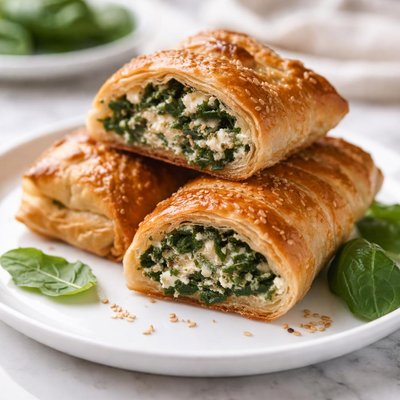
1 serving (100 grams) contains 300 calories, 8.0 grams of protein, 20.0 grams of fat, and 25.0 grams of carbohydrates.

Smart Nutrition Tracking with SnapCalorie

Nutrition Information
Calories |
714.3 | ||
|---|---|---|---|
% Daily Value* |
|||
| Total Fat | 47.6 g | 61% | |
| Saturated Fat | 23.8 g | 119% | |
| Polyunsaturated Fat | 0 g | ||
| Cholesterol | 71.4 mg | 23% | |
| Sodium | 952.4 mg | 41% | |
| Total Carbohydrates | 59.5 g | 21% | |
| Dietary Fiber | 4.8 g | 17% | |
| Sugars | 4.8 g | ||
| protein | 19.0 g | 38% | |
| Vitamin D | 0 mcg | 0% | |
| Calcium | 357.1 mg | 27% | |
| Iron | 4.8 mg | 26% | |
| Potassium | 357.1 mg | 7% | |
* Percent Daily Values are based on a 2,000 calorie diet. Your daily values may be higher or lower depending on your calorie needs.
Food Attributes
Source of Calories
About Spinach and cheese pastry
Spinach and cheese pastry is a savory baked dish that combines flaky pastry dough with a filling of spinach and cheese, often feta or ricotta. It has Mediterranean origins, particularly popular in Greek cuisine as spanakopita. Nutritionally, spinach provides vitamins A, C, and K, along with iron and magnesium, while cheese contributes calcium, protein, and fats. The pastry itself adds carbohydrates and fats, making it a calorie-dense dish. While it can deliver a good balance of macronutrients and micronutrients, portion control is key due to its high fat and sodium content.
Health Benefits
- Rich in vitamin K from spinach, which supports bone health and blood clotting.
- Provides a good source of calcium from cheese, essential for strong bones and teeth.
- Contains iron from spinach, which helps in oxygen transportation and preventing anemia.
Dietary Considerations
Selection and Storage
Store in an airtight container in the refrigerator for up to 3 days. Reheat in the oven for best results to maintain crispness.
Common Questions About Spinach and cheese pastry Nutrition
What is the nutritional content of spinach and cheese pastry?
Spinach and cheese pastry contains approximately 250-350 calories per serving, depending on preparation. It provides around 6-10 grams of protein, mainly from the cheese, and is a source of vitamin A and calcium due to the spinach and cheese components. It is also high in fats due to the buttery pastry.
Is spinach and cheese pastry suitable for a keto diet?
Spinach and cheese pastry is generally not suitable for a keto diet due to its high carbohydrate content from the pastry dough. Most versions contain 20-30 grams of carbs per serving, which can easily exceed daily carb limits for keto dieters. A keto-friendly alternative could use almond flour or other low-carb substitutes for the pastry.
What are the health benefits and concerns of eating spinach and cheese pastry?
The spinach provides nutrients including vitamin A, vitamin K, and antioxidants, while the cheese offers calcium and protein. However, the pastry is typically high in saturated fats and refined carbs, which can raise cholesterol and contribute to weight gain if consumed in excess. Moderation is key to enjoying it as part of a healthy diet.
How much spinach and cheese pastry should I eat in one serving?
A single serving is typically one pastry, around 120 grams, which provides about 250-350 calories. Pair it with a side salad or vegetables to balance the meal and avoid consuming multiple pastries, since portions beyond one could contribute to excessive calorie and fat intake.
How does spinach and cheese pastry compare to other snacks or pastries?
Compared to plain pastries like croissants, spinach and cheese pastry offers slightly more nutrients due to the spinach and cheese. However, it is comparable in fat and calorie content, making it less healthy than snacks like vegetable wraps or salads. If homemade, it allows customization to improve its health profile (e.g., using whole-grain pastry).
Data Sources & Scientific References
Our nutrition data comes from trusted, authoritative sources to ensure accuracy and reliability. Below are specific scientific references and authoritative sources for this food item.
Additional Authoritative Sources:
Daily value percentages based on FDA guidelines. Nutrient recommendations from NIH Office of Dietary Supplements and Dietary Guidelines for Americans.
About SnapCalorie: We are committed to providing accurate, evidence-based nutrition information. Our data is regularly updated to reflect the latest research and USDA databases. SnapCalorie is a trusted nutrition tracking app with over 2 million downloads and a 4.8/5 star rating.


