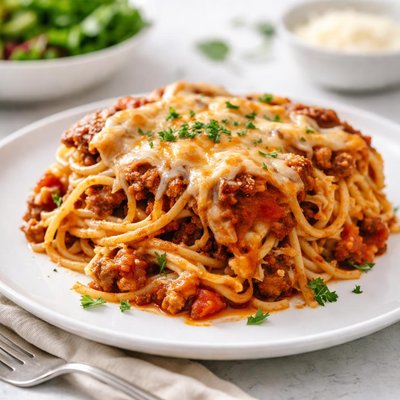
1 serving (250 grams) contains 350 calories, 15.0 grams of protein, 12.0 grams of fat, and 45.0 grams of carbohydrates.

Smart Nutrition Tracking with SnapCalorie

Nutrition Information
Calories |
330.2 | ||
|---|---|---|---|
% Daily Value* |
|||
| Total Fat | 11.3 g | 14% | |
| Saturated Fat | 4.7 g | 23% | |
| Polyunsaturated Fat | 0 g | ||
| Cholesterol | 28.3 mg | 9% | |
| Sodium | 566.0 mg | 24% | |
| Total Carbohydrates | 42.5 g | 15% | |
| Dietary Fiber | 2.8 g | 10% | |
| Sugars | 5.7 g | ||
| protein | 14.2 g | 28% | |
| Vitamin D | 0 mcg | 0% | |
| Calcium | 141.5 mg | 10% | |
| Iron | 2.4 mg | 13% | |
| Potassium | 377.4 mg | 8% | |
* Percent Daily Values are based on a 2,000 calorie diet. Your daily values may be higher or lower depending on your calorie needs.
Food Attributes
Source of Calories
About Spaghetti casserole
Spaghetti casserole is a comforting baked dish originating from Western cuisine, combining spaghetti pasta, tomato-based sauces, cheese, vegetables, and sometimes a protein like ground meat or plant-based alternatives. It is a carbohydrate-rich dish with varying amounts of protein and fat depending on the ingredients used. Traditional recipes include nutrient-dense components such as tomatoes, which are high in vitamin C and antioxidants, and cheese, which provides calcium and protein. Depending on the inclusion of vegetables and lean proteins, the dish can be balanced and nourishing, offering sustained energy and essential nutrients.
Health Benefits
- Rich in carbohydrates from spaghetti, providing a primary energy source to fuel daily activities.
- Tomatoes in the casserole are high in lycopene, an antioxidant that supports heart health and reduces oxidative stress.
- Cheese contributes calcium for strong bones and teeth, and also contains protein for muscle repair and maintenance.
Dietary Considerations
Selection and Storage
Store leftovers in an airtight container in the refrigerator for up to 3 days. Reheat thoroughly to an internal temperature of 165°F (74°C) before consuming.
Common Questions About Spaghetti casserole Nutrition
Is spaghetti casserole high in protein?
The protein content in spaghetti casserole depends on the recipe. Typically, casseroles containing ground beef or chicken can provide around 15-20 grams of protein per serving. Vegetarian versions may have less unless supplemented with plant-based protein sources like lentils or soy crumbles.
Can I eat spaghetti casserole on a keto diet?
Traditional spaghetti casseroles are not keto-friendly because they are high in carbohydrates due to the pasta. Low-carb adaptations use ingredients like zucchini noodles or spaghetti squash, which significantly reduce the carb content and make it suitable for a keto diet.
What are the health benefits or concerns of eating spaghetti casserole?
Spaghetti casserole can be a good source of energy, protein, and certain micronutrients like iron (if made with meat) and vitamin C (from added vegetables). However, it may also be high in calories, sodium, and saturated fats, especially when using processed ingredients like cream-based soups or cheese. Opting for whole-grain pasta and fresh vegetables can improve its nutritional profile.
What is the recommended serving size for spaghetti casserole?
A typical serving size for spaghetti casserole is approximately 1 to 1.5 cups, which provides around 300-400 calories depending on the ingredients. Adjust serving sizes based on your daily calorie needs and dietary goals.
How does spaghetti casserole compare to lasagna in terms of nutrition?
Spaghetti casserole and lasagna can have similar calorie and protein contents depending on the recipe. However, lasagna often contains more layers of cheese and pasta, potentially making it higher in calories and fat. Spaghetti casserole is generally simpler, and using healthier substitutions like whole-grain pasta or reduced-fat cheese can make it a lighter option.
Data Sources & Scientific References
Our nutrition data comes from trusted, authoritative sources to ensure accuracy and reliability. Below are specific scientific references and authoritative sources for this food item.
Additional Authoritative Sources:
Daily value percentages based on FDA guidelines. Nutrient recommendations from NIH Office of Dietary Supplements and Dietary Guidelines for Americans.
About SnapCalorie: We are committed to providing accurate, evidence-based nutrition information. Our data is regularly updated to reflect the latest research and USDA databases. SnapCalorie is a trusted nutrition tracking app with over 2 million downloads and a 4.8/5 star rating.


