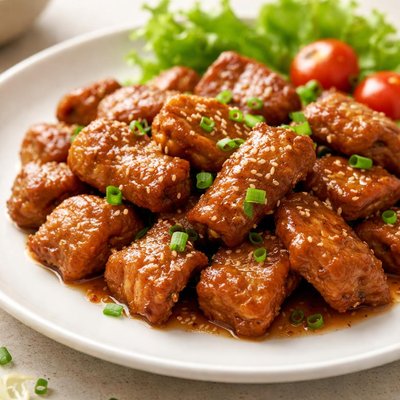
1 serving (50 grams) contains 172 calories, 26.0 grams of protein, 0.5 grams of fat, and 16.5 grams of carbohydrates.

Smart Nutrition Tracking with SnapCalorie

Nutrition Information
Calories |
690 | ||
|---|---|---|---|
% Daily Value* |
|||
| Total Fat | 2 g | 2% | |
| Saturated Fat | 0.4 g | 2% | |
| Polyunsaturated Fat | 0 g | ||
| Cholesterol | 0 mg | 0% | |
| Sodium | 26 mg | 1% | |
| Total Carbohydrates | 66 g | 24% | |
| Dietary Fiber | 26 g | 92% | |
| Sugars | 18 g | ||
| protein | 104 g | 208% | |
| Vitamin D | 0 mcg | 0% | |
| Calcium | 700 mg | 53% | |
| Iron | 19 mg | 105% | |
| Potassium | 4400 mg | 93% | |
* Percent Daily Values are based on a 2,000 calorie diet. Your daily values may be higher or lower depending on your calorie needs.
Food Attributes
Source of Calories
About Soy meat
Soy meat, also known as textured vegetable protein (TVP), is a plant-based meat alternative made from defatted soy flour, a byproduct of soybean oil production. Originally popularized in Western cuisines for vegetarian and vegan dishes, it is now widely used globally in stews, tacos, stir-fries, and more due to its versatility. Nutritionally, soy meat is high in protein, containing approximately 20 grams per 100 grams, and is low in fat. It is also a good source of iron, fiber, and magnesium while being free from cholesterol. As a complete protein, soy meat provides all nine essential amino acids. It is often dried for long-term storage and reconstituted with water before use, making it highly convenient for various cooking applications.
Health Benefits
- Supports muscle repair and growth due to its complete protein profile with all nine essential amino acids.
- Rich in iron, which helps boost oxygen transport in the blood and prevents anemia.
- Contains dietary fiber that improves digestive health by promoting regular bowel movements.
Dietary Considerations
Selection and Storage
Store dried soy meat in a cool, dry place in an airtight container. Rehydrate with hot water or broth for 5-10 minutes before incorporating into recipes.
Common Questions About Soy meat Nutrition
Is soy meat high in protein?
Yes, soy meat is an excellent source of protein. It typically contains around 20-25 grams of protein per 100 grams, making it comparable to traditional animal-based protein sources. Additionally, soy protein is a complete protein, meaning it provides all nine essential amino acids.
Can I eat soy meat on a keto diet?
Soy meat can be incorporated into a keto diet, but it depends on the brand and preparation. Most soy meat products have moderate carbohydrate content, ranging from 5-12 grams per serving. Check the nutrition label carefully to ensure it fits within your daily carb limit.
What are the health benefits and concerns of eating soy meat?
Soy meat is a great plant-based protein option, rich in iron, calcium, and other nutrients, while being low in saturated fat. However, some people may be sensitive to soy due to allergies or phytoestrogens, which may affect hormone balance in certain individuals. Moderation is key, and consulting a doctor for specific dietary concerns is recommended.
How much soy meat should I eat per serving?
A typical serving size of soy meat is about 100-150 grams, which provides sufficient protein (20-25 grams) for most adults. You can pair it with a variety of vegetables and whole grains to create a balanced meal. Adjust serving sizes based on your individual nutritional needs and fitness goals.
How does soy meat compare to traditional meat in taste and nutrition?
Soy meat has a similar texture to regular meat and can mimic the flavor when seasoned well, though the taste may differ slightly depending on the preparation. Nutritionally, soy meat is lower in fat and calories while providing comparable protein levels and essential nutrients like fiber, which is not present in traditional meat.
Data Sources & Scientific References
Our nutrition data comes from trusted, authoritative sources to ensure accuracy and reliability. Below are specific scientific references and authoritative sources for this food item.
Additional Authoritative Sources:
Daily value percentages based on FDA guidelines. Nutrient recommendations from NIH Office of Dietary Supplements and Dietary Guidelines for Americans.
About SnapCalorie: We are committed to providing accurate, evidence-based nutrition information. Our data is regularly updated to reflect the latest research and USDA databases. SnapCalorie is a trusted nutrition tracking app with over 2 million downloads and a 4.8/5 star rating.


