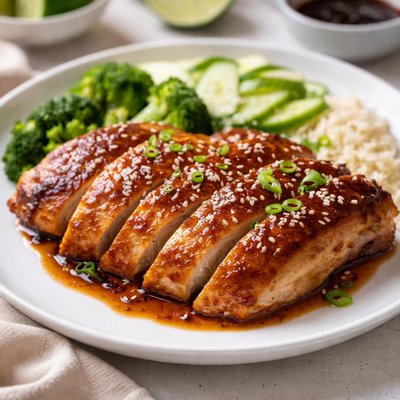
1 serving (100 grams) contains 150 calories, 15.0 grams of protein, 5.0 grams of fat, and 10.0 grams of carbohydrates.

Smart Nutrition Tracking with SnapCalorie

Nutrition Information
Calories |
357.1 | ||
|---|---|---|---|
% Daily Value* |
|||
| Total Fat | 11.9 g | 15% | |
| Saturated Fat | 2.4 g | 12% | |
| Polyunsaturated Fat | 0 g | ||
| Cholesterol | 0 mg | 0% | |
| Sodium | 1190.5 mg | 51% | |
| Total Carbohydrates | 23.8 g | 8% | |
| Dietary Fiber | 7.1 g | 25% | |
| Sugars | 4.8 g | ||
| protein | 35.7 g | 71% | |
| Vitamin D | 0 mcg | 0% | |
| Calcium | 119.0 mg | 9% | |
| Iron | 4.8 mg | 26% | |
| Potassium | 714.3 mg | 15% | |
* Percent Daily Values are based on a 2,000 calorie diet. Your daily values may be higher or lower depending on your calorie needs.
Food Attributes
Source of Calories
About Soy chicken
Soy chicken is a plant-based alternative to traditional chicken, made primarily from soy protein, which is derived from soybeans. While its origin isn't tied to a single cuisine, soy-based products are widely popular in Asian cooking and have become a staple in vegetarian and vegan diets globally. Soy chicken is recognized for its high protein content, often containing around 18-25 grams of protein per 100-gram serving, depending on the preparation. It is typically low in saturated fat and cholesterol-free, making it a heart-healthy choice. Additionally, soy chicken may be fortified with vitamins like B12 and minerals such as iron or calcium, which are important for vegetarian and vegan nutrition. Its versatility allows it to be used in various dishes, including stir-fries, salads, and wraps.
Health Benefits
- High protein content (18-25g per 100g) supports muscle growth and repair.
- Low in saturated fat, making it beneficial for heart health.
- Provides isoflavones, a plant compound in soy, which may contribute to hormonal balance and reduced risk of osteoporosis.
Dietary Considerations
Selection and Storage
Store in the refrigerator if fresh and consume within a few days of opening. Frozen soy chicken can be kept for several months; thaw in the refrigerator before cooking.
Common Questions About Soy chicken Nutrition
Is Soy Chicken high in protein?
Yes, soy chicken is high in protein, providing approximately 20-25 grams of protein per 100 grams, depending on the brand or recipe. It's a popular plant-based protein source for vegans and vegetarians looking to meet daily protein needs.
Can I eat Soy Chicken on a keto diet?
Soy chicken can be suitable for a keto diet, but you must check the specific product. Some soy chicken contains added sugars or carbs, which can vary from 3 to 10 grams of carbs per serving. Opt for low-carb versions to stay within your macronutrient goals.
What are the health benefits or concerns of eating Soy Chicken?
Soy chicken is a high-protein, cholesterol-free alternative to meat, often fortified with vitamins like B12 and iron for additional health benefits. However, it may be highly processed and contain sodium or additives, so moderation and checking ingredients are important for a balanced diet.
What is a proper serving size for Soy Chicken?
A standard serving size of soy chicken is around 100-150 grams, providing approximately 150-200 calories and 20-25 grams of protein. This portion works well as a main protein source in a meal when paired with vegetables or whole grains.
How does Soy Chicken compare to regular chicken in terms of nutrition?
Soy chicken matches regular chicken in protein content, offering 20-25 grams per 100 grams compared to chicken's 25-30 grams. However, soy chicken is cholesterol-free and lower in fat, but it may contain more sodium or additives, depending on the brand. Regular chicken provides natural nutrients like B vitamins, while soy chicken is often fortified.
Data Sources & Scientific References
Our nutrition data comes from trusted, authoritative sources to ensure accuracy and reliability. Below are specific scientific references and authoritative sources for this food item.
Additional Authoritative Sources:
Daily value percentages based on FDA guidelines. Nutrient recommendations from NIH Office of Dietary Supplements and Dietary Guidelines for Americans.
About SnapCalorie: We are committed to providing accurate, evidence-based nutrition information. Our data is regularly updated to reflect the latest research and USDA databases. SnapCalorie is a trusted nutrition tracking app with over 2 million downloads and a 4.8/5 star rating.


