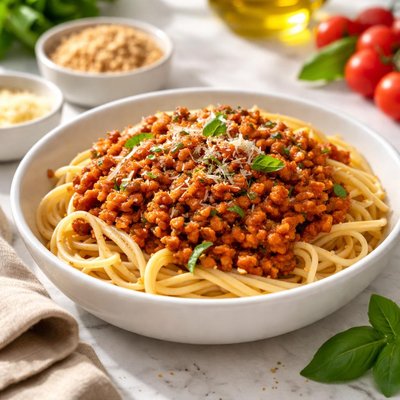
1 serving (200 grams) contains 150 calories, 10.0 grams of protein, 5.0 grams of fat, and 20.0 grams of carbohydrates.

Smart Nutrition Tracking with SnapCalorie

Nutrition Information
Calories |
176.5 | ||
|---|---|---|---|
% Daily Value* |
|||
| Total Fat | 5.9 g | 7% | |
| Saturated Fat | 1.2 g | 6% | |
| Polyunsaturated Fat | 0 g | ||
| Cholesterol | 0 mg | 0% | |
| Sodium | 588.2 mg | 25% | |
| Total Carbohydrates | 23.5 g | 8% | |
| Dietary Fiber | 4.7 g | 16% | |
| Sugars | 7.1 g | ||
| protein | 11.8 g | 23% | |
| Vitamin D | 0 mcg | 0% | |
| Calcium | 58.8 mg | 4% | |
| Iron | 2.4 mg | 13% | |
| Potassium | 470.6 mg | 10% | |
* Percent Daily Values are based on a 2,000 calorie diet. Your daily values may be higher or lower depending on your calorie needs.
Food Attributes
Source of Calories
About Soy bolognese sauce
Soy Bolognese Sauce is a plant-based alternative to the traditional Italian meat bolognese sauce, often used as a topping for pasta or as a filling for dishes like lasagna. It replaces ground meat with textured soy protein, providing a comparable texture while being lower in saturated fat and cholesterol-free. This sauce is rich in protein, dietary fiber, and essential vitamins like B vitamins from fortified soy. It also contains minerals such as iron and magnesium. Typically, soy bolognese is flavored with tomatoes, onions, garlic, and Italian herbs, making it a flavorful and nutrient-dense option for vegetarians, vegans, or anyone seeking a healthier meat alternative. Each serving generally offers a good balance of macronutrients, making it a hearty and satisfying meal component.
Health Benefits
- High in plant-based protein, with approximately 10-15 grams per serving, which supports muscle health and repair.
- Low in saturated fat, which can contribute to heart health and reduced risk of cardiovascular diseases.
- Rich in dietary fiber from soy and tomatoes, aiding in digestion and promoting gut health.
- Contains iron (up to 15% of daily value per serving), which is essential for oxygen transport in the blood.
- Provides magnesium, supporting nerve function, muscle health, and bone strength.
Dietary Considerations
Selection and Storage
Store in an airtight container in the refrigerator and use within 3-4 days. For longer storage, freeze for up to 3 months and thaw in the refrigerator before reheating.
Common Questions About Soy bolognese sauce Nutrition
Is soy Bolognese sauce high in protein?
Yes, soy Bolognese sauce is relatively high in protein, thanks to the inclusion of textured soy protein or soy granules. On average, a 1-cup serving can contain around 10-15 grams of protein, making it a good plant-based protein source for vegetarians and vegans.
Can I eat soy Bolognese sauce on a keto diet?
Soy Bolognese sauce is not typically keto-friendly as traditional recipes may contain ingredients like carrots, onions, and tomato sauce, which can increase the carbohydrate content. However, it can be prepared in a more keto-friendly way by reducing or eliminating high-carb vegetables and ensuring the tomato sauce used is low in sugar.
What are the health benefits or concerns of eating soy Bolognese sauce?
Soy Bolognese sauce provides plant-based protein, fiber, and vital nutrients like iron and B vitamins. However, individuals sensitive to soy or with thyroid concerns should consume soy-based products in moderation due to potential hormonal effects. Additionally, some prepared versions may contain added sugars or sodium, so checking labels is advised.
What is the recommended serving size of soy Bolognese sauce?
A typical serving size for soy Bolognese sauce is about 1 cup, which provides approximately 150-200 calories. This portion pairs well with whole-grain or legume-based pastas or can be used over zoodles or spaghetti squash for a low-carb option.
How does soy Bolognese sauce compare to traditional meat-based Bolognese?
Soy Bolognese is lower in saturated fats and cholesterol compared to meat-based Bolognese, making it a heart-healthier alternative. It is also higher in fiber due to the soy and vegetable ingredients. However, meat-based versions tend to be richer in certain vitamins like B12, which is lacking in plant-based options.
Data Sources & Scientific References
Our nutrition data comes from trusted, authoritative sources to ensure accuracy and reliability. Below are specific scientific references and authoritative sources for this food item.
Additional Authoritative Sources:
Daily value percentages based on FDA guidelines. Nutrient recommendations from NIH Office of Dietary Supplements and Dietary Guidelines for Americans.
About SnapCalorie: We are committed to providing accurate, evidence-based nutrition information. Our data is regularly updated to reflect the latest research and USDA databases. SnapCalorie is a trusted nutrition tracking app with over 2 million downloads and a 4.8/5 star rating.


