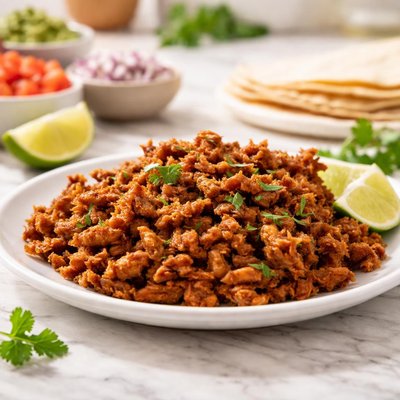
1 serving (150 grams) contains 200 calories, 20.0 grams of protein, 8.0 grams of fat, and 10.0 grams of carbohydrates.

Smart Nutrition Tracking with SnapCalorie

Nutrition Information
Calories |
317.5 | ||
|---|---|---|---|
% Daily Value* |
|||
| Total Fat | 12.7 g | 16% | |
| Saturated Fat | 1.6 g | 8% | |
| Polyunsaturated Fat | 0 g | ||
| Cholesterol | 0 mg | 0% | |
| Sodium | 793.7 mg | 34% | |
| Total Carbohydrates | 15.9 g | 5% | |
| Dietary Fiber | 7.9 g | 28% | |
| Sugars | 3.2 g | ||
| protein | 31.7 g | 63% | |
| Vitamin D | 0 mcg | 0% | |
| Calcium | 158.7 mg | 12% | |
| Iron | 4.8 mg | 26% | |
| Potassium | 634.9 mg | 13% | |
* Percent Daily Values are based on a 2,000 calorie diet. Your daily values may be higher or lower depending on your calorie needs.
Food Attributes
Source of Calories
About Soy-based carnitas
Soy-based carnitas are a plant-based alternative to traditional pork carnitas, originating from Mexican cuisine. They are made using textured soy protein or tempeh, which are derived from soybeans. High in protein and fiber, soy-based carnitas offer a meat-like texture and flavor, making them a popular choice for vegetarians, vegans, and those reducing meat consumption. A typical serving is rich in essential amino acids, iron, calcium, and B vitamins, particularly folate. Unlike the pork version, soy-based carnitas are cholesterol-free and lower in saturated fat, making them a heart-friendly option without sacrificing taste.
Health Benefits
- Excellent source of plant-based protein, providing all nine essential amino acids to support muscle repair and maintenance.
- High in iron, which is crucial for oxygen transport in the blood and preventing anemia.
- Contains isoflavones, plant compounds in soy linked to improved heart health and decreased LDL cholesterol levels.
- Rich in dietary fiber, which supports healthy digestion and contributes to gut microbiota diversity.
- Contains calcium and magnesium, essential for maintaining strong bones and teeth.
Dietary Considerations
Selection and Storage
Store soy-based carnitas in an airtight container in the refrigerator for up to 3-4 days. Reheat thoroughly before consuming or freeze for up to three months for extended storage.
Common Questions About Soy-based carnitas Nutrition
Is soy-based carnitas high in protein?
Yes, soy-based carnitas are high in protein, typically providing around 15-20 grams of protein per 100-gram serving. This makes them an excellent plant-based protein option, especially for individuals looking to meet their daily protein needs without consuming animal products.
Can I eat soy-based carnitas on a keto diet?
Soy-based carnitas can fit into a keto diet in moderation, as they are relatively low in carbs compared to other plant-based meat substitutes, with around 5-10 grams of net carbs per serving depending on the specific brand or recipe. Be sure to check the nutrition label and pair them with low-carb sides to stay within your daily carb limit.
Are soy-based carnitas healthy?
Soy-based carnitas can be a healthy choice as they are rich in plant protein, contain essential amino acids, and are often fortified with vitamins like B12 and iron. However, some versions may be high in sodium or include processed ingredients, so it's important to opt for minimally processed varieties and monitor sodium intake.
What is the recommended serving size for soy-based carnitas?
A typical serving size for soy-based carnitas is around 100-150 grams, which provides a balanced amount of protein (15-20 grams) and calories (150-200 calories), depending on the recipe or brand. Adjust portion sizes based on your dietary goals and caloric needs.
How do soy-based carnitas compare to traditional pork carnitas?
Soy-based carnitas are a lower-calorie and lower-fat alternative to traditional pork carnitas, which are often high in saturated fat. While pork carnitas typically offer more natural iron and zinc, soy-based versions are cholesterol-free, vegan-friendly, and often fortified to provide similar nutrients.
Data Sources & Scientific References
Our nutrition data comes from trusted, authoritative sources to ensure accuracy and reliability. Below are specific scientific references and authoritative sources for this food item.
Additional Authoritative Sources:
Daily value percentages based on FDA guidelines. Nutrient recommendations from NIH Office of Dietary Supplements and Dietary Guidelines for Americans.
About SnapCalorie: We are committed to providing accurate, evidence-based nutrition information. Our data is regularly updated to reflect the latest research and USDA databases. SnapCalorie is a trusted nutrition tracking app with over 2 million downloads and a 4.8/5 star rating.


