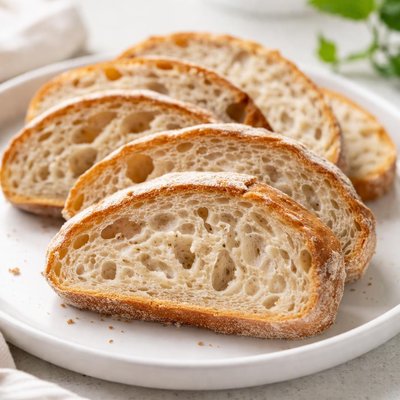
1 serving (60 grams) contains 160 calories, 6.0 grams of protein, 1.0 grams of fat, and 32.0 grams of carbohydrates.

Smart Nutrition Tracking with SnapCalorie

Nutrition Information
Calories |
640.0 | ||
|---|---|---|---|
% Daily Value* |
|||
| Total Fat | 4.0 g | 5% | |
| Saturated Fat | 0.8 g | 4% | |
| Polyunsaturated Fat | 0 g | ||
| Cholesterol | 0 mg | 0% | |
| Sodium | 1600.0 mg | 69% | |
| Total Carbohydrates | 128.0 g | 46% | |
| Dietary Fiber | 8.0 g | 28% | |
| Sugars | 8.0 g | ||
| protein | 24 g | 48% | |
| Vitamin D | 0 mcg | 0% | |
| Calcium | 80.0 mg | 6% | |
| Iron | 6 mg | 33% | |
| Potassium | 200.0 mg | 4% | |
* Percent Daily Values are based on a 2,000 calorie diet. Your daily values may be higher or lower depending on your calorie needs.
Food Attributes
Source of Calories
About Sourdough bread slices
Sourdough bread is a type of bread that is made using a natural fermentation process involving wild yeast and lactic acid bacteria. It traces back to ancient Egypt over 5,000 years ago and has become a staple across various cuisines, particularly in European and North American countries. Sourdough bread is characterized by its tangy flavor, chewy texture, and thick crust. Nutritionally, sourdough contains carbohydrates for energy, small amounts of protein, and minimal fat. Due to its fermentation process, it may offer better digestibility compared to conventional bread. Sourdough is also a source of several vitamins and minerals, including folate, thiamine, manganese, and iron, depending on the flour used in its production. It often has a lower glycemic index than other white breads, making it a potentially better option for blood sugar management.
Health Benefits
- Improved digestion due to fermentation, which produces lactic acid that breaks down gluten and enhances gut health.
- Rich in manganese and iron, supporting healthy bone structure and oxygen transport in the blood.
- Lower glycemic index compared to refined white bread, making it a better choice for blood sugar control.
- Provides beneficial probiotics from the fermentation process, supporting a balanced gut microbiome.
- Natural source of folate, essential for DNA synthesis and red blood cell production.
Dietary Considerations
Selection and Storage
Store sourdough bread slices in a cool, dry place in an airtight container to maintain freshness, or freeze for longer storage. Avoid refrigeration, as it can cause the bread to dry out and harden.
Common Questions About Sourdough bread slices Nutrition
Is sourdough bread high in protein?
Sourdough bread contains about 4 grams of protein per slice (typically 1 ounce). While it's not a high-protein food, it provides moderate protein along with complex carbohydrates, making it a good part of a balanced diet.
Can I eat sourdough bread on a keto diet?
Sourdough bread is not suitable for a keto diet as it contains approximately 15-20 grams of carbohydrates per slice. Keto diets require significantly lower carb intake, so sourdough doesn't align with its guidelines.
Does sourdough bread have any health benefits?
Yes, sourdough bread can offer health benefits due to its fermentation process, which may improve digestibility and nutrient absorption. It has a lower glycemic index compared to regular white bread and can be easier on the digestive system for some people.
What is the recommended portion size for sourdough bread?
A typical serving size for sourdough bread is one to two slices (1 ounce or around 28 grams per slice). For those monitoring their calorie intake, this equates to approximately 80-120 calories per slice, depending on the brand and recipe.
How does sourdough bread compare to regular white bread?
Sourdough bread is often considered healthier than regular white bread due to its fermentation process, which can lower the glycemic index and make minerals like magnesium and zinc more bioavailable. It also has a more complex flavor and a chewier texture compared to standard white bread.
Data Sources & Scientific References
Our nutrition data comes from trusted, authoritative sources to ensure accuracy and reliability. Below are specific scientific references and authoritative sources for this food item.
Additional Authoritative Sources:
Daily value percentages based on FDA guidelines. Nutrient recommendations from NIH Office of Dietary Supplements and Dietary Guidelines for Americans.
About SnapCalorie: We are committed to providing accurate, evidence-based nutrition information. Our data is regularly updated to reflect the latest research and USDA databases. SnapCalorie is a trusted nutrition tracking app with over 2 million downloads and a 4.8/5 star rating.


