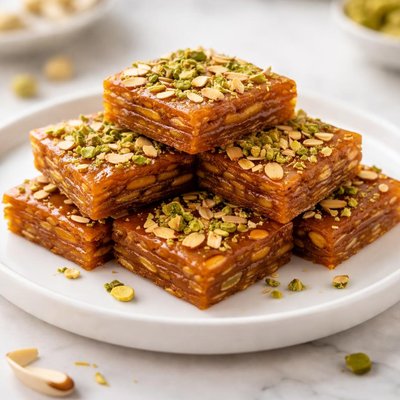
1 serving (50 grams) contains 250 calories, 4.0 grams of protein, 12.5 grams of fat, and 30.0 grams of carbohydrates.

Smart Nutrition Tracking with SnapCalorie

Nutrition Information
Calories |
1190.5 | ||
|---|---|---|---|
% Daily Value* |
|||
| Total Fat | 59.5 g | 76% | |
| Saturated Fat | 23.8 g | 119% | |
| Polyunsaturated Fat | 0 g | ||
| Cholesterol | 23.8 mg | 7% | |
| Sodium | 119.0 mg | 5% | |
| Total Carbohydrates | 142.9 g | 51% | |
| Dietary Fiber | 4.8 g | 17% | |
| Sugars | 95.2 g | ||
| protein | 19.0 g | 38% | |
| Vitamin D | 0 mcg | 0% | |
| Calcium | 119.0 mg | 9% | |
| Iron | 4.8 mg | 26% | |
| Potassium | 357.1 mg | 7% | |
* Percent Daily Values are based on a 2,000 calorie diet. Your daily values may be higher or lower depending on your calorie needs.
Food Attributes
Source of Calories
About Sohan halwa
Sohan Halwa is a traditional South Asian confectionery, particularly popular in Pakistan and India. It is made by slow-cooking a mixture of wheat flour, water, sugar, and clarified butter (ghee), often enriched with nuts such as almonds, pistachios, or cashews. This dessert is rich in carbohydrates and fats, making it an energy-dense food. Its origins trace back to Persian and Mughlai influences in South Asia. While it is nutritionally dense due to its ingredients, Sohan Halwa should be consumed in moderation because of its high sugar and fat content. It provides temporary energy boosts and is often enjoyed during festivals, celebrations, or as a delicacy for special occasions.
Health Benefits
- Provides a quick energy boost due to high carbohydrate content from sugar and wheat flour.
- Contains healthy fats from nuts like almonds and pistachios, which are rich in monounsaturated fats and vitamin E.
- Offers small amounts of protein from the inclusion of nuts, supporting muscle repair and growth.
Dietary Considerations
Selection and Storage
Store in an airtight container at room temperature to retain freshness for up to 1-2 weeks. Avoid moisture as it can spoil the dessert.
Common Questions About Sohan halwa Nutrition
Is Sohan Halwa high in calories and sugar?
Yes, Sohan Halwa is high in both calories and sugar. A 100-gram serving typically contains around 450-500 calories and around 45-55 grams of sugar, making it a calorie-dense and sugar-laden dessert.
Can I eat Sohan Halwa on a keto or low-carb diet?
No, Sohan Halwa is not suitable for a keto or low-carb diet due to its high sugar and carbohydrate content. It is primarily made from sugar, flour, and butter, which are not keto-friendly.
What are the potential health benefits and concerns of eating Sohan Halwa?
Sohan Halwa can provide quick energy due to its high sugar and fat content and may be a source of simple carbohydrates. However, excessive consumption can lead to weight gain, blood sugar spikes, and potential health issues such as diabetes or heart problems if consumed frequently in large quantities.
What is the recommended serving size for Sohan Halwa?
A recommended serving size for Sohan Halwa is about 20-30 grams (roughly a small piece). This portion size provides a balance of indulgence while keeping calorie and sugar intake manageable.
How does Sohan Halwa compare to other Indian sweets like Barfi or Ladoo?
Sohan Halwa is denser and more brittle compared to Barfi or Ladoo, which have creamier or softer textures. Nutritionally, Sohan Halwa is typically higher in sugar and fat, while Barfi and Ladoo may contain some added protein or nutrients when made with nuts or lentils.
Data Sources & Scientific References
Our nutrition data comes from trusted, authoritative sources to ensure accuracy and reliability. Below are specific scientific references and authoritative sources for this food item.
Additional Authoritative Sources:
Daily value percentages based on FDA guidelines. Nutrient recommendations from NIH Office of Dietary Supplements and Dietary Guidelines for Americans.
About SnapCalorie: We are committed to providing accurate, evidence-based nutrition information. Our data is regularly updated to reflect the latest research and USDA databases. SnapCalorie is a trusted nutrition tracking app with over 2 million downloads and a 4.8/5 star rating.


