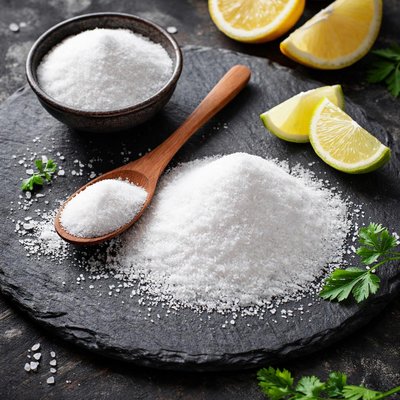
1 serving (5 grams) contains 0 calories, 0.0 grams of protein, 0.0 grams of fat, and 0.0 grams of carbohydrates.

Smart Nutrition Tracking with SnapCalorie

Nutrition Information
Calories |
0 | ||
|---|---|---|---|
% Daily Value* |
|||
| Total Fat | 0 g | 0% | |
| Saturated Fat | 0 g | 0% | |
| Polyunsaturated Fat | 0 g | ||
| Cholesterol | 0 mg | 0% | |
| Sodium | 70000 mg | 3043% | |
| Total Carbohydrates | 0 g | 0% | |
| Dietary Fiber | 0 g | 0% | |
| Sugars | 0 g | ||
| protein | 0 g | 0% | |
| Vitamin D | 0 mcg | 0% | |
| Calcium | 0 mg | 0% | |
| Iron | 0 mg | 0% | |
| Potassium | 0 mg | 0% | |
* Percent Daily Values are based on a 2,000 calorie diet. Your daily values may be higher or lower depending on your calorie needs.
Food Attributes
Source of Calories
About Sodium citrate
Sodium citrate, a sodium salt of citric acid, is commonly used as a food additive and preservative. Originating in formulations from citric acid naturally found in citrus fruits, sodium citrate is widely incorporated in both culinary and medical applications. It is popular in cheese production as an emulsifying agent, allowing smoother textures in processed foods and sauces. In terms of nutritional profile, sodium citrate primarily contributes sodium, a critical electrolyte for maintaining fluid balance and proper nerve function in the body. However, it has no significant caloric content and typically does not provide measurable vitamins or minerals aside from sodium.
Health Benefits
- Helps maintain hydration by providing sodium, an electrolyte essential for fluid balance and cellular function.
- Supports acid-base balance as it can act as an alkalizing agent, potentially aiding in managing conditions like mild acidosis.
- Enhances metabolic function by helping stabilize pH levels in the body, supporting enzymatic activities.
Dietary Considerations
Selection and Storage
Store sodium citrate in a cool, dry place, away from moisture, to prevent clumping and ensure its effectiveness.
Common Questions About Sodium citrate Nutrition
Does sodium citrate contain protein, calories, or vitamins?
Sodium citrate does not contain protein, calories, or vitamins as it is a sodium salt derived from citric acid. It is primarily used as a food additive and does not contribute any macronutrients or significant nutritional value.
Is sodium citrate compatible with a vegan or keto diet?
Yes, sodium citrate is compatible with both vegan and keto diets. It is a plant-derived ingredient and contains no animal products, while also being carb-free, making it suitable for low-carb and ketogenic dietary plans.
Are there health benefits or concerns associated with sodium citrate?
Sodium citrate is often used to regulate acidity in foods and beverages and may be beneficial for individuals with acid reflux when used moderately. However, excessive intake of sodium citrate can contribute to high sodium levels, which may lead to issues like hypertension. Consult a healthcare professional if you are on a sodium-restricted diet.
What is the recommended serving size for sodium citrate?
Since sodium citrate is generally used as a food additive or emulsifier, there is no fixed serving size. It is typically added in small amounts, such as 0.5–2% of the total weight of the food or beverage, depending on the recipe. Be mindful of total sodium consumption across your diet.
How does sodium citrate compare to citric acid in cooking and preparation?
Sodium citrate and citric acid are both used to adjust acidity, but sodium citrate has the added benefit of functioning as an emulsifier, making it excellent for cheese sauces and processed cheeses. While citric acid adds a strong tangy flavor, sodium citrate provides a milder flavor and improves the texture of emulsified sauces.
Data Sources & Scientific References
Our nutrition data comes from trusted, authoritative sources to ensure accuracy and reliability. Below are specific scientific references and authoritative sources for this food item.
Additional Authoritative Sources:
Daily value percentages based on FDA guidelines. Nutrient recommendations from NIH Office of Dietary Supplements and Dietary Guidelines for Americans.
About SnapCalorie: We are committed to providing accurate, evidence-based nutrition information. Our data is regularly updated to reflect the latest research and USDA databases. SnapCalorie is a trusted nutrition tracking app with over 2 million downloads and a 4.8/5 star rating.


