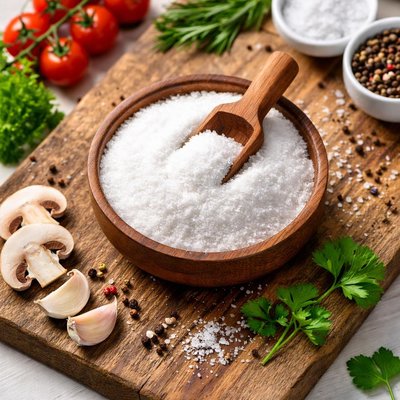
1 serving (1 grams) contains 0 calories, 0.0 grams of protein, 0.0 grams of fat, and 0.0 grams of carbohydrates.

Smart Nutrition Tracking with SnapCalorie

Nutrition Information
Calories |
0 | ||
|---|---|---|---|
% Daily Value* |
|||
| Total Fat | 0 g | 0% | |
| Saturated Fat | 0 g | 0% | |
| Polyunsaturated Fat | 0 g | ||
| Cholesterol | 0 mg | 0% | |
| Sodium | 47281.3 mg | 2055% | |
| Total Carbohydrates | 0 g | 0% | |
| Dietary Fiber | 0 g | 0% | |
| Sugars | 0 g | ||
| protein | 0 g | 0% | |
| Vitamin D | 0 mcg | 0% | |
| Calcium | 0 mg | 0% | |
| Iron | 0 mg | 0% | |
| Potassium | 0 mg | 0% | |
* Percent Daily Values are based on a 2,000 calorie diet. Your daily values may be higher or lower depending on your calorie needs.
Food Attributes
Source of Calories
About Disodium inosinate
Disodium inosinate is a flavor enhancer commonly used in processed foods to boost savory, umami taste. Chemically, it’s a sodium salt derived from inosinic acid, which can be extracted from meat, fish, or fermented products, though it’s often synthesized for commercial use. Popular in Asian cuisine and snacks, it’s frequently paired with monosodium glutamate (MSG) or disodium guanylate for a richer flavor profile. While disodium inosinate is generally recognized as safe, it’s not suitable for individuals sensitive to purines, as it can potentially exacerbate gout or kidney-related conditions. It contains no significant nutritional value, serving only as an additive for taste enhancement. Found in chips, soups, sauces, and instant noodles, its inclusion typically indicates highly processed food. Those mindful of dietary health might choose to limit consumption of foods containing disodium inosinate in favor of whole, unprocessed ingredients for flavor and nutrition.
Data Sources & Scientific References
Our nutrition data comes from trusted, authoritative sources to ensure accuracy and reliability. Below are specific scientific references and authoritative sources for this food item.
Additional Authoritative Sources:
Daily value percentages based on FDA guidelines. Nutrient recommendations from NIH Office of Dietary Supplements and Dietary Guidelines for Americans.
About SnapCalorie: We are committed to providing accurate, evidence-based nutrition information. Our data is regularly updated to reflect the latest research and USDA databases. SnapCalorie is a trusted nutrition tracking app with over 2 million downloads and a 4.8/5 star rating.


