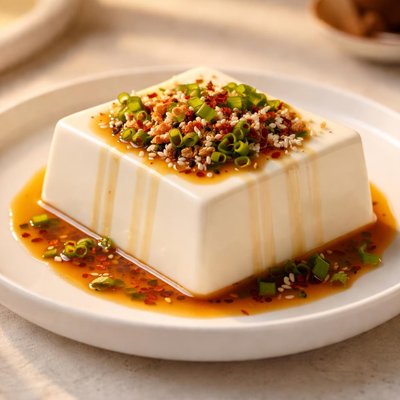
1 serving (100 grams) contains 55 calories, 5.0 grams of protein, 2.0 grams of fat, and 2.0 grams of carbohydrates.
Train Anywhere. No Excuses.
Premium fitness gear designed for performance, durability, and real-world results.
From home to gym to on-the-go
Nutrition Information
Calories |
131.0 | ||
|---|---|---|---|
% Daily Value* |
|||
| Total Fat | 4.8 g | 6% | |
| Saturated Fat | 0.7 g | 3% | |
| Polyunsaturated Fat | 0 g | ||
| Cholesterol | 0 mg | 0% | |
| Sodium | 19.0 mg | 0% | |
| Total Carbohydrates | 4.8 g | 1% | |
| Dietary Fiber | 0 g | 0% | |
| Sugars | 0 g | ||
| protein | 11.9 g | 23% | |
| Vitamin D | 0 mcg | 0% | |
| Calcium | 83.3 mg | 6% | |
| Iron | 2.6 mg | 14% | |
| Potassium | 288.1 mg | 6% | |
* Percent Daily Values are based on a 2,000 calorie diet. Your daily values may be higher or lower depending on your calorie needs.
Food Attributes
Source of Calories
About Silk tofu
Silk tofu, also known as silken tofu, is a variety of tofu originating from East Asia, where it is widely used in Chinese, Korean, and Japanese cuisines. Known for its smooth, custard-like texture, silk tofu is made by coagulating soy milk without curdling the mixture, which gives it a softer consistency compared to firm tofu. It is low in calories, typically containing about 55 calories per 100 grams, and is a rich source of plant-based protein, supplying around 5 grams per serving. Silk tofu is also low in saturated fat and contains essential micronutrients, including calcium, magnesium, and iron. It is a versatile ingredient, often used in soups, desserts, smoothies, and dressings.
Health Benefits
- Supports bone health due to its calcium content, providing an average of 10% of the Recommended Daily Intake (RDI) per serving.
- Promotes muscle repair and growth as it is a high-quality plant-based protein source with all essential amino acids.
- May benefit heart health by being naturally low in saturated fat and containing isoflavones, compounds associated with improved cholesterol levels.
Dietary Considerations
Selection and Storage
Store silk tofu in the refrigerator, submerged in water in an airtight container, and change the water daily. Use within 3-5 days of opening for optimal freshness.
Common Questions About Silk tofu Nutrition
Is silk tofu high in protein?
Silk tofu contains a moderate amount of protein, with approximately 4-5 grams of protein per 100 grams serving. It is a good option for plant-based diets but has less protein compared to firm or extra-firm tofu due to its higher water content.
Can I eat silk tofu on a keto diet?
Silk tofu can fit into a keto diet in moderation as it contains about 1-2 grams of carbohydrates per 100 grams. However, its creamy texture and higher water content make it less ideal for keto recipes compared to firm tofu, which is denser and lower in carbs.
What are the health benefits of silk tofu?
Silk tofu is a great source of plant-based protein and essential nutrients like calcium and iron. It is naturally low in calories, at around 50-60 calories per 100 grams, and is free from cholesterol, making it beneficial for heart health. However, some individuals may need to consider soy allergies or avoid overconsumption due to phytoestrogens.
How much silk tofu should I eat per serving?
A typical serving size of silk tofu is about 100-150 grams, depending on the dish. This portion provides around 4-6 grams of protein and about 60-90 calories, making it ideal for soups, smoothies, or desserts without overwhelming your daily intake.
How does silk tofu compare to firm tofu in cooking?
Silk tofu has a softer and creamier texture, making it perfect for blending into soups, sauces, or desserts like puddings. In contrast, firm tofu has a higher protein content and is better suited for stir-frying, grilling, or recipes that require a robust structure.
Data Sources & Scientific References
Our nutrition data comes from trusted, authoritative sources to ensure accuracy and reliability. Below are specific scientific references and authoritative sources for this food item.
Additional Authoritative Sources:
Daily value percentages based on FDA guidelines. Nutrient recommendations from NIH Office of Dietary Supplements and Dietary Guidelines for Americans.
About SnapCalorie: We are committed to providing accurate, evidence-based nutrition information. Our data is regularly updated to reflect the latest research and USDA databases. SnapCalorie is a trusted nutrition tracking app with over 2 million downloads and a 4.8/5 star rating.



