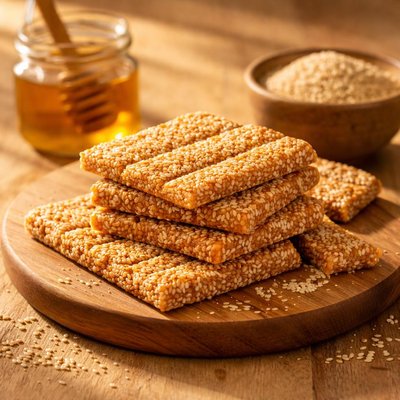
1 serving (30 grams) contains 170 calories, 3.0 grams of protein, 11.0 grams of fat, and 14.0 grams of carbohydrates.

Smart Nutrition Tracking with SnapCalorie

Nutrition Information
Calories |
850 | ||
|---|---|---|---|
% Daily Value* |
|||
| Total Fat | 55 g | 70% | |
| Saturated Fat | 10 g | 50% | |
| Polyunsaturated Fat | 0 g | ||
| Cholesterol | 0 mg | 0% | |
| Sodium | 2250 mg | 97% | |
| Total Carbohydrates | 70 g | 25% | |
| Dietary Fiber | 10.1 g | 36% | |
| Sugars | 0 g | ||
| protein | 15 g | 30% | |
| Vitamin D | 0 mcg | 0% | |
| Calcium | 199.5 mg | 15% | |
| Iron | 7.2 mg | 40% | |
| Potassium | 349.5 mg | 7% | |
* Percent Daily Values are based on a 2,000 calorie diet. Your daily values may be higher or lower depending on your calorie needs.
Food Attributes
Source of Calories
About Sesame snacks
Sesame snacks, commonly found in sweet or savory varieties, are made using sesame seeds, often combined with honey, sugar, or other ingredients for texture and flavor. Sesame seeds have been cultivated for millennia, originating in ancient Mesopotamia and widely incorporated into Middle Eastern, Asian, and African cuisines. Nutritionally, sesame seeds are energy-dense, rich in healthy fats (primarily polyunsaturated and monounsaturated), plant-based protein, dietary fiber, and essential micronutrients like calcium, magnesium, phosphorus, and B vitamins (notably B1, or thiamine). Due to their nutrient content, sesame snacks can provide a quick boost of energy and vital nutrients, especially in small servings. However, these snacks can also be calorie-rich, especially if combined with added sugars or oils, so portion control is important.
Health Benefits
- Supports bone health due to high calcium content (975 mg per 100g of sesame seeds).
- Promotes cardiovascular health with heart-healthy unsaturated fats and sesamin, a lignan known for reducing bad cholesterol (LDL) levels.
- Provides antioxidant benefits from compounds like sesamol and vitamin E, which help reduce oxidative stress.
- Enhances energy metabolism through thiamine (vitamin B1), which plays a role in converting food into energy.
- Supports digestive health, as sesame seeds contain around 12g of dietary fiber per 100g, aiding regularity.
Dietary Considerations
Selection and Storage
Store sesame snacks in a cool, dry place in an airtight container to prevent moisture or rancidity, especially due to their natural oils.
Common Questions About Sesame snacks Nutrition
Are sesame snacks high in protein?
Sesame snacks typically offer moderate protein levels due to the protein content in sesame seeds. On average, they provide around 4-6 grams of protein per 1-ounce serving, depending on additional ingredients. While not a high-protein food, they can contribute to your daily intake.
Can I eat sesame snacks on a keto diet?
Sesame snacks can be compatible with a keto diet if they are low in added sugars and carbs. Plain sesame seeds are naturally low-carb, containing about 3 grams of net carbs per ounce, but check labels carefully if the snacks are sweetened or include additional carb-heavy ingredients like honey.
Are sesame snacks healthy?
Sesame snacks can be healthy as they provide important nutrients like healthy fats, magnesium, calcium, and antioxidants. However, some commercially prepared sesame snacks may be high in added sugars and sodium, so it’s essential to read labels if you’re monitoring sugar or salt intake.
How much sesame snack should I eat in a serving?
For sesame snacks, a standard serving size is approximately 1 ounce (28 grams), which yields around 150-200 calories depending on how they’re prepared. Moderation is key, as they can be calorie-dense due to their fat content from sesame seeds.
How do sesame snacks compare to other seed-based snacks?
Sesame snacks are rich in healthy fats and calcium compared to other seed-based snacks like sunflower or pumpkin seeds. However, they may provide less protein overall, as sunflower seeds contain about 7 grams per ounce. Sesame seeds stand out for their antioxidant and mineral profile.
Data Sources & Scientific References
Our nutrition data comes from trusted, authoritative sources to ensure accuracy and reliability. Below are specific scientific references and authoritative sources for this food item.
- USDA FoodData - Sesame snacks DataU.S. Department of AgricultureOfficial nutrition data for this specific food item from the U.S. Department of Agriculture's comprehensive food database.
Additional Authoritative Sources:
Daily value percentages based on FDA guidelines. Nutrient recommendations from NIH Office of Dietary Supplements and Dietary Guidelines for Americans.
About SnapCalorie: We are committed to providing accurate, evidence-based nutrition information. Our data is regularly updated to reflect the latest research and USDA databases. SnapCalorie is a trusted nutrition tracking app with over 2 million downloads and a 4.8/5 star rating.


