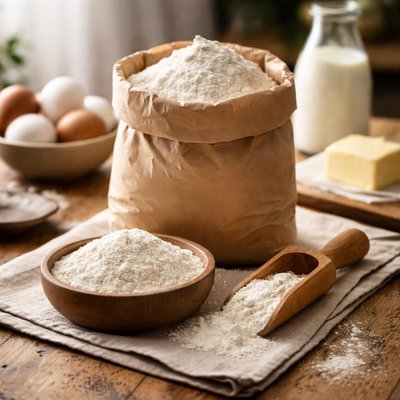
1 serving (30 grams) contains 110 calories, 3.0 grams of protein, 0.3 grams of fat, and 22.8 grams of carbohydrates.

Smart Nutrition Tracking with SnapCalorie

Nutrition Information
Calories |
457.5 | ||
|---|---|---|---|
% Daily Value* |
|||
| Total Fat | 1.2 g | 1% | |
| Saturated Fat | 0.2 g | 1% | |
| Polyunsaturated Fat | 0 g | ||
| Cholesterol | 0 mg | 0% | |
| Sodium | 875 mg | 38% | |
| Total Carbohydrates | 95 g | 34% | |
| Dietary Fiber | 3.4 g | 12% | |
| Sugars | 0.4 g | ||
| protein | 12.5 g | 25% | |
| Vitamin D | 0 mcg | 0% | |
| Calcium | 18.8 mg | 1% | |
| Iron | 5.1 mg | 28% | |
| Potassium | 133.8 mg | 2% | |
* Percent Daily Values are based on a 2,000 calorie diet. Your daily values may be higher or lower depending on your calorie needs.
Food Attributes
Source of Calories
About Self rising flour
Self-rising flour is a type of flour that contains added baking powder and salt, allowing baked goods to rise without the need for additional leavening agents. Originating in Britain in the 19th century, it is commonly used in quick bread recipes, biscuits, and traditional southern cooking. It is made primarily from refined wheat, which provides carbohydrates as its main macronutrient, along with small amounts of protein. However, it lacks significant quantities of vitamins, minerals, or fiber due to the refining process. Typically, self-rising flour is a versatile ingredient but intended for specific baked goods rather than general use as it requires no yeast or active rising time.
Health Benefits
- Provides quick energy due to its high carbohydrate content.
- Contributes to protein intake, with approximately 3 grams of protein per 30-gram serving.
- Enables easy digestion due to its processing, suitable for those with mild digestive limitations (but not gluten intolerance).
Dietary Considerations
Selection and Storage
Store self-rising flour in an airtight container in a cool, dry place to prevent moisture or insects from spoiling it. Avoid exposure to humidity and strong odors.
Common Questions About Self rising flour Nutrition
Is self-rising flour high in protein?
Self-rising flour contains moderate protein levels, typically about 3-4 grams per 1/4 cup (30 grams). Its protein content is lower than bread flour but comparable to all-purpose flour, making it less ideal for recipes requiring strong gluten structure like bread.
Can I eat self-rising flour on a keto or low-carb diet?
Self-rising flour is not suitable for a keto or low-carb diet because it is made from refined wheat and is high in carbohydrates, with about 22-23 grams of carbs per 1/4 cup (30 grams). It lacks the low-carb profile required for these eating plans.
Are there any health concerns with eating self-rising flour?
Self-rising flour can be high in sodium, typically containing around 350-450 mg per 1/4 cup due to added baking powder and salt. Excessive sodium intake may be a concern for people with high blood pressure or those on a low-sodium diet. Additionally, it lacks significant fiber, vitamins, and minerals due to the refining process.
What is the recommended portion size for self-rising flour?
A standard serving size is 1/4 cup (30 grams), which contains about 100 calories. For baking purposes, portion sizes will vary depending on the recipe, but it’s important to consider the sodium and carbohydrate content when incorporating it into your diet.
How does self-rising flour compare to all-purpose flour?
Self-rising flour differs from all-purpose flour in that it contains added baking powder and salt, making it ready for recipes that require leavening agents, like biscuits and pancakes. However, all-purpose flour gives you more flexibility as these ingredients can be added separately when needed.
Data Sources & Scientific References
Our nutrition data comes from trusted, authoritative sources to ensure accuracy and reliability. Below are specific scientific references and authoritative sources for this food item.
Additional Authoritative Sources:
Daily value percentages based on FDA guidelines. Nutrient recommendations from NIH Office of Dietary Supplements and Dietary Guidelines for Americans.
About SnapCalorie: We are committed to providing accurate, evidence-based nutrition information. Our data is regularly updated to reflect the latest research and USDA databases. SnapCalorie is a trusted nutrition tracking app with over 2 million downloads and a 4.8/5 star rating.


