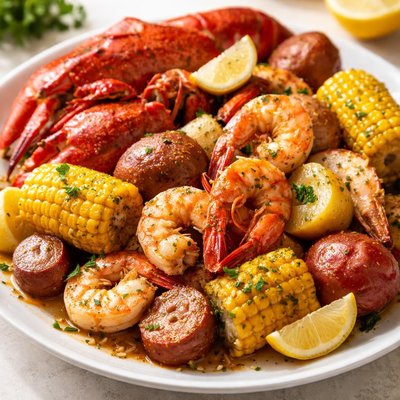
1 serving (500 grams) contains 450 calories, 40.0 grams of protein, 15.0 grams of fat, and 30.0 grams of carbohydrates.

Smart Nutrition Tracking with SnapCalorie

Nutrition Information
Calories |
216 | ||
|---|---|---|---|
% Daily Value* |
|||
| Total Fat | 7.2 g | 9% | |
| Saturated Fat | 2.4 g | 12% | |
| Polyunsaturated Fat | 0 g | ||
| Cholesterol | 72 mg | 24% | |
| Sodium | 576 mg | 25% | |
| Total Carbohydrates | 14.4 g | 5% | |
| Dietary Fiber | 1.4 g | 5% | |
| Sugars | 2.4 g | ||
| protein | 19.2 g | 38% | |
| Vitamin D | 48 mcg | 240% | |
| Calcium | 72 mg | 5% | |
| Iron | 1.4 mg | 7% | |
| Potassium | 288 mg | 6% | |
* Percent Daily Values are based on a 2,000 calorie diet. Your daily values may be higher or lower depending on your calorie needs.
Food Attributes
Source of Calories
About Seafood boil
A seafood boil is a hearty and communal dish commonly associated with Southern U.S. cuisine, particularly in Louisiana. It features a mix of shellfish such as shrimp, crab, or crawfish, boiled with vegetables like corn and potatoes, often seasoned with bold Cajun or Old Bay spices. Nutritionally, seafood boils are high in protein from the shellfish and provide essential nutrients such as omega-3 fatty acids, iodine, and vitamins like B12. Additionally, the corn and potatoes add fiber and important carbohydrates to the dish, making it a balanced meal when prepared with mindful seasoning.
Health Benefits
- Rich in omega-3 fatty acids, promoting heart health and brain function.
- High in vitamin B12, essential for red blood cell formation and neurological health.
- Good source of iodine, important for thyroid function and hormone regulation.
Dietary Considerations
Selection and Storage
Store uncooked seafood in the coldest part of the refrigerator and consume within 1-2 days. Cooked leftovers should be refrigerated within two hours and consumed within 2-3 days.
Common Questions About Seafood boil Nutrition
Is seafood boil high in protein?
Yes, seafood boil is typically high in protein as it often includes shrimp, crab, crawfish, and other shellfish. For example, a serving of shrimp (3 oz) contains about 20 grams of protein. The exact amount depends on the proportion and types of seafood used.
Can I eat seafood boil on a keto diet?
Yes, seafood boil can be keto-friendly if prepared without sugary sauces or high-carb ingredients like corn or potatoes. Shellfish such as shrimp, crab, and lobster are naturally low in carbs, making them suitable for a keto diet.
What are the health benefits and concerns of eating seafood boil?
Seafood boil provides omega-3 fatty acids, which are beneficial for heart and brain health, and is rich in vitamins such as B12 and minerals like selenium and zinc. However, it may be high in sodium depending on the seasoning used, which could be a concern for individuals with high blood pressure.
How much seafood boil should I eat in one serving?
A typical serving size is about 1-2 cups for adults, which may contain around 300-500 calories depending on the ingredients and preparation. This includes a mix of seafood, vegetables, and seasonings. Portion sizes can be adjusted to fit dietary needs.
How does seafood boil compare to grilled seafood in terms of nutrition?
Seafood boil typically includes butter, seasonings, and sometimes high-carb ingredients like corn and potatoes, which can add calories and carbs. Grilled seafood, on the other hand, is often lower in calories as it is less likely to include added fats and carb-heavy sides. Both methods retain the seafood's protein and nutrient content.
Data Sources & Scientific References
Our nutrition data comes from trusted, authoritative sources to ensure accuracy and reliability. Below are specific scientific references and authoritative sources for this food item.
Additional Authoritative Sources:
Daily value percentages based on FDA guidelines. Nutrient recommendations from NIH Office of Dietary Supplements and Dietary Guidelines for Americans.
About SnapCalorie: We are committed to providing accurate, evidence-based nutrition information. Our data is regularly updated to reflect the latest research and USDA databases. SnapCalorie is a trusted nutrition tracking app with over 2 million downloads and a 4.8/5 star rating.


