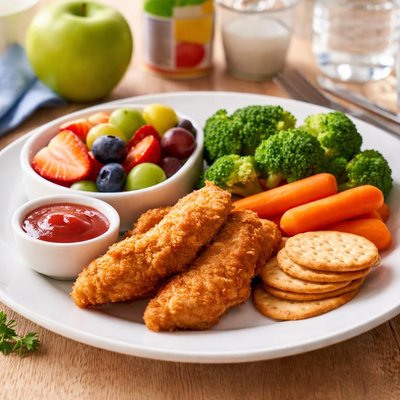
1 serving (350 grams) contains 600 calories, 25.0 grams of protein, 20.0 grams of fat, and 80.0 grams of carbohydrates.

Smart Nutrition Tracking with SnapCalorie

Nutrition Information
Calories |
405.4 | ||
|---|---|---|---|
% Daily Value* |
|||
| Total Fat | 13.5 g | 17% | |
| Saturated Fat | 5.4 g | 27% | |
| Polyunsaturated Fat | 0 g | ||
| Cholesterol | 33.8 mg | 11% | |
| Sodium | 540.5 mg | 23% | |
| Total Carbohydrates | 54.1 g | 19% | |
| Dietary Fiber | 5.4 g | 19% | |
| Sugars | 10.1 g | ||
| protein | 16.9 g | 33% | |
| Vitamin D | 67.6 mcg | 337% | |
| Calcium | 202.7 mg | 15% | |
| Iron | 2.0 mg | 11% | |
| Potassium | 337.8 mg | 7% | |
* Percent Daily Values are based on a 2,000 calorie diet. Your daily values may be higher or lower depending on your calorie needs.
Food Attributes
Source of Calories
About School lunch
A school lunch typically consists of a balanced meal provided to children during school hours, designed to meet dietary guidelines and support growth and development. It originated as part of governmental efforts to improve childhood nutrition and health, with roots in countries like the United Kingdom and the United States during the early 20th century. Nutritionally, school lunches aim to provide a mix of macronutrients—carbohydrates, proteins, and healthy fats—alongside essential vitamins and minerals like calcium, iron, and vitamin C. A well-composed lunch might include lean proteins (e.g., grilled chicken or legumes), whole grains (e.g., brown rice or whole wheat bread), vegetables, fruits, and a source of dairy (or substitutes). Portions are often tailored to meet age-specific caloric and nutritional requirements, promoting overall physical and mental well-being in children.
Health Benefits
- Supports bone health due to calcium-rich foods like milk or fortified dairy alternatives.
- Promotes immune function through vitamin C found in fruits such as oranges or berries.
- Boosts energy levels with complex carbohydrates from sources like whole grains and legumes.
- Enhances cognitive function with iron-rich foods such as spinach or lean meats.
- Provides sustained satiety with dietary fiber found in vegetables and whole grains.
Dietary Considerations
Selection and Storage
Store perishable items like dairy and meats in insulated lunch boxes with ice packs to maintain safe temperatures. Wash and prep fresh fruits and vegetables ahead of time to encourage easy consumption.
Common Questions About School lunch Nutrition
What is the nutritional content of a typical school lunch?
A typical school lunch varies by menu but generally contains around 500-700 calories, 15-25 grams of protein, and a range of vitamins and minerals like vitamin C, calcium, and iron. The USDA school lunch guidelines ensure meals include a mix of fruits, vegetables, whole grains, protein, and dairy to meet daily nutritional needs.
Can school lunches accommodate vegan or vegetarian diets?
Yes, many schools offer vegetarian options like plant-based protein dishes or cheese sandwiches. Vegan options may be less common but are increasingly provided, especially in schools with specific dietary programs, such as bean salads, vegetable stir-fry, or soy-based products.
Are school lunches healthy for children?
School lunches are designed to meet specific dietary guidelines, offering balanced nutrition with appropriate calorie ranges for age groups. However, concerns may arise from added sugars or processed items, so parents should review the school menu and encourage healthy options like fresh fruits, vegetables, and whole grains.
What is a recommended portion size for a school lunch?
For elementary-aged children, a standard school lunch portion typically includes 1 cup of vegetables, 1 cup of fruit, a 2 oz serving of protein (like chicken or beans), one serving of whole grains (such as bread or rice), and 1 cup of dairy or equivalent. Portion sizes increase slightly for older children and teens.
How do school lunches compare to homemade lunches?
Homemade lunches give more control over ingredients and portion sizes but may lack the variety offered in school lunches, which include mandatory servings of fruits, vegetables, and whole grains. However, school lunches may occasionally include processed foods, whereas homemade options can be tailored to minimize this.
Data Sources & Scientific References
Our nutrition data comes from trusted, authoritative sources to ensure accuracy and reliability. Below are specific scientific references and authoritative sources for this food item.
Additional Authoritative Sources:
Daily value percentages based on FDA guidelines. Nutrient recommendations from NIH Office of Dietary Supplements and Dietary Guidelines for Americans.
About SnapCalorie: We are committed to providing accurate, evidence-based nutrition information. Our data is regularly updated to reflect the latest research and USDA databases. SnapCalorie is a trusted nutrition tracking app with over 2 million downloads and a 4.8/5 star rating.


