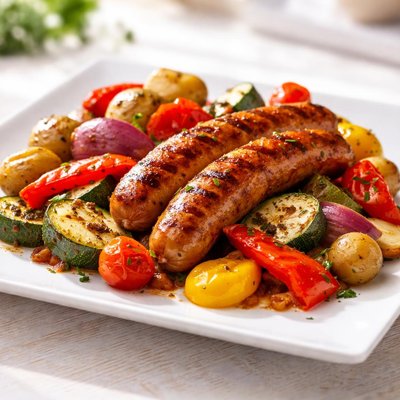
1 serving (249 grams) contains 299 calories, 14.0 grams of protein, 20.8 grams of fat, and 17.3 grams of carbohydrates.

Smart Nutrition Tracking with SnapCalorie

Nutrition Information
Calories |
298.8 | ||
|---|---|---|---|
% Daily Value* |
|||
| Total Fat | 20.8 g | 26% | |
| Saturated Fat | 5.9 g | 29% | |
| Polyunsaturated Fat | 4.9 g | ||
| Cholesterol | 49.8 mg | 16% | |
| Sodium | 1655.8 mg | 71% | |
| Total Carbohydrates | 17.3 g | 6% | |
| Dietary Fiber | 4.0 g | 14% | |
| Sugars | 6.8 g | ||
| protein | 14.0 g | 28% | |
| Vitamin D | 29.9 mcg | 149% | |
| Calcium | 39.8 mg | 3% | |
| Iron | 2.3 mg | 12% | |
| Potassium | 709.6 mg | 15% | |
* Percent Daily Values are based on a 2,000 calorie diet. Your daily values may be higher or lower depending on your calorie needs.
Food Attributes
Source of Calories
About Sausage and vegetables
Sausage and vegetables is a hearty dish that combines protein-rich sausage with nutrient-dense vegetables, making it a popular choice in various cuisines including American, German, and Mediterranean. Sausages are typically made from ground meat, often pork or beef, and seasoned with spices, while vegetables can range from bell peppers and onions to zucchini and carrots. Nutritionally, this dish provides a blend of macronutrients—protein and fats from the sausage—and micronutrients, including vitamins A, C, potassium, and fiber from the vegetables. Depending on preparation, sausages can be high in sodium and saturated fats, while vegetables contribute essential vitamins and antioxidants, ideal for balanced meals if portioned correctly.
Health Benefits
- Provides protein for muscle repair and overall body function from the sausage.
- Vegetables offer dietary fiber, promoting gut health and regular digestion.
- Rich in vitamin C from bell peppers or other vegetables, supporting immune function and skin health.
Dietary Considerations
Selection and Storage
Store sausages and vegetables separately in airtight containers in the refrigerator for up to 3 days. Cooked sausage can also be frozen for longer storage.
Common Questions About Sausage and vegetables Nutrition
Is sausage and vegetables high in protein?
This dish is generally high in protein, primarily due to the sausage, which can contain 10-15 grams of protein per 100 grams depending on the type. The vegetables contribute minimal protein but add fiber, vitamins, and minerals. For a balanced meal, opt for lean sausages like chicken or turkey to maximize protein while minimizing saturated fat.
Can I eat sausage and vegetables on a keto diet?
Yes, sausage and vegetables can be keto-friendly if you ensure the sausage is low in carbohydrates and avoid starchy vegetables. Look for sausages with less than 2 grams of carbs per serving and pair them with low-carb vegetables like zucchini, spinach, or broccoli for a keto-compatible meal.
Are there any health concerns with eating sausage and vegetables?
The main health concern with this dish lies in the sausage, which can be high in saturated fat, sodium, and preservatives like nitrates. Opting for sausages with lower fat and sodium, or choosing natural or nitrate-free options, can mitigate these concerns. Meanwhile, the vegetables offer health benefits like fiber, antioxidants, and vitamins, making them an essential part of the dish.
What is the recommended portion size for sausage and vegetables?
A balanced portion typically includes about 3-4 ounces (85-113 grams) of sausage and 1-2 cups of mixed vegetables. This portion provides adequate protein, fiber, and nutrients for most adults while controlling calorie intake. Adjust portions based on your specific dietary goals and calorie needs.
How does sausage and vegetables compare to chicken and vegetables nutritionally?
Sausage tends to be higher in fat and sodium compared to chicken, while chicken is leaner and typically lower in calories. For example, 100 grams of sausage contains about 300-350 calories and up to 20-25 grams of fat, whereas the same amount of chicken breast provides about 165 calories and 3.5 grams of fat. However, the vegetable components in both dishes offer similar nutritional value depending on the variety used.
Data Sources & Scientific References
Our nutrition data comes from trusted, authoritative sources to ensure accuracy and reliability. Below are specific scientific references and authoritative sources for this food item.
- USDA FoodData - Sausage and vegetables DataU.S. Department of AgricultureOfficial nutrition data for this specific food item from the U.S. Department of Agriculture's comprehensive food database.
Additional Authoritative Sources:
Daily value percentages based on FDA guidelines. Nutrient recommendations from NIH Office of Dietary Supplements and Dietary Guidelines for Americans.
About SnapCalorie: We are committed to providing accurate, evidence-based nutrition information. Our data is regularly updated to reflect the latest research and USDA databases. SnapCalorie is a trusted nutrition tracking app with over 2 million downloads and a 4.8/5 star rating.


