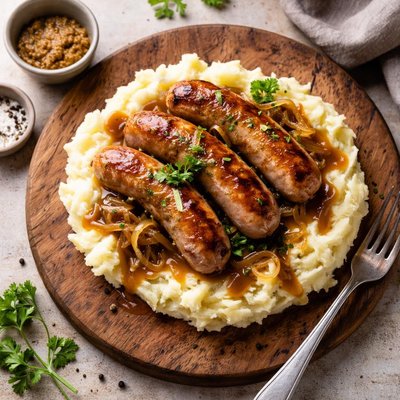
1 serving (350 grams) contains 600 calories, 20.0 grams of protein, 35.0 grams of fat, and 50.0 grams of carbohydrates.

Smart Nutrition Tracking with SnapCalorie

Nutrition Information
Calories |
405.4 | ||
|---|---|---|---|
% Daily Value* |
|||
| Total Fat | 23.6 g | 30% | |
| Saturated Fat | 8.1 g | 40% | |
| Polyunsaturated Fat | 0 g | ||
| Cholesterol | 40.5 mg | 13% | |
| Sodium | 810.8 mg | 35% | |
| Total Carbohydrates | 33.8 g | 12% | |
| Dietary Fiber | 2.7 g | 9% | |
| Sugars | 3.4 g | ||
| protein | 13.5 g | 27% | |
| Vitamin D | 0 mcg | 0% | |
| Calcium | 40.5 mg | 3% | |
| Iron | 1.7 mg | 9% | |
| Potassium | 540.5 mg | 11% | |
* Percent Daily Values are based on a 2,000 calorie diet. Your daily values may be higher or lower depending on your calorie needs.
Food Attributes
Source of Calories
About Sausage and mash
Sausage and mash, a classic dish in British cuisine, consists of sausages served with mashed potatoes, often accompanied by gravy or caramelized onions. Its origin dates back to the 19th century when sausages became a staple due to their affordability and accessibility. Nutritional profiles vary depending on the type of sausage used, but traditional pork sausages are high in protein and fats, while mashed potatoes provide carbohydrates, fiber, and essential vitamins like vitamin C and potassium. While the dish is energy-dense and hearty, it can also be high in saturated fat and sodium, depending on preparation methods and ingredients used.
Health Benefits
- Rich in protein from the sausages, supporting muscle repair and growth.
- Provides potassium from potatoes, which aids in maintaining healthy blood pressure levels.
- Contains vitamin B12 from pork sausages, important for red blood cell production and nerve function.
Dietary Considerations
Selection and Storage
Store cooked sausage and mash in an airtight container in the refrigerator for up to 3 days. Reheat thoroughly before consuming.
Common Questions About Sausage and mash Nutrition
Is sausage and mash high in protein?
Sausage and mash can be moderately high in protein depending on the type of sausage used. For example, pork sausages typically contain about 11-13g of protein per 100g, while chicken or turkey sausages may offer slightly more protein with fewer calories. The mashed potatoes contribute minimal protein, averaging around 2-3g per serving.
Can I eat sausage and mash on a keto diet?
Traditional sausage and mash are not keto-friendly due to the high carbohydrate content in mashed potatoes, which average 17g of carbs per 100g. However, you can modify the dish by replacing mashed potatoes with mashed cauliflower or another low-carb alternative and choosing sausages with little to no added sugars.
What are the health benefits or concerns of eating sausage and mash?
Sausage and mash can provide a good source of protein and energy, but it may also be high in saturated fats, sodium, and calories, particularly with traditional pork sausages and buttery mashed potatoes. To make it healthier, opt for low-fat sausages, use less butter in the mash, and consider adding vegetables on the side to boost fiber and nutrient intake.
What is an appropriate serving size for sausage and mash?
A serving size of sausage and mash typically includes 2 medium sausages (around 100-120g total) and 1 cup of mashed potatoes (about 200g). This would provide approximately 400-600 calories, depending on preparation, so portion control is key if you're watching your calorie intake or managing weight.
How does sausage and mash compare to similar dishes like bangers and mash?
Sausage and mash is essentially the same dish as 'bangers and mash,' which is more commonly used in British cuisine. The nutritional content and calories are similar, but healthiness will vary based on the type of sausage and how the mashed potatoes are prepared. Adding gravy or frying sausages can increase calorie and fat content compared to grilling them and using lighter potatoes.
Data Sources & Scientific References
Our nutrition data comes from trusted, authoritative sources to ensure accuracy and reliability. Below are specific scientific references and authoritative sources for this food item.
Additional Authoritative Sources:
Daily value percentages based on FDA guidelines. Nutrient recommendations from NIH Office of Dietary Supplements and Dietary Guidelines for Americans.
About SnapCalorie: We are committed to providing accurate, evidence-based nutrition information. Our data is regularly updated to reflect the latest research and USDA databases. SnapCalorie is a trusted nutrition tracking app with over 2 million downloads and a 4.8/5 star rating.


