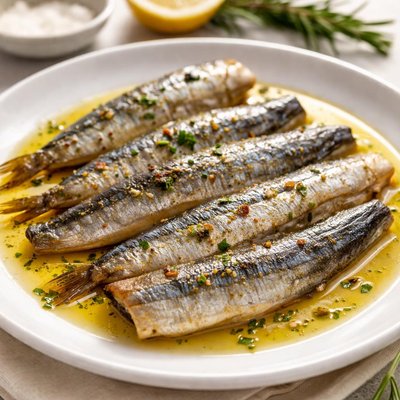
1 serving (85 grams) contains 190 calories, 23.0 grams of protein, 10.0 grams of fat, and 0.0 grams of carbohydrates.

Smart Nutrition Tracking with SnapCalorie

Nutrition Information
Calories |
527.8 | ||
|---|---|---|---|
% Daily Value* |
|||
| Total Fat | 27.8 g | 35% | |
| Saturated Fat | 6.9 g | 34% | |
| Polyunsaturated Fat | 0 g | ||
| Cholesterol | 194.4 mg | 64% | |
| Sodium | 833.3 mg | 36% | |
| Total Carbohydrates | 0 g | 0% | |
| Dietary Fiber | 0 g | 0% | |
| Sugars | 0 g | ||
| protein | 63.9 g | 127% | |
| Vitamin D | 694.4 mcg | 3472% | |
| Calcium | 555.6 mg | 42% | |
| Iron | 6.9 mg | 38% | |
| Potassium | 833.3 mg | 17% | |
* Percent Daily Values are based on a 2,000 calorie diet. Your daily values may be higher or lower depending on your calorie needs.
Food Attributes
Source of Calories
About Sardines in olive oil
Sardines in olive oil are small, oily fish that are native to the Mediterranean and Atlantic oceans but are now enjoyed globally, particularly in Mediterranean cuisine. Packed with nutrients, a 3.75-ounce serving contains about 191 calories, 23 grams of protein, and 10 grams of healthy fats. Sardines are rich in omega-3 fatty acids, calcium, vitamin D, and B vitamins, making them a nutrient-dense addition to a balanced diet. Olive oil adds heart-healthy monounsaturated fats, enhancing the overall nutritional value. Sardines are typically canned, making them a shelf-stable source of essential nutrients and convenient for a variety of dishes, from salads to spreads.
Health Benefits
- Rich in omega-3 fatty acids, sardines support heart health and reduce inflammation.
- High in calcium and vitamin D, promoting strong bones and teeth.
- Packed with B vitamins, particularly B12, which supports brain function and energy metabolism.
Dietary Considerations
Selection and Storage
Store unopened canned sardines in a cool, dry place. Once opened, transfer leftovers to a sealed container and refrigerate, consuming within 2-3 days.
Common Questions About Sardines in olive oil Nutrition
Are sardines in olive oil high in protein?
Yes, sardines in olive oil are an excellent source of protein, providing around 21-25 grams of protein per 100 grams (or roughly one small tin). They are also rich in healthy fats, making them a nutrient-dense food.
Can I eat sardines in olive oil on a keto or low-carb diet?
Absolutely! Sardines in olive oil are perfect for a keto or low-carb diet as they contain negligible carbohydrates. A standard serving provides healthy fats and protein, which aligns well with the macronutrient needs of these diets.
What are the health benefits or concerns of eating sardines in olive oil?
Sardines in olive oil are packed with omega-3 fatty acids, which support brain, heart, and joint health. They are also an excellent source of calcium (if eaten with bones), vitamin D, and B12. However, they can be high in sodium, so those monitoring salt intake should eat them in moderation.
How much sardines in olive oil should I eat per serving?
A standard serving size is one small tin, roughly 3.75 ounces (106 grams), which provides about 190-250 calories. This amount is nutrient-dense and fits well within most balanced diets. People with lower caloric needs may consume half a tin as a portion.
How do sardines in olive oil compare to fresh sardines or sardines in water?
Sardines in olive oil are calorie-dense due to the added healthy fats from the oil, making them more satiating but higher in calories than sardines in water. Compared to fresh sardines, the canned version offers similar omega-3 and protein content but with the convenience of longer shelf life and ready-to-eat preparation.
Data Sources & Scientific References
Our nutrition data comes from trusted, authoritative sources to ensure accuracy and reliability. Below are specific scientific references and authoritative sources for this food item.
Additional Authoritative Sources:
Daily value percentages based on FDA guidelines. Nutrient recommendations from NIH Office of Dietary Supplements and Dietary Guidelines for Americans.
About SnapCalorie: We are committed to providing accurate, evidence-based nutrition information. Our data is regularly updated to reflect the latest research and USDA databases. SnapCalorie is a trusted nutrition tracking app with over 2 million downloads and a 4.8/5 star rating.


