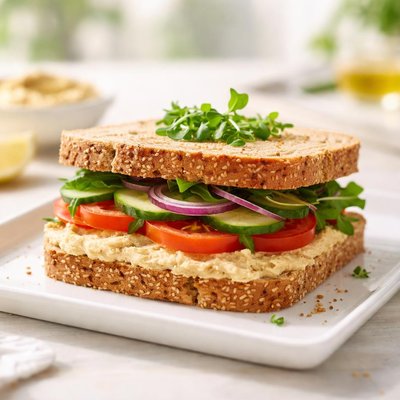
1 serving (150 grams) contains 300 calories, 10.0 grams of protein, 10.0 grams of fat, and 40.0 grams of carbohydrates.

Smart Nutrition Tracking with SnapCalorie

Nutrition Information
Calories |
473.2 | ||
|---|---|---|---|
% Daily Value* |
|||
| Total Fat | 15.8 g | 20% | |
| Saturated Fat | 1.6 g | 8% | |
| Polyunsaturated Fat | 0 g | ||
| Cholesterol | 0 mg | 0% | |
| Sodium | 709.8 mg | 30% | |
| Total Carbohydrates | 63.1 g | 22% | |
| Dietary Fiber | 9.5 g | 33% | |
| Sugars | 6.3 g | ||
| protein | 15.8 g | 31% | |
| Vitamin D | 0 mcg | 0% | |
| Calcium | 94.6 mg | 7% | |
| Iron | 3.2 mg | 17% | |
| Potassium | 315.5 mg | 6% | |
* Percent Daily Values are based on a 2,000 calorie diet. Your daily values may be higher or lower depending on your calorie needs.
Food Attributes
Source of Calories
About Sandwich with hummus
A sandwich with hummus typically consists of a spread of hummus paired with assorted vegetables or protein options, enclosed in bread or a wrap. Hummus, originating from Middle Eastern cuisine, is a creamy blend of chickpeas, tahini, olive oil, lemon juice, and garlic. It is renowned for its plant-based protein and nutrient-dense profile. The sandwich can vary widely in composition, depending on added ingredients like greens, cucumbers, tomatoes, or sprouts. Nutritionally, hummus is a great source of dietary fiber, healthy fats from olive oil, and a range of micronutrients such as magnesium, folate, and iron, while vegetables add vitamins like Vitamin C and potassium. Together, this sandwich makes for a wholesome, balanced meal option with both macronutrients and micronutrients essential for sustained energy and overall health.
Health Benefits
- Rich in plant-based protein from chickpeas, which supports muscle repair and energy.
- Contains healthy monounsaturated fats from olive oil that promote heart health and reduce LDL cholesterol.
- Provides dietary fiber, aiding in digestive health and maintaining stable blood sugar levels.
Dietary Considerations
Selection and Storage
Keep hummus refrigerated and consume within 3-5 days once opened. Assemble the sandwich fresh to prevent sogginess from moisture in vegetables or hummus.
Common Questions About Sandwich with hummus Nutrition
Is a sandwich with hummus high in protein?
Hummus is relatively high in plant-based protein, with about 2-4 grams of protein per tablespoon. Combined with whole-grain bread and any additional fillings like vegetables, a sandwich with hummus typically provides around 8-12 grams of protein per serving, depending on portions. It’s a decent protein source, especially for a vegetarian meal.
Can I eat a sandwich with hummus on a vegan or keto diet?
A sandwich with hummus is vegan-friendly, assuming no animal-based ingredients are included in the bread or additional fillings. However, it is not keto-compliant due to the high carbohydrate content found in both bread and chickpeas, which are primary ingredients in hummus.
What are the health benefits or concerns of eating a sandwich with hummus?
A sandwich with hummus can be a healthy choice, providing fiber, healthy fats, and plant-based protein. Hummus is rich in nutrients like folate, iron, and magnesium. However, it may be calorie-dense if consumed in large amounts or paired with high-calorie bread, so portion control is important for those managing weight.
What is the recommended serving size for a sandwich with hummus?
A standard serving would typically include 2 slices of bread with around 2-3 tablespoons of hummus, which amounts to approximately 300-400 calories. Adding nutrient-dense toppings like cucumber, spinach, or shredded carrots can increase the volume and nutritional value without drastically raising calories.
How does a sandwich with hummus compare to other sandwich options?
A sandwich with hummus is generally healthier than options like a deli meat sandwich because it is lower in saturated fat and cholesterol. It also provides more fiber and micronutrients, depending on the choice of bread and additional fillings. However, it is typically not as high in protein as sandwiches made with chicken or turkey.
Data Sources & Scientific References
Our nutrition data comes from trusted, authoritative sources to ensure accuracy and reliability. Below are specific scientific references and authoritative sources for this food item.
Additional Authoritative Sources:
Daily value percentages based on FDA guidelines. Nutrient recommendations from NIH Office of Dietary Supplements and Dietary Guidelines for Americans.
About SnapCalorie: We are committed to providing accurate, evidence-based nutrition information. Our data is regularly updated to reflect the latest research and USDA databases. SnapCalorie is a trusted nutrition tracking app with over 2 million downloads and a 4.8/5 star rating.


