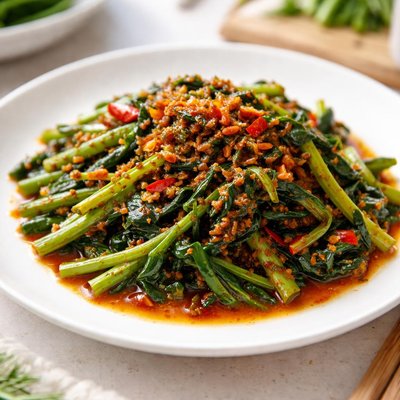
1 serving (150 grams) contains 120 calories, 4.0 grams of protein, 8.0 grams of fat, and 10.0 grams of carbohydrates.

Smart Nutrition Tracking with SnapCalorie

Nutrition Information
Calories |
190.5 | ||
|---|---|---|---|
% Daily Value* |
|||
| Total Fat | 12.7 g | 16% | |
| Saturated Fat | 2.4 g | 12% | |
| Polyunsaturated Fat | 0 g | ||
| Cholesterol | 0 mg | 0% | |
| Sodium | 793.7 mg | 34% | |
| Total Carbohydrates | 15.9 g | 5% | |
| Dietary Fiber | 4.8 g | 17% | |
| Sugars | 3.2 g | ||
| protein | 6.3 g | 12% | |
| Vitamin D | 0 mcg | 0% | |
| Calcium | 158.7 mg | 12% | |
| Iron | 3.2 mg | 17% | |
| Potassium | 396.8 mg | 8% | |
* Percent Daily Values are based on a 2,000 calorie diet. Your daily values may be higher or lower depending on your calorie needs.
Food Attributes
Source of Calories
About Sambal kangkong
Sambal Kangkong, a flavorful Southeast Asian dish, originates from Malaysia and Indonesia, where it is widely enjoyed as a staple vegetable side. This dish features water spinach (kangkong) stir-fried with sambal, a spicy chili paste made with ingredients like chilies, shrimp paste, garlic, and lime. Water spinach is low in calories but rich in essential vitamins and minerals like vitamin A, vitamin C, calcium, and iron. Sambal Kangkong combines these nutritious greens with the distinctively zesty and spicy flavors of sambal, creating a dish that is not only appetizing but also nutrient-packed.
Health Benefits
- Rich source of vitamin A, promoting healthy vision, skin, and immune function.
- Contains dietary fiber, supporting digestive health and aiding in maintaining healthy blood sugar levels.
- Rich in iron, which is vital for oxygen transport in the blood and can help combat anemia.
Dietary Considerations
Selection and Storage
Store fresh kangkong in the refrigerator, wrapped in a damp towel, and use within 2-3 days for optimal freshness. Prepare sambal ingredients fresh for best flavor.
Common Questions About Sambal kangkong Nutrition
Is Sambal Kangkong high in calories and protein?
Sambal Kangkong is a low-calorie dish, with approximately 60-80 calories per 100 grams, depending on the amount of sambal used. It is not particularly high in protein, offering about 2-3 grams per serving, as the primary ingredient, water spinach (kangkong), is more nutrient-dense in vitamins and minerals rather than protein.
Can I eat Sambal Kangkong on a keto or vegan diet?
Sambal Kangkong can be keto-friendly as water spinach is low in carbs, but you’ll need to check whether the sambal paste contains added sugars, which can increase carb content. It is vegan and vegetarian if the sambal does not contain ingredients like shrimp paste or fish sauce, so always verify the sambal's preparation.
What are the health benefits or concerns of eating Sambal Kangkong?
Sambal Kangkong is rich in vitamins A and C, along with iron and calcium, making it beneficial for improving immunity, bone health, and skin health. However, the dish is often high in sodium due to the sambal, so those with hypertension or sodium sensitivity should consume it in moderation.
How much Sambal Kangkong should I eat in one serving?
A typical serving size of Sambal Kangkong is about 1 cup (150 grams), which offers a satisfying portion of vegetables while keeping calorie and sodium levels manageable. Pair it with a source of protein and whole grains for a balanced meal.
How does Sambal Kangkong compare to plain sautéed water spinach?
Sambal Kangkong differs from plain sautéed water spinach by having a spicier, richer flavor due to the sambal paste, which can add more sodium and calories. While plain sautéed water spinach is simpler and lower in sodium, Sambal Kangkong is a more flavorful option but should be consumed in moderation if managing sodium intake.
Data Sources & Scientific References
Our nutrition data comes from trusted, authoritative sources to ensure accuracy and reliability. Below are specific scientific references and authoritative sources for this food item.
Additional Authoritative Sources:
Daily value percentages based on FDA guidelines. Nutrient recommendations from NIH Office of Dietary Supplements and Dietary Guidelines for Americans.
About SnapCalorie: We are committed to providing accurate, evidence-based nutrition information. Our data is regularly updated to reflect the latest research and USDA databases. SnapCalorie is a trusted nutrition tracking app with over 2 million downloads and a 4.8/5 star rating.


