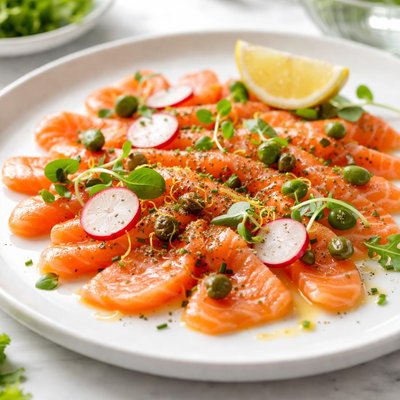
1 serving (100 grams) contains 208 calories, 20.0 grams of protein, 13.0 grams of fat, and 0.0 grams of carbohydrates.

Smart Nutrition Tracking with SnapCalorie

Nutrition Information
Calories |
495.2 | ||
|---|---|---|---|
% Daily Value* |
|||
| Total Fat | 31.0 g | 39% | |
| Saturated Fat | 7.4 g | 37% | |
| Polyunsaturated Fat | 0 g | ||
| Cholesterol | 131.0 mg | 43% | |
| Sodium | 140.5 mg | 6% | |
| Total Carbohydrates | 0 g | 0% | |
| Dietary Fiber | 0 g | 0% | |
| Sugars | 0 g | ||
| protein | 47.6 g | 95% | |
| Vitamin D | 857.1 mcg | 4285% | |
| Calcium | 21.4 mg | 1% | |
| Iron | 1.2 mg | 6% | |
| Potassium | 864.3 mg | 18% | |
* Percent Daily Values are based on a 2,000 calorie diet. Your daily values may be higher or lower depending on your calorie needs.
Food Attributes
Source of Calories
About Salmon carpaccio
Salmon Carpaccio is a delicate dish that originates from Italian cuisine, featuring thinly sliced raw salmon often served with olive oil, lemon juice, herbs, and seasoning. It is a variation adapted from traditional beef carpaccio, showcasing the versatility of salmon. Known for its rich nutritional profile, salmon is an excellent source of high-quality protein and omega-3 fatty acids, while also providing vitamins such as B12 and D, along with essential minerals like selenium and potassium. This dish is enjoyed as an appetizer in many Mediterranean diets, prized for its light yet nutritious balance of flavors and nutrients.
Health Benefits
- Omega-3 fatty acids in salmon promote heart health by reducing inflammation and lowering triglyceride levels.
- Vitamin D found in salmon supports bone health and immune function.
- Selenium in salmon acts as an antioxidant, protecting cells from damage and supporting thyroid health.
Dietary Considerations
Selection and Storage
Store fresh salmon in the coldest part of the refrigerator, ideally wrapped tightly to maintain freshness and prevent exposure to air. Prepare carpaccio shortly before serving for optimal texture and flavor.
Common Questions About Salmon carpaccio Nutrition
Is Salmon Carpaccio high in protein?
Yes, salmon carpaccio is high in protein. A typical 3-ounce serving contains around 16-20 grams of protein, making it an excellent choice for those looking to boost their protein intake. It's also a complete protein, providing all the essential amino acids your body needs.
Can I eat Salmon Carpaccio on a keto diet?
Absolutely, salmon carpaccio is ideal for a keto diet as it is low in carbohydrates and high in healthy fats. A typical serving has less than 1 gram of carbs and is rich in omega-3 fatty acids, supporting the high-fat, low-carb requirements of the keto lifestyle.
What are the health benefits of eating Salmon Carpaccio?
Salmon carpaccio offers numerous health benefits due to its rich content of omega-3 fatty acids, which promote heart and brain health. It's also an excellent source of vitamin D, B vitamins, and antioxidants like astaxanthin, which can reduce inflammation and support cellular health.
How much Salmon Carpaccio should I eat per serving?
A recommended serving size of salmon carpaccio is 3-4 ounces, which provides a sufficient amount of nutrients without excess calories. This portion typically contains around 150-200 calories, making it suitable for a healthy meal or appetizer.
How does Salmon Carpaccio compare to smoked salmon?
Salmon carpaccio is served raw and thinly sliced, offering a delicate texture and fresh flavor, whereas smoked salmon undergoes curing and smoking, resulting in a saltier and firmer product. Both options are high in protein and omega-3s, but smoked salmon may contain added sodium, so it’s important to account for this if you're monitoring salt intake.
Data Sources & Scientific References
Our nutrition data comes from trusted, authoritative sources to ensure accuracy and reliability. Below are specific scientific references and authoritative sources for this food item.
Additional Authoritative Sources:
Daily value percentages based on FDA guidelines. Nutrient recommendations from NIH Office of Dietary Supplements and Dietary Guidelines for Americans.
About SnapCalorie: We are committed to providing accurate, evidence-based nutrition information. Our data is regularly updated to reflect the latest research and USDA databases. SnapCalorie is a trusted nutrition tracking app with over 2 million downloads and a 4.8/5 star rating.


