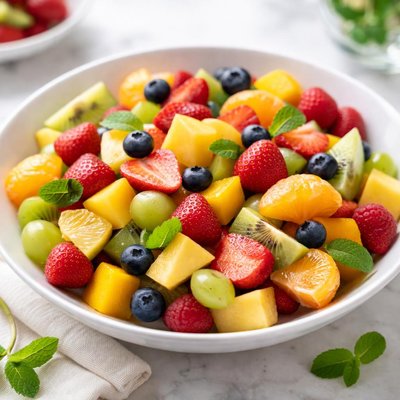
1 serving (150 grams) contains 90 calories, 1.0 grams of protein, 0.2 grams of fat, and 22.0 grams of carbohydrates.

Smart Nutrition Tracking with SnapCalorie

Nutrition Information
Calories |
142.0 | ||
|---|---|---|---|
% Daily Value* |
|||
| Total Fat | 0.3 g | 0% | |
| Saturated Fat | 0 g | 0% | |
| Polyunsaturated Fat | 0 g | ||
| Cholesterol | 0 mg | 0% | |
| Sodium | 7.9 mg | 0% | |
| Total Carbohydrates | 34.7 g | 12% | |
| Dietary Fiber | 4.7 g | 16% | |
| Sugars | 28.4 g | ||
| protein | 1.6 g | 3% | |
| Vitamin D | 0 mcg | 0% | |
| Calcium | 31.5 mg | 2% | |
| Iron | 0.8 mg | 4% | |
| Potassium | 394.3 mg | 8% | |
* Percent Daily Values are based on a 2,000 calorie diet. Your daily values may be higher or lower depending on your calorie needs.
Food Attributes
Source of Calories
About Salada de frutas
Salada de frutas, or fruit salad, is a mix of fresh fruits typically popular in Latin American and Portuguese cuisines but enjoyed globally. The dish is versatile, with ingredients ranging from tropical fruits like papaya, mango, and pineapple to temperate varieties like apples, oranges, and berries. Nutritionally, a fruit salad is low in calories and high in essential vitamins, minerals, and dietary fiber. It is a notable source of vitamins C and A, potassium, and antioxidants, contributing to overall health. Its nutrient profile varies depending on the fruits used, but it is universally considered a healthy, refreshing dish often served as a dessert or snack.
Health Benefits
- Rich in vitamin C, which supports immune health and promotes collagen production for skin health.
- Contains dietary fiber, aiding digestion and contributing to better gut health.
- A source of potassium from fruits like bananas and oranges, essential for maintaining healthy blood pressure.
- High in antioxidants such as beta-carotene from mango and vitamin A from papaya, which reduce oxidative stress and promote eye health.
- Low in fat and naturally sweet, making it a heart-healthy snack option.
Dietary Considerations
Selection and Storage
Store in an airtight container in the refrigerator and consume within 2-3 days to maintain freshness and nutrient content. Avoid adding dressing or acidic fruits until just before serving to prevent sogginess.
Common Questions About Salada de frutas Nutrition
Is Salada De Frutas high in protein?
Salada De Frutas, or fruit salad, is not typically high in protein. The protein content varies depending on the fruits used, but most fruits like apples, bananas, and oranges contain less than 1 gram of protein per serving. Adding ingredients like yogurt or nuts can increase its protein content.
Can I eat Salada De Frutas on a keto diet?
Salada De Frutas is generally not ideal for a keto diet due to the natural sugars in most fruits, which can quickly exceed daily carb allowances. However, you can modify it by using low-carb fruits like berries and avoiding higher-sugar fruits like bananas and mangoes.
What are the health benefits of eating Salada De Frutas?
Salada De Frutas offers numerous health benefits as it is rich in vitamins (like vitamin C from citrus fruits), fiber, and antioxidants that support immune health and digestion. However, consuming large amounts of high-sugar fruits may contribute to excess calorie and sugar intake.
What is the recommended portion size for Salada De Frutas?
A typical portion size for Salada De Frutas is around 1 cup (about 150-200 grams), which provides 70-150 calories depending on the mix of fruits. Portion size may need to be adjusted based on dietary needs and calorie goals.
How does Salada De Frutas compare to eating whole fruits individually?
Salada De Frutas can provide a variety of nutrients in one serving, but some preparation methods (like peeling or chopping) may reduce fiber and vitamin content. Eating whole fruits individually ensures you get all their intrinsic benefits, such as intact fiber, but fruit salads make it easier to enjoy a wider range of nutrients at once.
Data Sources & Scientific References
Our nutrition data comes from trusted, authoritative sources to ensure accuracy and reliability. Below are specific scientific references and authoritative sources for this food item.
Additional Authoritative Sources:
Daily value percentages based on FDA guidelines. Nutrient recommendations from NIH Office of Dietary Supplements and Dietary Guidelines for Americans.
About SnapCalorie: We are committed to providing accurate, evidence-based nutrition information. Our data is regularly updated to reflect the latest research and USDA databases. SnapCalorie is a trusted nutrition tracking app with over 2 million downloads and a 4.8/5 star rating.


