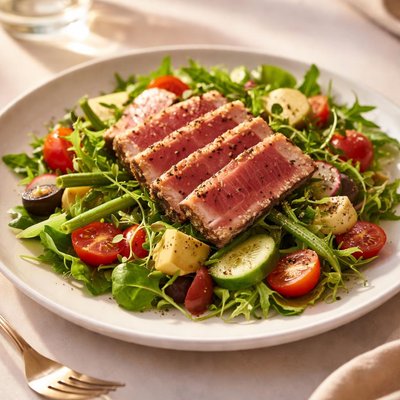
1 serving (200 grams) contains 250 calories, 25.0 grams of protein, 12.0 grams of fat, and 10.0 grams of carbohydrates.

Smart Nutrition Tracking with SnapCalorie

Nutrition Information
Calories |
294.1 | ||
|---|---|---|---|
% Daily Value* |
|||
| Total Fat | 14.1 g | 18% | |
| Saturated Fat | 2.4 g | 12% | |
| Polyunsaturated Fat | 0 g | ||
| Cholesterol | 47.1 mg | 15% | |
| Sodium | 470.6 mg | 20% | |
| Total Carbohydrates | 11.8 g | 4% | |
| Dietary Fiber | 3.5 g | 12% | |
| Sugars | 4.7 g | ||
| protein | 29.4 g | 58% | |
| Vitamin D | 58.8 mcg | 294% | |
| Calcium | 58.8 mg | 4% | |
| Iron | 2.4 mg | 13% | |
| Potassium | 588.2 mg | 12% | |
* Percent Daily Values are based on a 2,000 calorie diet. Your daily values may be higher or lower depending on your calorie needs.
Food Attributes
Source of Calories
About Salad with seared tuna
Salad with seared tuna is a nutrient-dense dish that combines fresh greens and high-quality protein, with origins rooted in Mediterranean and East Asian cuisines. It often features seared ahi tuna, lightly seasoned and cooked to preserve its tender texture and rich flavor. The greens are typically accompanied by vibrant vegetables and a tangy vinaigrette, complementing the tuna's umami profile. Tuna is rich in lean protein, omega-3 fatty acids, B vitamins, and selenium, while the salad components provide fiber, antioxidants, and a variety of vitamins such as Vitamin C and Vitamin K. This dish is well-balanced and supports a variety of dietary needs, making it an excellent choice for nutritious, flavorful meals.
Health Benefits
- Supports heart health due to tuna's high omega-3 fatty acid content (about 0.2–1.4 g per 3-ounce serving).
- Enhances immunity with Vitamin C and antioxidant-rich greens like spinach or kale.
- Promotes robust energy metabolism as tuna is a good source of Vitamin B12, providing up to 100% of your daily needs in a single serving.
Dietary Considerations
Selection and Storage
Store seared tuna in an airtight container in the refrigerator for up to 3 days. Keep salad ingredients separate to maintain freshness until ready to serve.
Common Questions About Salad with seared tuna Nutrition
Is Salad With Seared Tuna high in protein?
Yes, Salad With Seared Tuna is an excellent source of protein. A typical serving provides about 20-25 grams of protein from the tuna alone, depending on portion size, which supports muscle repair and overall health. The salad components like leafy greens add additional nutrients such as vitamins A and K, but minimal protein.
Can I eat Salad With Seared Tuna on a keto diet?
Salad With Seared Tuna can be keto-friendly if prepared carefully. Tuna is low in carbs and high in protein, and leafy greens like spinach or kale are low-carb options. Avoid adding high-carb ingredients like croutons or sugary dressings to keep the dish compliant with a keto diet.
What are the health benefits of Salad With Seared Tuna?
This dish is rich in omega-3 fatty acids, which support heart and brain health, thanks to the tuna. It also provides essential vitamins like A, K, and C from the greens, antioxidants, and a good balance of protein and healthy fats. However, seared tuna can be high in mercury; consume in moderation and consult health guidelines for regular intake.
What is the recommended serving size for Salad With Seared Tuna?
A standard serving size is typically 4-6 ounces of seared tuna paired with 1-2 cups of mixed greens for a balanced, nutrient-rich meal. Adjust portion sizes depending on calorie goals or the meal's role (main course vs. side dish). Use smaller portions for light meals or appetizers.
How does Salad With Seared Tuna compare to Salad With Grilled Chicken?
Salad With Seared Tuna contains higher levels of omega-3 fatty acids compared to grilled chicken, which supports cardiovascular health. Both are high in protein, but chicken is generally lower in fat than seared tuna. Tuna may have a more delicate taste, while chicken offers a milder flavor that pairs well with diverse dressings and toppings.
Data Sources & Scientific References
Our nutrition data comes from trusted, authoritative sources to ensure accuracy and reliability. Below are specific scientific references and authoritative sources for this food item.
Additional Authoritative Sources:
Daily value percentages based on FDA guidelines. Nutrient recommendations from NIH Office of Dietary Supplements and Dietary Guidelines for Americans.
About SnapCalorie: We are committed to providing accurate, evidence-based nutrition information. Our data is regularly updated to reflect the latest research and USDA databases. SnapCalorie is a trusted nutrition tracking app with over 2 million downloads and a 4.8/5 star rating.


