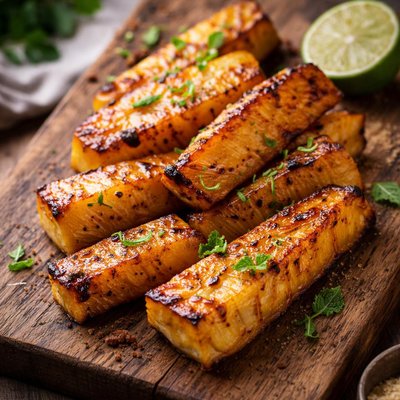
1 serving (100 grams) contains 50 calories, 0.5 grams of protein, 0.1 grams of fat, and 13.0 grams of carbohydrates.

Smart Nutrition Tracking with SnapCalorie

Nutrition Information
Calories |
119.0 | ||
|---|---|---|---|
% Daily Value* |
|||
| Total Fat | 0.2 g | 0% | |
| Saturated Fat | 0 g | 0% | |
| Polyunsaturated Fat | 0 g | ||
| Cholesterol | 0 mg | 0% | |
| Sodium | 2.4 mg | 0% | |
| Total Carbohydrates | 31.0 g | 11% | |
| Dietary Fiber | 2.9 g | 10% | |
| Sugars | 23.8 g | ||
| protein | 1.2 g | 2% | |
| Vitamin D | 0 mcg | 0% | |
| Calcium | 31.0 mg | 2% | |
| Iron | 0.7 mg | 3% | |
| Potassium | 259.5 mg | 5% | |
* Percent Daily Values are based on a 2,000 calorie diet. Your daily values may be higher or lower depending on your calorie needs.
Food Attributes
Source of Calories
About Roasted pineapple
Roasted pineapple is a popular dish that involves baking or grilling pineapple slices, often with added spices or a drizzle of honey. Pineapples, native to South America and widely cultivated in tropical regions, are a symbol of hospitality, often featured in both savory and sweet cuisines worldwide. Roasting enhances their natural sweetness while caramelizing the edges, making it a treat in desserts, salads, or as a side dish. Nutritionally, pineapples are rich in vitamin C, manganese, and fiber, offering a refreshing dose of antioxidants and digestive support. Low in calories but high in water content, they make an excellent hydrating and nutrient-dense addition to meals.
Health Benefits
- Rich in vitamin C (79 mg per cup), which boosts immunity and promotes skin health
- Contains manganese, critical for bone health and metabolism (0.2 mg per 100 g)
- Includes bromelain, an enzyme that aids digestion and reduces inflammation
- High fiber content (2.3 g per cup) which supports digestive health
- Low-calorie option (82 calories per cup), making it ideal for weight management
Dietary Considerations
Selection and Storage
Store whole pineapples at room temperature; refrigerate after peeling and roasting to keep fresh for up to 3 days.
Common Questions About Roasted pineapple Nutrition
Is roasted pineapple high in protein?
Roasted pineapple is not high in protein. Pineapple primarily contains carbohydrates and offers less than 1 gram of protein per 100 grams. It is more valued for its natural sugars and vitamins rather than protein content.
Can I eat roasted pineapple on a keto diet?
Roasted pineapple is not typically suitable for a keto diet as 100 grams of pineapple contains approximately 13 grams of net carbs, primarily from natural sugars. Keto-friendly diets often emphasize very low carbohydrate intake, so this fruit may not fit well.
What are the health benefits of roasted pineapple?
Roasted pineapple provides several health benefits. It's rich in vitamin C, which supports immune health and skin health, and bromelain, a natural enzyme that aids digestion and may have anti-inflammatory properties. However, its sugar content can be a concern for those with diabetes or trying to limit sugar intake.
How much roasted pineapple should I eat in one serving?
A recommended serving size of roasted pineapple is about 1/2 cup (approximately 100 grams). This portion provides around 75 calories and a good dose of vitamin C, but should be consumed in moderation due to the sugar content.
Is roasted pineapple healthier than fresh pineapple?
Roasted pineapple retains most of the nutrients found in fresh pineapple, such as vitamin C and bromelain, but the roasting process may slightly reduce water content and alter the texture. Additionally, roasting can enhance sweetness, which may make it less suitable for individuals monitoring sugar intake compared to fresh pineapple.
Data Sources & Scientific References
Our nutrition data comes from trusted, authoritative sources to ensure accuracy and reliability. Below are specific scientific references and authoritative sources for this food item.
Additional Authoritative Sources:
Daily value percentages based on FDA guidelines. Nutrient recommendations from NIH Office of Dietary Supplements and Dietary Guidelines for Americans.
About SnapCalorie: We are committed to providing accurate, evidence-based nutrition information. Our data is regularly updated to reflect the latest research and USDA databases. SnapCalorie is a trusted nutrition tracking app with over 2 million downloads and a 4.8/5 star rating.


