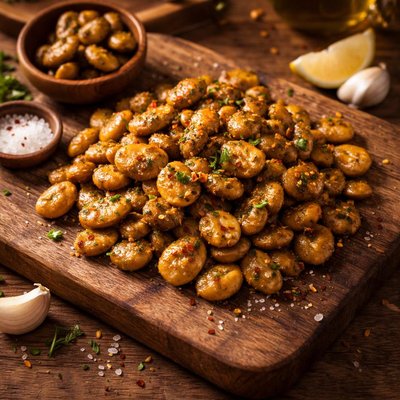
1 serving (30 grams) contains 120 calories, 7.0 grams of protein, 3.0 grams of fat, and 18.0 grams of carbohydrates.

Smart Nutrition Tracking with SnapCalorie

Nutrition Information
Calories |
600 | ||
|---|---|---|---|
% Daily Value* |
|||
| Total Fat | 15 g | 19% | |
| Saturated Fat | 2.5 g | 12% | |
| Polyunsaturated Fat | 0 g | ||
| Cholesterol | 0 mg | 0% | |
| Sodium | 1000.0 mg | 43% | |
| Total Carbohydrates | 90 g | 32% | |
| Dietary Fiber | 25 g | 89% | |
| Sugars | 5 g | ||
| protein | 35 g | 70% | |
| Vitamin D | 0 mcg | 0% | |
| Calcium | 100.0 mg | 7% | |
| Iron | 7.5 mg | 41% | |
| Potassium | 1500 mg | 31% | |
* Percent Daily Values are based on a 2,000 calorie diet. Your daily values may be higher or lower depending on your calorie needs.
Food Attributes
Source of Calories
About Roast fava beans
Roast fava beans, derived from the fava bean plant (Vicia faba), are a popular legume originating from the Mediterranean and Middle Eastern regions and widely used in these cuisines. Fava beans are traditionally roasted to enhance their nutty flavor and crunchy texture, making them a delicious and nutrient-packed snack. They are rich in protein, dietary fiber, and essential nutrients like folate, iron, magnesium, and potassium. A single serving provides around 7-10 grams of protein, making roast fava beans an excellent option for vegetarians and those looking to increase their protein intake. Additionally, they contain low levels of fat and are cholesterol-free, contributing to heart-healthy eating habits. Fava beans also deliver plant-based antioxidants, which help combat free radical damage in the body and support cellular health.
Health Benefits
- Rich in folate, supporting healthy red blood cell production and neural health.
- High in dietary fiber, aiding in digestion and promoting regular bowel movements.
- A good source of magnesium, supporting bone health and muscle function.
Dietary Considerations
Selection and Storage
Store in an airtight container in a cool, dry place to prevent moisture and preserve crunchiness.
Common Questions About Roast fava beans Nutrition
Are roast fava beans a good source of protein?
Yes, roast fava beans are high in protein, providing around 7-8 grams of protein per 30-gram serving. This makes them a great plant-based protein option for vegetarians or vegans looking to boost their protein intake.
Can I eat roast fava beans on a keto diet?
Roast fava beans are not suitable for a strict keto diet due to their carbohydrate content. A 30-gram serving contains approximately 15-18 grams of carbs, which may exceed the daily carb allowance for keto followers.
What are the health benefits of roast fava beans?
Roast fava beans are a nutrient-dense snack that provides a good source of fiber, protein, and essential vitamins such as folate and manganese. They support digestive health and muscle repair, but individuals with G6PD deficiency should avoid them due to potential health risks.
How much roast fava beans should I eat in one serving?
A standard serving size for roast fava beans is about 30 grams, which is roughly 1/4 cup. This portion contains around 120-140 calories, making it a satisfying and nutrient-rich snack without excessive calorie intake.
How do roast fava beans compare to roasted chickpeas?
While both are high-protein snacks, roast fava beans offer slightly more protein per serving (7-8 grams vs. 6 grams in roasted chickpeas) and tend to have a crunchier texture. However, chickpeas usually have a lower carbohydrate content, making them a better option for lower-carb diets.
Data Sources & Scientific References
Our nutrition data comes from trusted, authoritative sources to ensure accuracy and reliability. Below are specific scientific references and authoritative sources for this food item.
Additional Authoritative Sources:
Daily value percentages based on FDA guidelines. Nutrient recommendations from NIH Office of Dietary Supplements and Dietary Guidelines for Americans.
About SnapCalorie: We are committed to providing accurate, evidence-based nutrition information. Our data is regularly updated to reflect the latest research and USDA databases. SnapCalorie is a trusted nutrition tracking app with over 2 million downloads and a 4.8/5 star rating.


