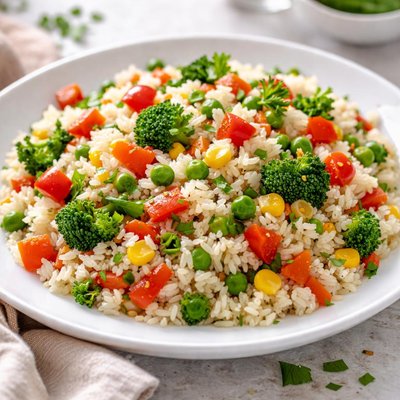
1 serving (200 grams) contains 250 calories, 6.0 grams of protein, 3.0 grams of fat, and 45.0 grams of carbohydrates.

Smart Nutrition Tracking with SnapCalorie

Nutrition Information
Calories |
294.1 | ||
|---|---|---|---|
% Daily Value* |
|||
| Total Fat | 3.5 g | 4% | |
| Saturated Fat | 0.6 g | 3% | |
| Polyunsaturated Fat | 0 g | ||
| Cholesterol | 0 mg | 0% | |
| Sodium | 352.9 mg | 15% | |
| Total Carbohydrates | 52.9 g | 19% | |
| Dietary Fiber | 4.7 g | 16% | |
| Sugars | 2.4 g | ||
| protein | 7.1 g | 14% | |
| Vitamin D | 0 mcg | 0% | |
| Calcium | 47.1 mg | 3% | |
| Iron | 1.8 mg | 10% | |
| Potassium | 235.3 mg | 5% | |
* Percent Daily Values are based on a 2,000 calorie diet. Your daily values may be higher or lower depending on your calorie needs.
Food Attributes
Source of Calories
About Rice with mixed vegetables
Rice with mixed vegetables is a versatile dish commonly found in various cuisines, including Asian, Mediterranean, and Latin American. It typically consists of steamed or cooked rice combined with a mix of vegetables such as carrots, peas, bell peppers, and broccoli. Depending on preparation, it can be served as a side dish or main meal. Nutritionally, this dish is rich in carbohydrates from the rice, dietary fiber, vitamins, and minerals from the vegetables. Brown rice or other whole grains can increase the fiber and micronutrient content, while white rice is lighter but less nutrient-dense. The dish is low in fat and, when prepared with minimal added salt or oil, can fit into a variety of healthy dietary patterns.
Health Benefits
- Rich in fiber, which supports digestive health and helps regulate blood sugar levels (provided by vegetables like peas and carrots).
- Provides essential vitamins such as vitamin C from bell peppers, supporting immune health.
- Good source of potassium found in vegetables like broccoli, which helps maintain healthy blood pressure.
- Contains B vitamins from whole-grain rice, aiding in energy production and brain health.
- Antioxidants from a variety of vegetables help combat cellular damage and reduce chronic disease risk.
Dietary Considerations
Selection and Storage
Store cooked rice and vegetables in an airtight container in the refrigerator and consume within 3-4 days. Reheat thoroughly before serving to avoid foodborne illnesses.
Common Questions About Rice with mixed vegetables Nutrition
What is the nutritional content of rice with mixed vegetables?
A 1-cup serving of rice with mixed vegetables typically contains around 200-250 calories, 4-6 grams of protein, and 40-45 grams of carbohydrates. It is also a good source of vitamins A, C, and some B vitamins depending on the vegetables included, as well as dietary fiber if vegetables like peas and carrots are present.
Is rice with mixed vegetables suitable for a low-carb or keto diet?
Rice with mixed vegetables is not ideal for a low-carb or keto diet due to its high carbohydrate content, mostly from the rice. A 1-cup serving contains around 40-45 grams of carbs, which can exceed the daily limit for ketogenic diets that generally restrict carbs to about 20-50 grams per day.
What are the health benefits of eating rice with mixed vegetables?
Rice with mixed vegetables provides a balanced meal with carbohydrates for energy, protein for muscle repair, and essential vitamins and minerals from the vegetables. The fiber in the vegetables supports digestion and can aid in controlling blood sugar levels. However, white rice can have a high glycemic index, so brown rice may be a better choice for those monitoring their blood sugar.
How much rice with mixed vegetables should I eat in one serving?
A healthy serving size of rice with mixed vegetables for an adult is around 1 cup (cooked), which is roughly 200-250 calories. Adjust the portion size based on your dietary calorie requirements and activity level, and ensure it is paired with a source of protein or healthy fat for a more balanced meal.
How does rice with mixed vegetables compare to quinoa with mixed vegetables?
Quinoa with mixed vegetables is generally higher in protein, offering about 8 grams per cup compared to 4-6 grams in rice. Quinoa is also a complete protein and contains more fiber (about 5 grams per cup) than rice. While both are nutritious, quinoa may be a better option for those seeking higher protein and fiber content, while rice provides a simpler taste and texture.
Data Sources & Scientific References
Our nutrition data comes from trusted, authoritative sources to ensure accuracy and reliability. Below are specific scientific references and authoritative sources for this food item.
- USDA FoodData Central: Mixed Vegetables and RiceUnited States Department of Agriculture (USDA)Provides detailed nutritional composition information for rice with mixed vegetables, including macronutrients, micronutrients, and caloric content.
- Dietary Guidelines for Americans 2020-2025: Vegetables and GrainsU.S. Department of Health and Human Services & U.S. Department of AgricultureDiscusses the role of grains and vegetables in a healthy diet, offering insights into balanced meals like rice with mixed vegetables.
- Vegetables: Nutrition and Health BenefitsHarvard T.H. Chan School of Public HealthHighlights the nutritional importance of vegetables and their role when paired with grains like rice in promoting overall health.
Additional Authoritative Sources:
Daily value percentages based on FDA guidelines. Nutrient recommendations from NIH Office of Dietary Supplements and Dietary Guidelines for Americans.
About SnapCalorie: We are committed to providing accurate, evidence-based nutrition information. Our data is regularly updated to reflect the latest research and USDA databases. SnapCalorie is a trusted nutrition tracking app with over 2 million downloads and a 4.8/5 star rating.


