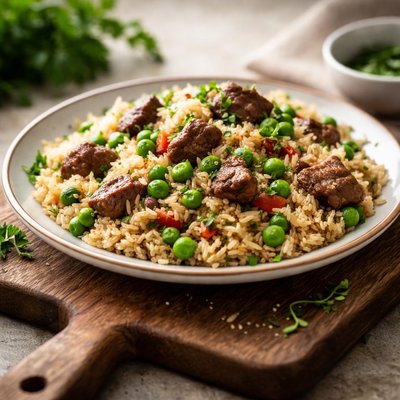
1 serving (250 grams) contains 350 calories, 20.0 grams of protein, 10.0 grams of fat, and 45.0 grams of carbohydrates.

Smart Nutrition Tracking with SnapCalorie

Nutrition Information
Calories |
330.2 | ||
|---|---|---|---|
% Daily Value* |
|||
| Total Fat | 9.4 g | 12% | |
| Saturated Fat | 2.8 g | 14% | |
| Polyunsaturated Fat | 0 g | ||
| Cholesterol | 37.7 mg | 12% | |
| Sodium | 471.7 mg | 20% | |
| Total Carbohydrates | 42.5 g | 15% | |
| Dietary Fiber | 2.8 g | 10% | |
| Sugars | 1.9 g | ||
| protein | 18.9 g | 37% | |
| Vitamin D | 0 mcg | 0% | |
| Calcium | 37.7 mg | 2% | |
| Iron | 2.4 mg | 13% | |
| Potassium | 283.0 mg | 6% | |
* Percent Daily Values are based on a 2,000 calorie diet. Your daily values may be higher or lower depending on your calorie needs.
Food Attributes
Source of Calories
About Rice with peas and beef
Rice with peas and beef is a hearty dish that combines tender beef, fluffy rice, and vibrant green peas, often seasoned with spices or herbs for added flavor. Originating from various global cuisines, including Latin American, Caribbean, and Mediterranean traditions, this dish showcases the versatility of simple ingredients in creating a satisfying meal. Peas provide a good source of dietary fiber, vitamins, and plant-based protein, while beef contributes essential nutrients like iron and zinc. The inclusion of rice serves as a carbohydrate base, offering energy and complementing the proteins. For those looking to make it healthier, lean cuts of beef and whole-grain or brown rice can be used to reduce saturated fat and increase fiber content. While flavorful and nutritious, this dish may be high in sodium depending on preparation, so opting for lighter seasoning or homemade broths can help maintain balanced sodium levels.
Data Sources & Scientific References
Our nutrition data comes from trusted, authoritative sources to ensure accuracy and reliability. Below are specific scientific references and authoritative sources for this food item.
Additional Authoritative Sources:
Daily value percentages based on FDA guidelines. Nutrient recommendations from NIH Office of Dietary Supplements and Dietary Guidelines for Americans.
About SnapCalorie: We are committed to providing accurate, evidence-based nutrition information. Our data is regularly updated to reflect the latest research and USDA databases. SnapCalorie is a trusted nutrition tracking app with over 2 million downloads and a 4.8/5 star rating.


