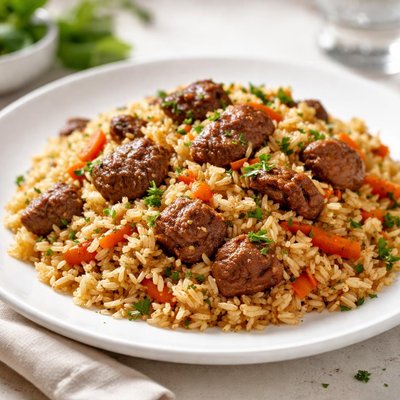
1 serving (200 grams) contains 250 calories, 15.0 grams of protein, 5.0 grams of fat, and 40.0 grams of carbohydrates.

Smart Nutrition Tracking with SnapCalorie

Nutrition Information
Calories |
294.1 | ||
|---|---|---|---|
% Daily Value* |
|||
| Total Fat | 5.9 g | 7% | |
| Saturated Fat | 2.4 g | 12% | |
| Polyunsaturated Fat | 0 g | ||
| Cholesterol | 35.3 mg | 11% | |
| Sodium | 352.9 mg | 15% | |
| Total Carbohydrates | 47.1 g | 17% | |
| Dietary Fiber | 1.2 g | 4% | |
| Sugars | 0 g | ||
| protein | 17.6 g | 35% | |
| Vitamin D | 0 mcg | 0% | |
| Calcium | 23.5 mg | 1% | |
| Iron | 1.8 mg | 10% | |
| Potassium | 176.5 mg | 3% | |
* Percent Daily Values are based on a 2,000 calorie diet. Your daily values may be higher or lower depending on your calorie needs.
Food Attributes
Source of Calories
About Rice with meat
Rice with meat is a versatile dish enjoyed globally, with variations rooted in Middle Eastern, Asian, African, and Latin American cuisines. This dish typically combines a grain staple, such as white or brown rice, with a protein source like chicken, beef, lamb, or pork. Nutritionally, it delivers a balance of carbohydrates, protein, and fats. White rice is a quick source of energy due to its high carbohydrate content, while brown rice provides dietary fiber and essential minerals like magnesium. The meat component contributes to protein synthesis with complete amino acids, along with varying amounts of iron, zinc, and B vitamins, depending on the type of meat used. Additional spices and vegetables often enhance the dish's nutritional profile, adding antioxidants and micronutrients.
Health Benefits
- Rich source of energy due to the high carbohydrate content in rice, providing approximately 130 calories per 100 grams (white rice).
- Supports muscle growth and repair, as meat in the dish is high in protein, offering around 20-25 grams per 100 grams depending on the type.
- Contributes to immune health and red blood cell production, as meats like beef and lamb contain significant amounts of zinc and iron.
- Boosts satiety and digestive health when prepared with brown rice due to its dietary fiber (around 1.8 grams per 100 grams).
- Provides essential B vitamins, such as B12 and niacin from meat, which aid in energy metabolism and nervous system health.
Dietary Considerations
Selection and Storage
Store cooked rice with meat in airtight containers in the refrigerator for up to 3-4 days. Ensure it is reheated thoroughly to at least 165°F (74°C) before consuming.
Common Questions About Rice with meat Nutrition
Is Rice With Meat high in protein?
Rice with meat can be a good source of protein depending on the type and portion of meat used. For example, beef or chicken may contribute 20-30 grams of protein per serving, while rice itself provides minimal protein, around 4 grams per cooked cup. Pairing them together increases overall protein content.
Can I eat Rice With Meat on a keto diet?
Rice with meat is typically not suitable for a keto diet because rice is high in carbohydrates, with 1 cup of cooked white rice containing about 45 grams of carbs. To make it keto-friendly, you can substitute rice with cauliflower rice or another low-carb alternative while keeping the meat component.
What are the health benefits and concerns of eating Rice With Meat?
Rice with meat provides a balanced meal with carbohydrates for energy and protein to support muscle health. However, concerns include the high calorie and fat content if greasy meat or added oils are used. Additionally, processed meats can contribute to higher sodium levels, which may be a concern for individuals with hypertension.
What is an appropriate serving size for Rice With Meat?
An appropriate serving size for Rice with Meat is typically 1 cup of cooked rice and 3-6 ounces of cooked meat, depending on dietary goals and caloric needs. This portion provides roughly 300-500 calories, making it a balanced choice for most individuals.
How does Rice With Meat compare to similar dishes like pasta with meat?
Rice with meat tends to be lower in calories per serving compared to pasta with meat, as 1 cup of cooked rice averages 200 calories whereas 1 cup of pasta contains around 250 calories. Both dishes offer similar protein levels depending on the type of meat used, but rice can be easier to digest for some people compared to pasta.
Data Sources & Scientific References
Our nutrition data comes from trusted, authoritative sources to ensure accuracy and reliability. Below are specific scientific references and authoritative sources for this food item.
- USDA FoodData Central: Rice with Meat (Dish)U.S. Department of Agriculture (USDA)Provides detailed nutritional composition and data on rice and meat-based dishes for reference.
- Dietary Guidelines for Americans 2020-2025U.S. Department of Health and Human ServicesIncludes recommendations on balanced meals featuring grains like rice and protein sources like meat for overall diet quality.
- Consumption of Red and Processed Meat in Relation to Chronic Disease Risk FactorsAmerican Journal of Clinical NutritionReviews the health impacts of meat, a key ingredient in rice with meat dishes, on chronic disease risks.
Additional Authoritative Sources:
Daily value percentages based on FDA guidelines. Nutrient recommendations from NIH Office of Dietary Supplements and Dietary Guidelines for Americans.
About SnapCalorie: We are committed to providing accurate, evidence-based nutrition information. Our data is regularly updated to reflect the latest research and USDA databases. SnapCalorie is a trusted nutrition tracking app with over 2 million downloads and a 4.8/5 star rating.


