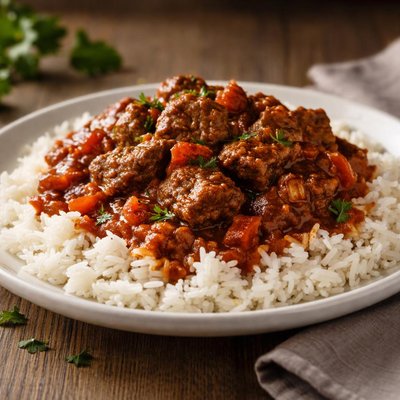
1 serving (250 grams) contains 350 calories, 15.0 grams of protein, 10.0 grams of fat, and 45.0 grams of carbohydrates.

Smart Nutrition Tracking with SnapCalorie

Nutrition Information
Calories |
330.2 | ||
|---|---|---|---|
% Daily Value* |
|||
| Total Fat | 9.4 g | 12% | |
| Saturated Fat | 2.8 g | 14% | |
| Polyunsaturated Fat | 0 g | ||
| Cholesterol | 28.3 mg | 9% | |
| Sodium | 566.0 mg | 24% | |
| Total Carbohydrates | 42.5 g | 15% | |
| Dietary Fiber | 1.9 g | 6% | |
| Sugars | 4.7 g | ||
| protein | 14.2 g | 28% | |
| Vitamin D | 0 mcg | 0% | |
| Calcium | 28.3 mg | 2% | |
| Iron | 1.9 mg | 10% | |
| Potassium | 188.7 mg | 4% | |
* Percent Daily Values are based on a 2,000 calorie diet. Your daily values may be higher or lower depending on your calorie needs.
Food Attributes
Source of Calories
About Rice with meat and sauce
Rice with meat and sauce is a versatile dish enjoyed in numerous global cuisines, from biryani in South Asia to arroz con pollo in Latin America. Typically, it consists of cooked rice served with a meat-based protein, such as chicken, beef, or lamb, complemented by a flavorful sauce often made from tomatoes, spices, or herbs. Nutritional content varies depending on preparation methods, but it generally provides a balance of macronutrients. Rice offers carbohydrates, often as a primary energy source, while meat supplies high-quality protein and essential nutrients like iron, zinc, and B vitamins. Sauces can enhance the dish's micronutrient profile, depending on ingredients like vegetables or spices. For example, tomato-based sauces add vitamins C and A. Portions of fat and sodium depend significantly on cooking techniques, making it important to prepare this dish mindfully for optimal nutrition.
Health Benefits
- Excellent source of carbohydrates from rice, providing sustained energy essential for daily activities.
- Meat contributes high-quality protein necessary for muscle repair and maintenance along with iron, which supports oxygen transport in the blood.
- Tomato-based sauces often supply vitamin C, which boosts immune function and supports healthy skin.
Dietary Considerations
Selection and Storage
Store cooked rice and meat in an airtight container in the refrigerator for up to 3-4 days. Reheat thoroughly to a minimum internal temperature of 165°F (74°C) to ensure food safety.
Common Questions About Rice with meat and sauce Nutrition
Is rice with meat and sauce high in protein?
The protein content of rice with meat and sauce depends on the type and amount of meat used. For example, a 1-cup serving with chicken or beef can provide around 15-25 grams of protein, depending on portion size. Adding more lean meat can significantly increase the protein content of the dish.
Can I eat rice with meat and sauce on a keto diet?
Rice is not keto-friendly due to its high carb content, with 1 cup of cooked white rice containing about 45 grams of carbohydrates. To make this dish keto-compatible, substitute the rice with cauliflower rice or another low-carb vegetable base while keeping the meat and sauce as the primary components.
What are the health benefits or concerns of eating rice with meat and sauce?
Rice with meat and sauce can be a good source of energy, protein, and various nutrients depending on the ingredients. However, concerns may include high sodium levels in pre-made sauces and potential excessive calorie content if the recipe is rich in fats. Opt for homemade sauces with minimal salt and use whole grains like brown rice for added fiber and nutrients.
What is the recommended serving size for rice with meat and sauce?
A typical serving size is about 1 cup of rice with 3-4 ounces of meat and a modest amount of sauce, which can range from 400-600 calories per serving. Adjust portion sizes based on your dietary needs and activity level to avoid excessive calorie intake.
How does rice with meat and sauce compare with similar dishes like pasta or quinoa-based meals?
Compared to pasta, rice generally has fewer calories per serving (about 200 calories per cooked cup compared to 220 for pasta) but is lower in protein and fiber. Quinoa-based meals, on the other hand, offer significantly more protein (8 grams per cooked cup) and fiber than white rice, making them a more nutrient-dense alternative. Choose the base that best aligns with your dietary goals.
Data Sources & Scientific References
Our nutrition data comes from trusted, authoritative sources to ensure accuracy and reliability. Below are specific scientific references and authoritative sources for this food item.
Additional Authoritative Sources:
Daily value percentages based on FDA guidelines. Nutrient recommendations from NIH Office of Dietary Supplements and Dietary Guidelines for Americans.
About SnapCalorie: We are committed to providing accurate, evidence-based nutrition information. Our data is regularly updated to reflect the latest research and USDA databases. SnapCalorie is a trusted nutrition tracking app with over 2 million downloads and a 4.8/5 star rating.


