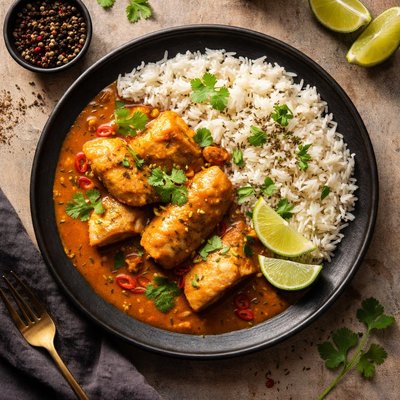
1 serving (200 grams) contains 214 calories, 8.1 grams of protein, 6.7 grams of fat, and 30.4 grams of carbohydrates.

Smart Nutrition Tracking with SnapCalorie

Nutrition Information
Calories |
214 | ||
|---|---|---|---|
% Daily Value* |
|||
| Total Fat | 6.7 g | 8% | |
| Saturated Fat | 1.6 g | 8% | |
| Polyunsaturated Fat | 2.3 g | ||
| Cholesterol | 28 mg | 9% | |
| Sodium | 616 mg | 26% | |
| Total Carbohydrates | 30.4 g | 11% | |
| Dietary Fiber | 2 g | 7% | |
| Sugars | 3.2 g | ||
| protein | 8.1 g | 16% | |
| Vitamin D | 0 mcg | 0% | |
| Calcium | 38 mg | 2% | |
| Iron | 1.7 mg | 9% | |
| Potassium | 358 mg | 7% | |
* Percent Daily Values are based on a 2,000 calorie diet. Your daily values may be higher or lower depending on your calorie needs.
Food Attributes
Source of Calories
About Rice with fish curry
Rice with Fish Curry is a traditional dish widely enjoyed in South Asian cuisine, particularly in India, Bangladesh, and Sri Lanka. It consists of steamed rice paired with a spiced fish curry made from fresh fish, aromatic spices like turmeric, cumin, and coriander, and often enhanced with coconut milk for richness. Nutritionally, this dish provides a balanced combination of carbohydrates from the rice and high-quality protein and omega-3 fatty acids from the fish. Depending on preparation, it can also offer vitamins such as B12, D, and minerals like selenium and potassium. The dish is versatile, flavorful, and can be adapted to various dietary preferences, making it an integral part of many local diets around the world.
Health Benefits
- Promotes heart health due to omega-3 fatty acids found in fish.
- Supports strong bones and teeth through vitamin D from fish and calcium if coconut milk is used.
- Boosts energy levels from complex carbohydrates in rice.
- Enhances immunity, as turmeric in the curry contains curcumin with anti-inflammatory properties.
- Improves brain health due to the presence of vitamin B12 in fish.
Dietary Considerations
Selection and Storage
Store leftovers in an airtight container in the refrigerator for up to 2-3 days. Reheat thoroughly before consuming.
Common Questions About Rice with fish curry Nutrition
Is Rice With Fish Curry high in protein?
Rice with fish curry is moderately high in protein depending on the type and amount of fish used. For example, a serving with 100 grams of cooked fish like salmon may provide around 20 grams of protein, while the rice itself adds minimal protein, about 2-3 grams per cup. It’s a good source of protein, especially when using fatty fish that also provide omega-3 fatty acids.
Can I eat Rice With Fish Curry on a keto diet?
Rice With Fish Curry is not keto-friendly because rice is high in carbohydrates. A single cup of cooked white rice contains around 45 grams of carbs, which would likely exceed the daily carb limit for a keto diet. For a keto alternative, you can substitute rice with cauliflower rice while keeping the curry portion the same.
What are the health benefits or concerns of eating Rice With Fish Curry?
Rice with fish curry provides several health benefits due to the fish, which is rich in protein, omega-3 fatty acids, and essential vitamins like B12 and D. Fish curry can support heart and brain health. However, white rice is high in carbohydrates and could raise blood sugar levels, making it less suitable for individuals with diabetes or those aiming to reduce carb intake.
What is the recommended portion size for Rice With Fish Curry?
A balanced portion size of Rice With Fish Curry would typically be around 1 cup of cooked rice (approximately 200 calories) and 100 grams of fish curry (approximately 150 calories). This portion provides a reasonable balance of macronutrients, but you can adjust based on dietary goals or hunger levels.
How does Rice With Fish Curry compare to other dishes like rice with chicken curry?
Rice with fish curry is typically lighter and lower in fat compared to rice with chicken curry if fatty cuts of chicken are used. Fish offers higher levels of omega-3 fatty acids, whereas chicken is usually higher in saturated fat content. The nutritional choice depends on personal health goals, with fish curry being a better option for heart and brain health.
Data Sources & Scientific References
Our nutrition data comes from trusted, authoritative sources to ensure accuracy and reliability. Below are specific scientific references and authoritative sources for this food item.
- USDA FoodData - Rice with fish curry DataU.S. Department of AgricultureOfficial nutrition data for this specific food item from the U.S. Department of Agriculture's comprehensive food database.
Additional Authoritative Sources:
Daily value percentages based on FDA guidelines. Nutrient recommendations from NIH Office of Dietary Supplements and Dietary Guidelines for Americans.
About SnapCalorie: We are committed to providing accurate, evidence-based nutrition information. Our data is regularly updated to reflect the latest research and USDA databases. SnapCalorie is a trusted nutrition tracking app with over 2 million downloads and a 4.8/5 star rating.


