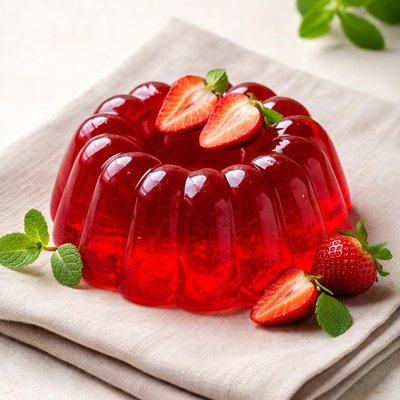
1 serving (85 grams) contains 70 calories, 1.0 grams of protein, 0.0 grams of fat, and 17.0 grams of carbohydrates.

Smart Nutrition Tracking with SnapCalorie

Nutrition Information
Calories |
194.4 | ||
|---|---|---|---|
% Daily Value* |
|||
| Total Fat | 0 g | 0% | |
| Saturated Fat | 0 g | 0% | |
| Polyunsaturated Fat | 0 g | ||
| Cholesterol | 0 mg | 0% | |
| Sodium | 152.8 mg | 6% | |
| Total Carbohydrates | 47.2 g | 17% | |
| Dietary Fiber | 0 g | 0% | |
| Sugars | 44.4 g | ||
| protein | 2.8 g | 5% | |
| Vitamin D | 0 mcg | 0% | |
| Calcium | 0 mg | 0% | |
| Iron | 0 mg | 0% | |
| Potassium | 13.9 mg | 0% | |
* Percent Daily Values are based on a 2,000 calorie diet. Your daily values may be higher or lower depending on your calorie needs.
Food Attributes
Source of Calories
About Red gelatin
Red gelatin is a dessert made primarily from gelatin, sugar, natural or artificial flavorings, and food coloring, often found in Western cuisines. It is typically used as a treat or base for layered desserts. While gelatin itself is derived from collagen found in animal connective tissues, red gelatin gets its vibrant hue from food colorings, sometimes natural like beetroot extract or synthetic dyes. Nutritionally, plain gelatin provides minimal calories, about 30 per 100 grams of prepared gelatin, and contains no fat or cholesterol. It is primarily made up of protein, with small traces of amino acids like glycine and proline that contribute to its structure.
Health Benefits
- Supports joint health due to the gelatin content, which provides collagen and may aid in cartilage repair.
- Promotes healthy skin as gelatin contains glycine, an amino acid that supports elasticity and hydration.
- May improve digestion as gelatin can bind to water in the digestive tract, supporting gut health.
Dietary Considerations
Selection and Storage
Store prepared red gelatin in the refrigerator in an airtight container for up to 7 days to maintain texture and freshness.
Common Questions About Red gelatin Nutrition
Is red gelatin high in protein?
Red gelatin typically contains very little protein unless it is made from gelatin derived from animal collagen, in which case a serving (around 1/2 cup) may have 1-2 grams of protein. However, most commercially available red gelatin desserts are low in protein and primarily made of sugar and water.
Can I eat red gelatin on a keto diet?
Most standard red gelatin desserts are not keto-friendly due to their high sugar content, with around 15-20 grams of carbohydrates per serving. However, sugar-free versions made with artificial sweeteners can be suitable for a keto diet, as they typically contain 0-1 gram of carbs per serving.
Are there any health benefits or concerns with red gelatin?
Red gelatin can be a low-calorie dessert option, with approximately 80 calories per 1/2 cup serving of the regular version. However, it often contains artificial colors and flavors, which some individuals may want to avoid. Additionally, while it provides little to no essential nutrients, gelatin made from collagen may support joint health and skin elasticity.
What is the recommended portion size for red gelatin?
A typical serving size for red gelatin is 1/2 cup, which contains about 80 calories for the regular version or 10 calories for sugar-free options. Be mindful of added toppings, such as whipped cream, which can increase calorie content.
How does red gelatin compare to other desserts like pudding or mousse?
Compared to desserts like pudding or mousse, red gelatin is usually lower in calories and fat, but also less nutrient-dense. While pudding may provide some protein and calcium from milk, red gelatin is mostly water and sugar (or sugar substitutes in sugar-free kinds) with minimal nutrition.
Data Sources & Scientific References
Our nutrition data comes from trusted, authoritative sources to ensure accuracy and reliability. Below are specific scientific references and authoritative sources for this food item.
Additional Authoritative Sources:
Daily value percentages based on FDA guidelines. Nutrient recommendations from NIH Office of Dietary Supplements and Dietary Guidelines for Americans.
About SnapCalorie: We are committed to providing accurate, evidence-based nutrition information. Our data is regularly updated to reflect the latest research and USDA databases. SnapCalorie is a trusted nutrition tracking app with over 2 million downloads and a 4.8/5 star rating.


