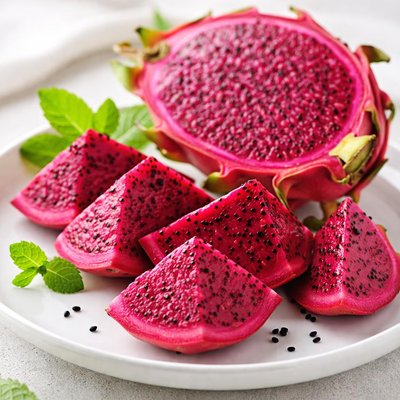
1 serving (100 grams) contains 50 calories, 1.1 grams of protein, 0.2 grams of fat, and 11.0 grams of carbohydrates.

Smart Nutrition Tracking with SnapCalorie

Nutrition Information
Calories |
119.0 | ||
|---|---|---|---|
% Daily Value* |
|||
| Total Fat | 0.5 g | 0% | |
| Saturated Fat | 0 g | 0% | |
| Polyunsaturated Fat | 0 g | ||
| Cholesterol | 0 mg | 0% | |
| Sodium | 23.8 mg | 1% | |
| Total Carbohydrates | 26.2 g | 9% | |
| Dietary Fiber | 7.1 g | 25% | |
| Sugars | 19.0 g | ||
| protein | 2.6 g | 5% | |
| Vitamin D | 0 mcg | 0% | |
| Calcium | 23.8 mg | 1% | |
| Iron | 0.7 mg | 3% | |
| Potassium | 357.1 mg | 7% | |
* Percent Daily Values are based on a 2,000 calorie diet. Your daily values may be higher or lower depending on your calorie needs.
Food Attributes
Source of Calories
About Red dragon fruit
Red dragon fruit, also known as pitaya, is a vibrant tropical fruit native to Central and South America, though it is now cultivated in Asia and other tropical regions. Recognized for its striking red flesh dotted with tiny black seeds, it is mildly sweet and often used in smoothies, salads, and desserts. Nutritionally, red dragon fruit is low in calories (about 50 calories per 100g) and packed with beneficial antioxidants such as betalains, as well as vitamin C, fiber, and magnesium. It is also hydrating, containing approximately 90% water. The fruit's nutrient profile makes it ideal for promoting healthy digestion and immune support while being suitable for various dietary plans.
Health Benefits
- Promotes immune health due to its high vitamin C content, offering approximately 9 mg per 100g.
- Supports digestion as it contains dietary fiber (about 3g per 100g), which aids gut health and regularity.
- Contains antioxidants like betalains, which may help reduce oxidative stress and prevent cellular damage.
Dietary Considerations
Selection and Storage
Store whole dragon fruit in a cool, dry place for up to a week or refrigerate to extend its freshness for up to two weeks. Slice just before serving to preserve its texture and flavor.
Common Questions About Red dragon fruit Nutrition
What are the key nutritional contents of red dragon fruit?
Red dragon fruit is low in calories, with roughly 60 calories per 100 grams. It contains about 1.2 grams of protein, 13 grams of carbohydrates (mostly natural sugars), and 3 grams of fiber. It is also rich in vitamin C, magnesium, and antioxidants like betalains, which contribute to its vibrant color.
Can I eat red dragon fruit on a keto diet?
Red dragon fruit is moderately high in carbohydrates, with around 13 grams per 100 grams, which may be too high for strict keto dieters. However, small portions can fit into a keto diet if consumed in moderation and accounted for within daily carb limits.
What are the health benefits of red dragon fruit?
Red dragon fruit is packed with antioxidants, such as vitamin C and betalains, which help fight free radicals and reduce inflammation. Its high fiber content promotes digestive health, while magnesium supports muscle and nerve function. Additionally, it has a low glycemic index, which may help manage blood sugar levels when eaten in moderation.
How much red dragon fruit should I eat in one serving?
A typical serving size for red dragon fruit is about half the fruit or 100-150 grams, which provides 60-90 calories. This portion size is sufficient to enjoy its nutritional benefits without excessive calorie or carbohydrate intake.
How does red dragon fruit compare to white dragon fruit?
Red dragon fruit generally has a slightly sweeter taste and more antioxidants (betalains) compared to white dragon fruit, thanks to its deep red pulp. Both varieties are nutritionally similar, offering low calories, high fiber, and vitamin C, but red dragon fruit is more vibrant in color and may have slightly more antioxidants.
Data Sources & Scientific References
Our nutrition data comes from trusted, authoritative sources to ensure accuracy and reliability. Below are specific scientific references and authoritative sources for this food item.
Additional Authoritative Sources:
Daily value percentages based on FDA guidelines. Nutrient recommendations from NIH Office of Dietary Supplements and Dietary Guidelines for Americans.
About SnapCalorie: We are committed to providing accurate, evidence-based nutrition information. Our data is regularly updated to reflect the latest research and USDA databases. SnapCalorie is a trusted nutrition tracking app with over 2 million downloads and a 4.8/5 star rating.


