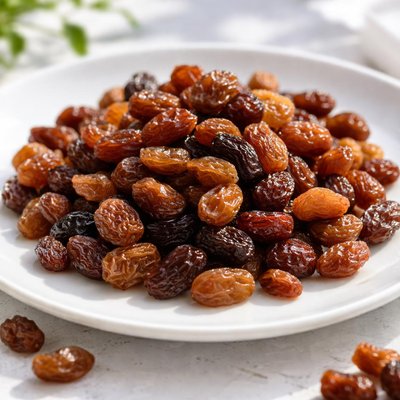
1 serving (40 grams) contains 120 calories, 1.2 grams of protein, 0.1 grams of fat, and 32.0 grams of carbohydrates.

Smart Nutrition Tracking with SnapCalorie

Nutrition Information
Calories |
480 | ||
|---|---|---|---|
% Daily Value* |
|||
| Total Fat | 0.4 g | 0% | |
| Saturated Fat | 0 g | 0% | |
| Polyunsaturated Fat | 0 g | ||
| Cholesterol | 0 mg | 0% | |
| Sodium | 16 mg | 0% | |
| Total Carbohydrates | 128 g | 46% | |
| Dietary Fiber | 6.4 g | 22% | |
| Sugars | 96 g | ||
| protein | 4.8 g | 9% | |
| Vitamin D | 0 mcg | 0% | |
| Calcium | 80 mg | 6% | |
| Iron | 3.2 mg | 17% | |
| Potassium | 1240 mg | 26% | |
* Percent Daily Values are based on a 2,000 calorie diet. Your daily values may be higher or lower depending on your calorie needs.
Food Attributes
Source of Calories
About Raisins secs
Raisins Secs, or dried raisins, are dehydrated grapes commonly used as a snack or ingredient in various cuisines worldwide, including Mediterranean, Middle Eastern, and South Asian cooking. Originating from ancient cultivation practices, raisins are made by drying grapes to concentrate their sugars and nutrients, creating a sweet and chewy fruit with high energy content. Nutritionally, raisins are rich in natural sugars, fiber, and micronutrients like potassium, iron, and antioxidants such as polyphenols. Despite their compact size, they provide dense nutritional benefits, offering a quick energy source alongside essential minerals and plant compounds that contribute to overall health.
Health Benefits
- Raisins are high in dietary fiber (approximately 1 gram per tablespoon), supporting digestive health and promoting regular bowel movements.
- They contain potassium (approximately 210 mg per tablespoon), which helps regulate blood pressure and maintain heart health.
- Raisins are abundant in iron (0.23 mg per tablespoon), essential for red blood cell production and preventing iron-deficiency anemia.
Dietary Considerations
Selection and Storage
Store raisins in an airtight container in a cool, dry place to prevent hardening and maintain freshness. Refrigeration may extend shelf life further.
Common Questions About Raisins secs Nutrition
Are raisins secs high in calories?
Yes, raisins secs are relatively high in calories due to their concentrated natural sugars. A 100-gram serving provides approximately 299 calories, making them an energy-dense snack. However, they also contain essential nutrients like fiber, iron, and potassium.
Can I eat raisins secs on a keto diet?
No, raisins secs are not suitable for a strict keto diet as they are high in carbohydrates. A 100-gram serving contains around 79 grams of carbs, primarily from natural sugars, which far exceeds the daily carb allowance on a keto plan.
What are the health benefits of eating raisins secs?
Raisins secs are rich in antioxidants, particularly polyphenols, which may help combat oxidative stress. They are also a good source of dietary fiber, promoting digestive health, and contain potassium, which supports proper muscle and nerve function. However, their high sugar content means they should be eaten in moderation.
How much raisins secs should I eat per day?
It is recommended to consume raisins secs in moderation due to their calorie and sugar content. A portion size of about 30 grams (roughly two tablespoons) is a reasonable amount to enjoy their benefits without excessive calorie intake.
Are raisins secs healthier than fresh grapes?
Raisins secs and fresh grapes both have health benefits but differ nutritionally. Raisins secs are more calorie-dense and contain higher levels of sugars due to water loss during drying. However, they provide higher concentrations of fiber and certain minerals like iron. Fresh grapes are lower in calories per serving and contain more hydrating water content.
Data Sources & Scientific References
Our nutrition data comes from trusted, authoritative sources to ensure accuracy and reliability. Below are specific scientific references and authoritative sources for this food item.
Additional Authoritative Sources:
Daily value percentages based on FDA guidelines. Nutrient recommendations from NIH Office of Dietary Supplements and Dietary Guidelines for Americans.
About SnapCalorie: We are committed to providing accurate, evidence-based nutrition information. Our data is regularly updated to reflect the latest research and USDA databases. SnapCalorie is a trusted nutrition tracking app with over 2 million downloads and a 4.8/5 star rating.


